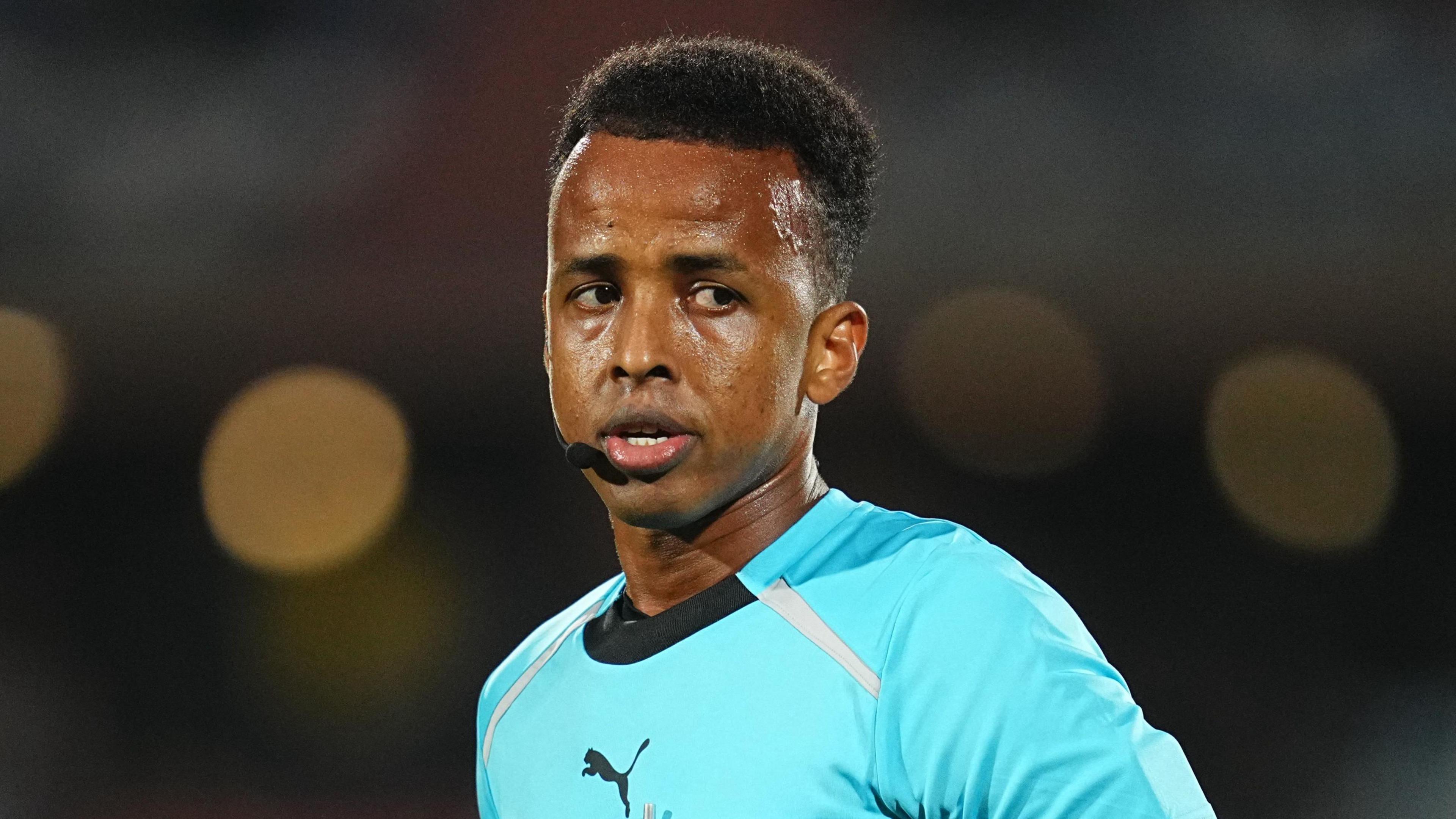
Omar Artan stood in an interrogation room at Miami International Airport for eleven hours, holding the right documents for the biggest opportunity of his life—only to be told he couldn't enter the country at all. The Somali referee had arrived with a valid diplomatic passport and a legitimate US visa, credentials that should have opened the door to officiating matches at the World Cup. Instead, US immigration authorities rejected both, citing what a government official described as his alleged "association with suspected members of terror organisations." When questioned about links to the Somali militant group Al Shabab, Artan insisted he knew nothing about the organization. His protest was simple and heartbreaking: "I'm just simply a referee who's trying to live his dream, the biggest dream of my life, to come to the World Cup."
The case highlights the crushing gap between preparation and circumstance—between having the right papers and being allowed through the gate. Artan had done everything asked of him. He had secured diplomatic credentials. He had obtained the required visa. He had been selected by FIFA to referee one of the world's most prestigious sporting events. Yet border security, operating under national security protocols, deemed him ineligible to enter the United States, regardless of documentation or explanation.
What makes this story remarkable, though, is what happened next. After being put back on a plane to Turkey, Artan received support from FIFA officials in Istanbul before returning to his home in Mogadishu. But the organization went further than simply offering logistical assistance. According to sources who spoke with BBC Sport, FIFA has committed to paying Artan his full tournament fee—the compensation he would have received had he successfully officiated at the World Cup.
The decision carries symbolic weight beyond the financial compensation. Referees do not learn their actual earnings until after the tournament concludes, making the final amount a mystery even to those who work the matches. Yet FIFA chose to honor Artan's fee in full, treating him as though he had fulfilled his duties despite a geopolitical circumstance entirely beyond his control. It's a gesture that affirms a principle: that a person should not be punished for being denied entry into a country, even when security concerns are invoked.
For Artan, the World Cup dream has been taken from him—the chance to stand on the pitch, to make crucial calls in matches watched by billions, to prove himself on football's grandest stage. No fee can restore that. But FIFA's decision recognizes that his preparation was real, his credentials were legitimate, and his presence at the tournament was denied not because of anything he did wrong, but because of geopolitical forces and security determinations made beyond his reach. In a moment of profound disappointment, the organization found a way to say: we believe you. We see you. You will be compensated as though you were here.
It's a small act of fairness in a situation marked by unfairness, and a reminder that even when borders remain closed and dreams remain deferred, some institutions can still choose to do right by people caught in circumstances beyond their making.