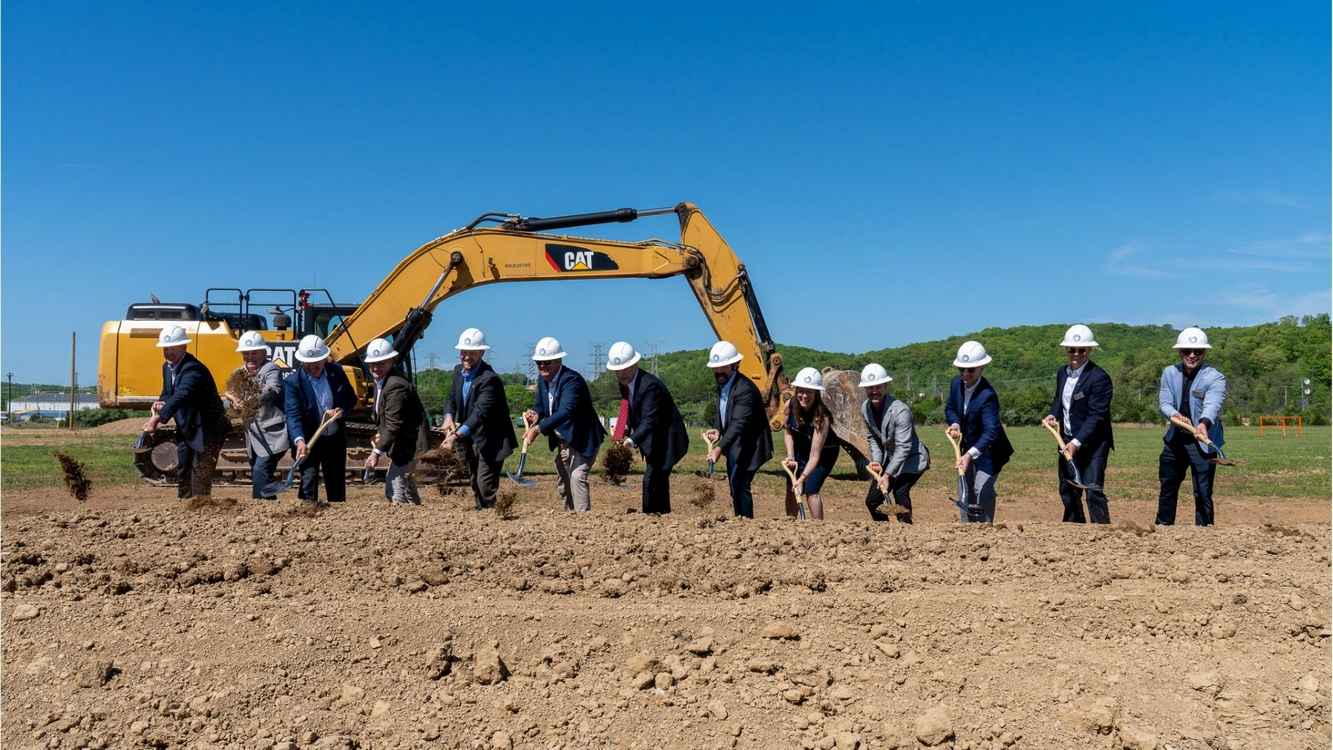
In Oak Ridge, Tennessee — the same town where scientists once cracked the atom to end World War II — workers in hard hats gathered last month to break ground on something new: the first advanced nuclear reactor plant in America.
Called Hermes 2, the project is being built by Kairos Power, a California-based company with a manufacturing plant in Albuquerque, New Mexico. By 2030, it will send 50 megawatts of carbon-free electricity directly to Google data centers in the Tennessee and Alabama region. That's enough clean power to run hundreds of thousands of homes.
The timing couldn't be better. AI programs, cloud storage, and video streaming all run inside massive data centers that gulp enormous amounts of electricity. Google alone operates two of these facilities in the Tennessee Valley, where a new state law now protects regular ratepayers from footing the bill when large energy users tap the grid beyond a certain threshold. So the tech giant signed an agreement with Kairos Power to get its carbon-free electrons somewhere else — from a nuclear plant built just for them.
What makes Hermes 2 different from older reactors sits inside its core. Most nuclear plants use pressurized water to keep things cool. Hermes 2 uses molten salt instead — a material that doesn't need high pressure to do its job. That removes one of the biggest dangers in nuclear accidents: the explosive force that happens when super-pressurized systems suddenly fail. The 2011 Fukushima disaster in Japan started exactly that way. Kairos will also swap regular uranium fuel rods for something called TRISO — tiny uranium pellets no bigger than poppy seeds, wrapped in layers of ceramic and graphite that can withstand far higher temperatures and trap dangerous radiation inside. The US and UK governments have been developing TRISO together since 1960, though fears following accidents at Chernobyl and Three Mile Island slowed progress for decades.
"For nuclear projects to be successful, we need more than just the right technology. We need to understand every aspect of project delivery," said Mike Laufer, a nuclear engineer and founder of Kairos Power, at the groundbreaking.
Amanda Peterson Corio, Google's Global Head of Data Center Energy, called the project part of building "the availability of smart, firm energy sources" for the digital economy.
Nuclear power does have critics. Some scientists argue the new reactor designs may produce more waste than traditional large plants, and the technology remains unproven at full scale. Still, with energy demand from AI and data centers doubling up, companies are finding that nuclear may be the only fossil-fuel-free source reliable enough to keep the lights on.