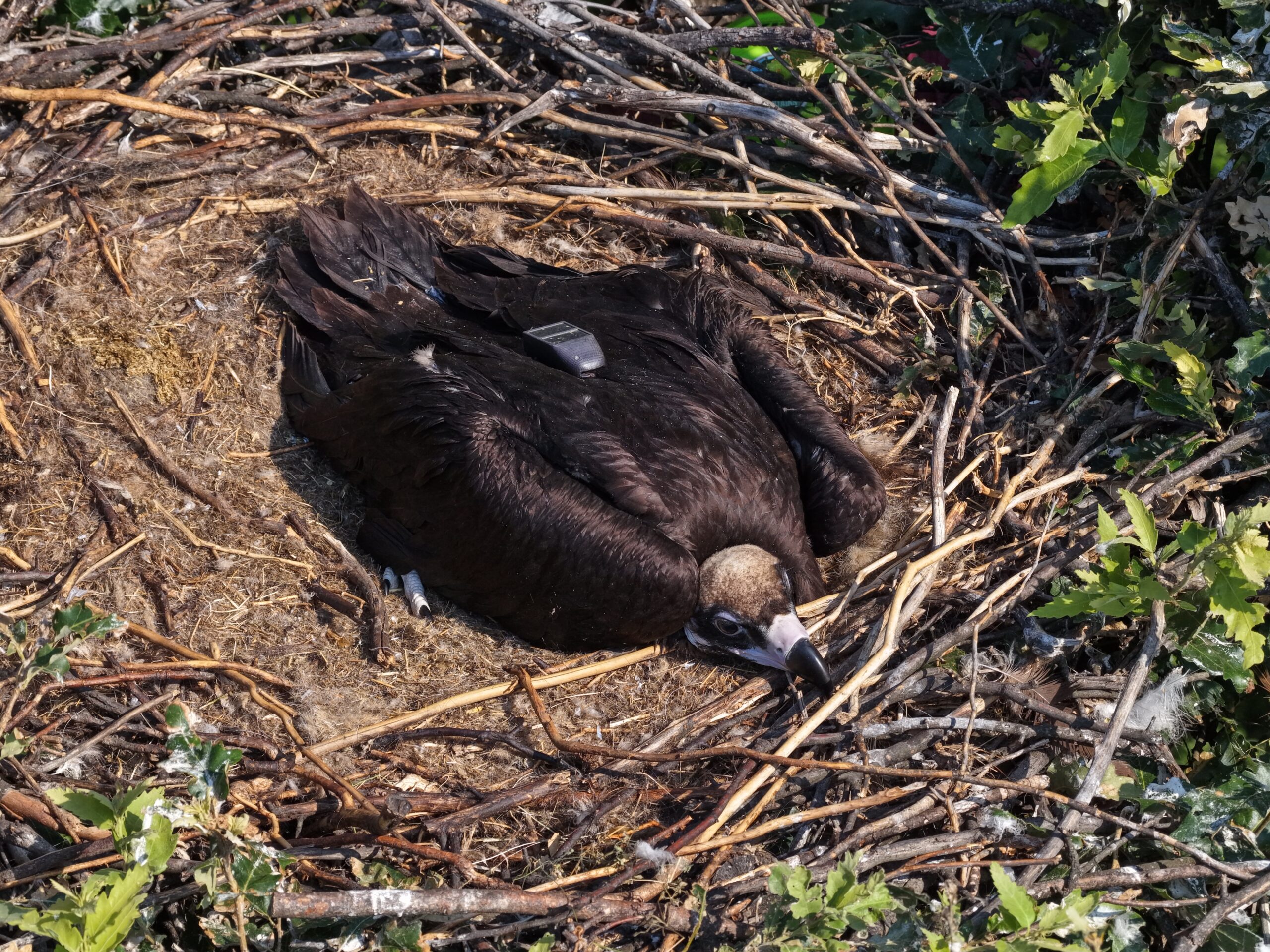
In the mountains of southern Bulgaria, something remarkable has taken flight. Three cinereous vulture chicks have hatched in the Rhodope Mountains — the first to be born there in more than thirty years.
The cinereous vulture is one of Europe's largest birds, with a wingspan that can reach nearly 10 feet. Once common across these mountain slopes, the species disappeared as a breeding population from the Bulgarian Rhodopes decades ago. Now, after years of careful rewilding work, the birds are slowly coming back.
The reintroduction program began in 2023, when conservation groups started releasing cinereous vultures into the area. So far, 40 birds have been released — seven of them just this year. Earlier this spring, monitoring teams found eight pairs of vultures nesting in the rewilding landscape. Seven of those pairs settled into artificial nests that teams had built specifically to encourage the birds to stay. After four pairs began incubating their eggs, three chicks successfully hatched.
Those eight nesting pairs already represent about 25 percent of Bulgaria's entire cinereous vulture population. The rest are found in the Balkan Mountains to the north.
"These hatchlings are a sign of hope and the first step towards the return of the cinereous vulture as a breeding species in the Bulgarian Rhodope Mountains," said Dobromir Dobrev, a vulture expert with the Bulgarian Society for the Protection of Birds. "After many years of preparation, now the real hard work begins."
Frans Schepers, executive director of Rewilding Europe, remembers spotting his very first cinereous vultures in the Greek Rhodopes back in 1987. He called the hatching news "proof that the re-established cinereous vulture population in the Rhodopes has begun the long road to recovery."
The program is a collaboration between the Bulgarian Society for the Protection of Birds, the Rewilding Rhodopes team, and a Spanish conservation group called GREFA. It is part of a broader effort called the LIFE Rhodope Vulture initiative, which is funded by the European Union and spans both Bulgaria and Greece.
The recovery matters because vultures play a crucial role in healthy ecosystems. As nature's cleanup crew, they consume animal carcasses, which prevents disease from spreading and returns nutrients to the soil. Conservationists have also worked to increase the number of wild animal carcasses available as food for the birds.
Some of the new breeding pairs already include birds that traveled across the border from Greece, offering early signs that the population may naturally expand across the wider mountain range. For a species that vanished from these skies for a generation, that crossing feels like a small miracle — and a sign that the long road to recovery may, at last, be heading upward.