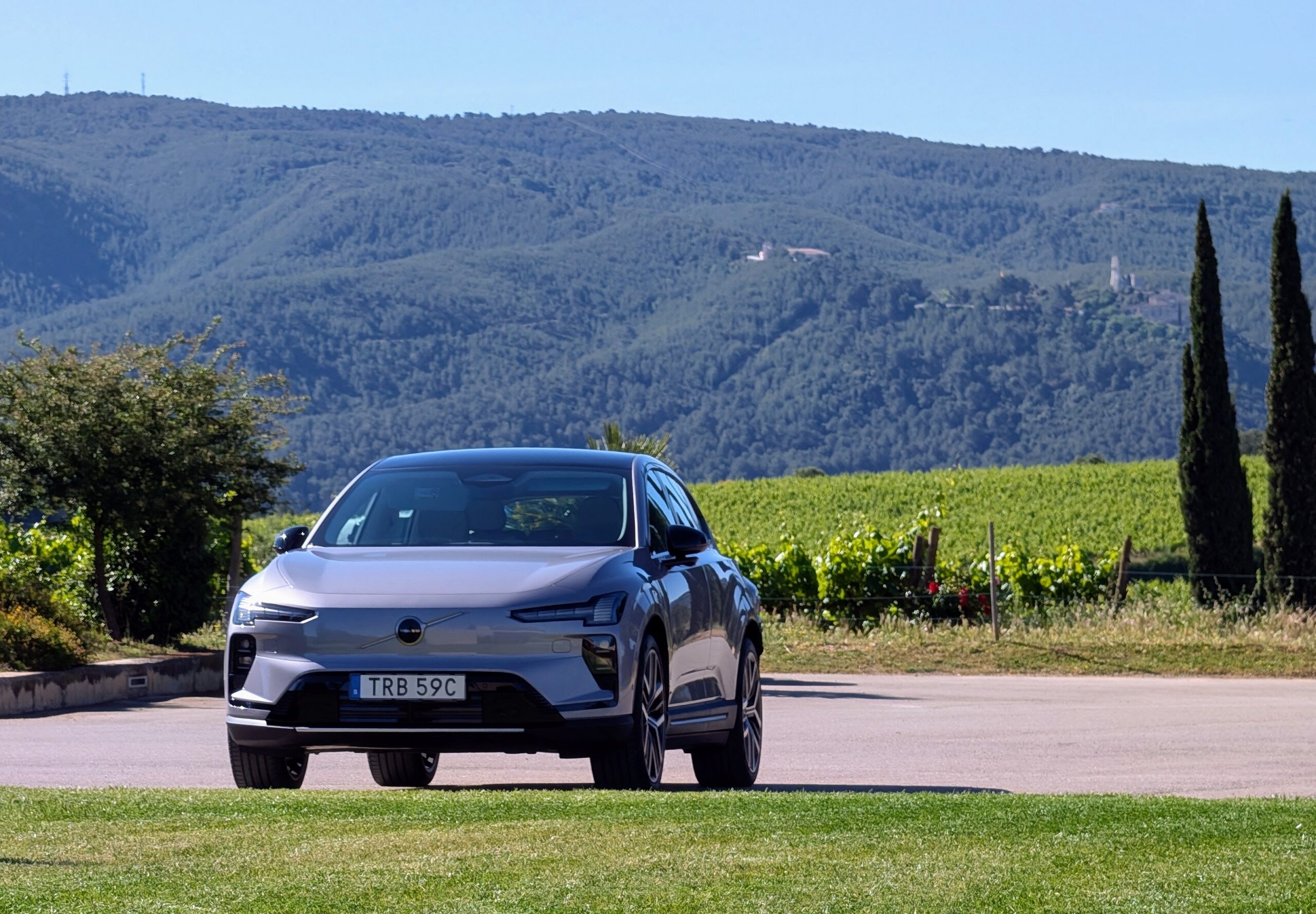
Volvo's new EX60 midsize electric SUV has already proven itself nimble and planted on the winding canyon roads behind Barcelona, signaling that the Swedish automaker's leap into mainstream EV production is ready to land. After squashing software bugs that plagued its flagship EX90, Volvo is aiming squarely at the largest vehicle segment in the US market with a car designed to drive serious volumes and deliver on the promise of a fully software-defined vehicle without the teething problems of its predecessor.
The EX60 arrives at a critical moment for electric vehicle adoption. Midsize SUVs dominate American driveways, and if Volvo can win over mainstream buyers with a reliable, feature-rich EV at this size, it could accelerate the shift away from combustion engines across the industry. The car launches in January 2026, and early drives reveal a vehicle that balances everyday practicality with genuine driving enjoyment.
The entry-level P6 variant comes equipped with a single rear motor delivering 369 horsepower and an 83 kWh battery pack rated for 307 miles of range on the EPA test cycle. Out on highways winding toward Montserrat, the P6 felt nimble and responsive—light enough to corner sharply without body roll, yet grounded by the low-slung battery pack sitting beneath the floorboard. Wide sweeping turns at highway speed proved predictable and planted, with regenerative braking providing confident feedback even under hard deceleration.
For those wanting more thrust, Volvo plans three power variants. The P10 AWD tested in Barcelona produces 503 combined horsepower from dual motors, an immediate step up that becomes especially playful in a special performance driving mode. The forthcoming P12 variant will push output to an impressive 670 horsepower, offering genuine performance credentials alongside daily practicality. Both higher-tier models get an adaptive suspension system that actively keeps the vehicle level under acceleration, braking, and cornering—a subtle but meaningful refinement over the P6's static setup.
One detail that impressed during testing was the sophisticated regenerative braking system. Drivers can choose One Pedal Driving at different sensitivity levels, allowing everything from maximum regen for the most engaged experience to an automatic mode where the vehicle optimizes recovery based on driving conditions. This level of fine-tuning suggests Volvo listened carefully to early EV adopters and built flexibility into the system.
The EX60 represents Volvo's answer to a specific challenge facing the EV industry: mass-market acceptance depends on making electric cars that feel mature from day one. The EX90 taught the company hard lessons about rushing software to market. With the EX60, Volvo has a chance to prove those lessons stuck, delivering a vehicle that handles like a proper SUV, accelerates with authority across multiple variants, and promises the digital features and reliability that everyday buyers expect. If it delivers on that promise, the EX60 could become the bridge that takes electric vehicles from enthusiast curiosity to suburban necessity. The January 2026 launch will tell whether Volvo's cautious, thorough approach pays off with genuine market traction.