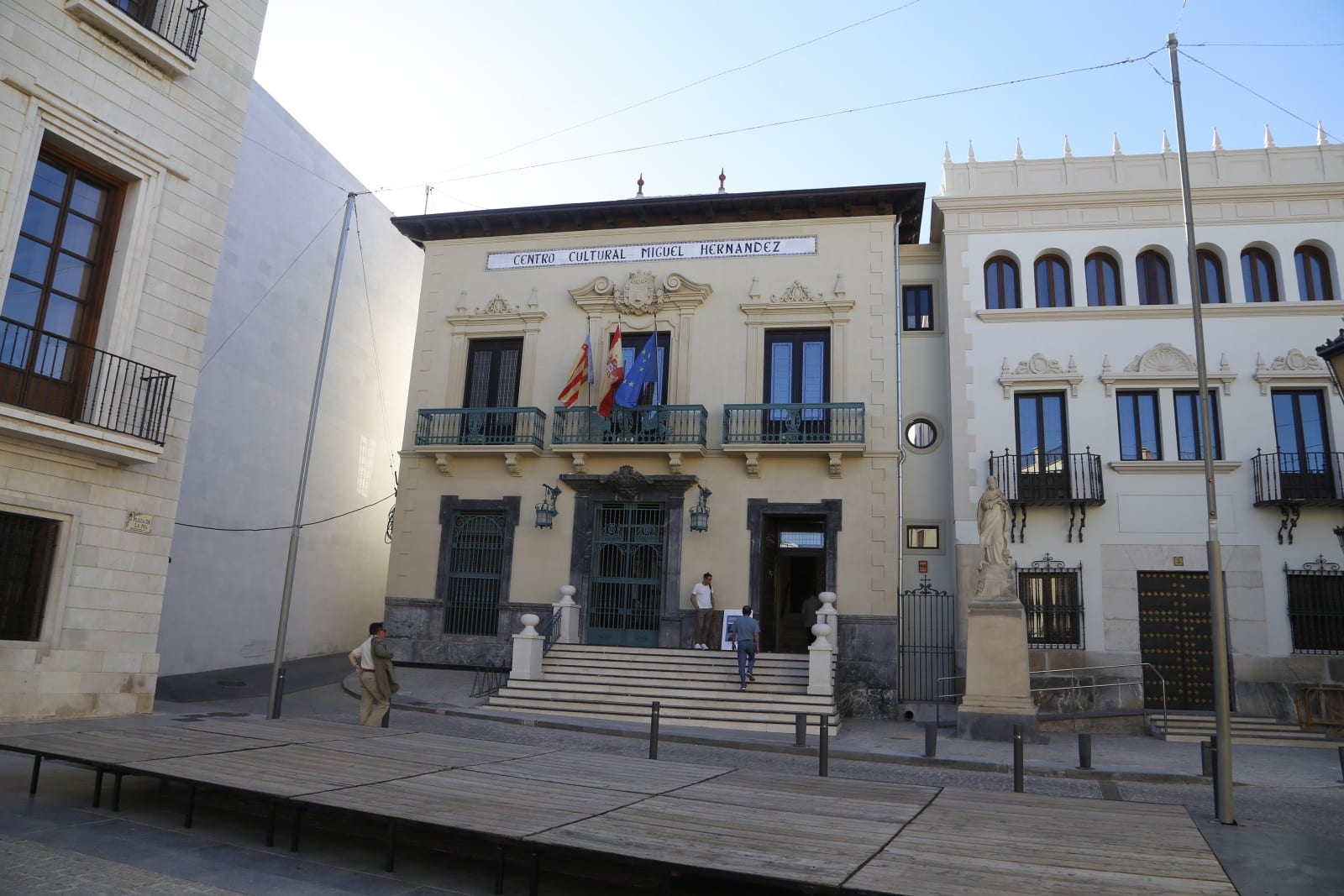
Nearly a century after it first opened its doors, Orihuela's Miguel Hernández Cultural Centre took its first breath as a restored landmark, hosting a near-capacity audience in its historic Ballroom for a conference on Los Saladares, one of southeastern Spain's most significant archaeological sites.
The restoration of this civic institution represents more than a building renovation—it signals a city's commitment to reclaiming its heritage and making it a living space for its citizens. Orihuela, a town in the province of Alicante with deep historical roots, had allowed the cultural centre to fall into disrepair for years. Its reopening now offers a second chance to serve as a hub for knowledge, discovery, and community gathering.
The inaugural event, titled "Los Saladares: An Exceptional Archaeological Site," drew historians, locals, and municipal leaders to the newly recovered Ballroom on a warm spring evening. Orihuela mayor Pepe Vegara sat alongside Historical Heritage councillor Matías Ruiz, Maribel Peñalver—director of the University of Alicante's Archbishop Loazes Chair—and Alberto Lorrio, the University of Alicante's Professor of Prehistory and scientific director of the Los Saladares excavations. The gathering was organized by Orihuela City Council's Historical Heritage Department, signaling official backing for what organizers hope will become a regular rhythm of cultural programming.
Los Saladares itself carries outsized archaeological importance. Lorrio explained to the audience that the Bronze Age settlement, excavated over years of careful work, offers crucial insights into the communities that thrived in southeastern Spain during both the Bronze Age and early Iron Age periods. Few sites in the region tell this story with such clarity and completeness. For researchers and enthusiasts alike, understanding how ancient peoples lived, traded, and organized themselves in this corner of the Mediterranean remains essential to reconstructing the deeper patterns of European prehistory.
Ruiz framed the evening's significance beyond the confines of archaeology. The restoration of historic buildings, he noted, matters most when those spaces become active again—when they host events, conversations, and encounters that enliven a community. A restored but empty building is merely a monument to its own past. A restored building filled with people thinking, learning, and gathering becomes a mirror of the present and a platform for the future.
Looking ahead, the centre is scheduled to host the official presentation of the Archbishop Loazes Chair on Tuesday, June 2, marking the next chapter in what promises to be a busier calendar. Mayor Vegara has signaled his vision for the Miguel Hernández Centre to become a cultural reference point for the entire city—a place where heritage is not preserved in amber but activated as a resource for understanding who Orihuela is and where it comes from.
For a modest city that has invested resources into restoring its past, the momentum is building. The near-capacity crowd on opening night, the presence of university researchers and municipal leaders in one room, and the promise of future events all suggest that Orihuela is serious about making this centre more than a historical footnote. It is, instead, becoming a space where the ancient and the contemporary converge.