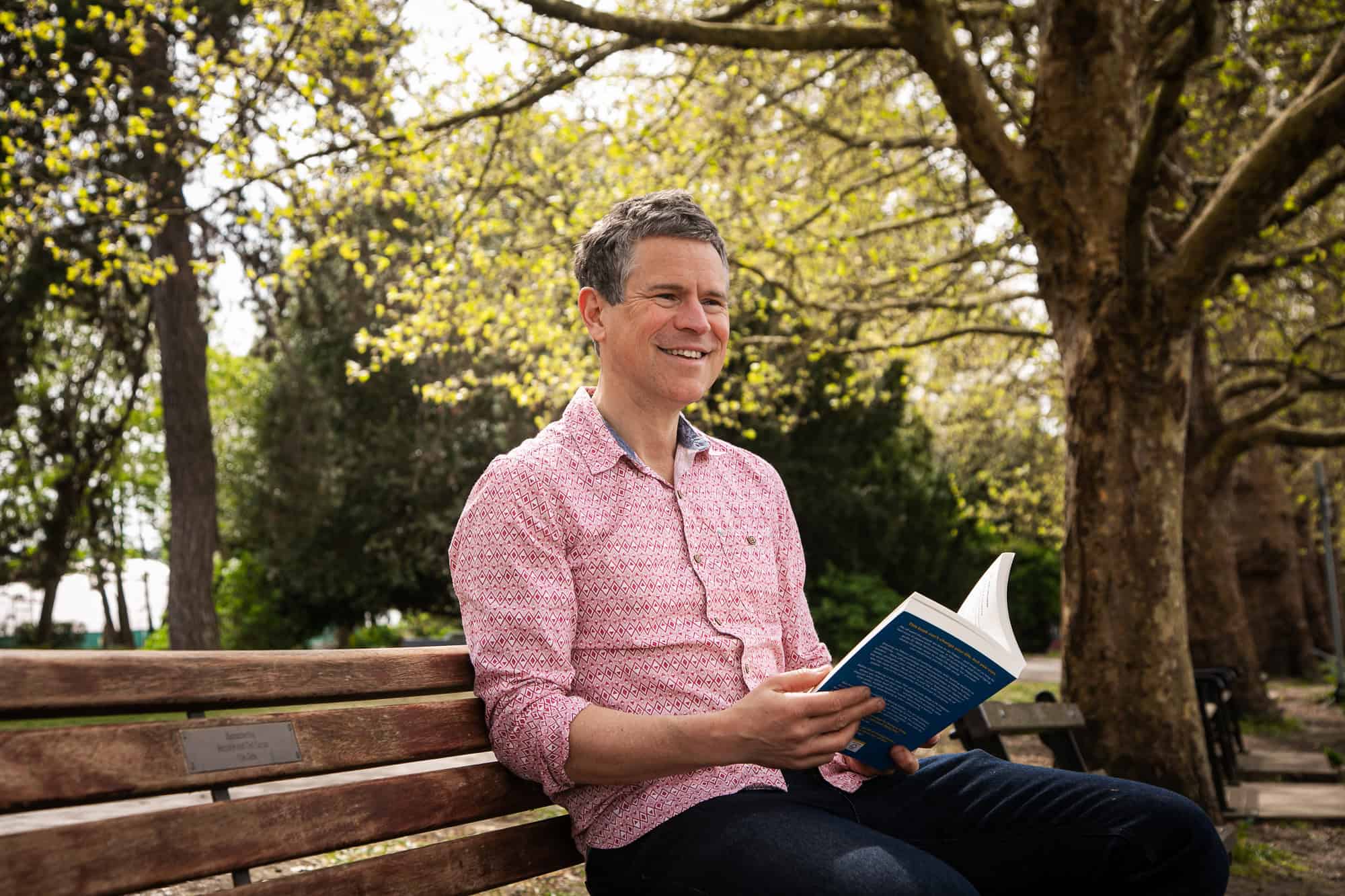
After 15 years helping thousands of people chase lasting happiness, Dr Mark Williamson has a deceptively simple insight: we don't think our way into new ways of living—we live our way into new ways of thinking. As director of Action for Happiness, Williamson has watched people transform their lives not through grand gestures, but through small, deliberate shifts in how they show up each day. In his new book Make Life Happier, he distills decades of wellbeing research into five practical changes anyone can start today.
The wisdom here matters because it upends our usual assumption: we wait to feel motivated before we act. Actually, it's backwards. Action creates motivation. Williamson invites us to treat life as a series of small experiments. Go for a walk. Call a friend. Shift your routine slightly. Some things will lift your mood; others won't. Both outcomes teach you something real about what works for your particular life. You become the most important research project, guided by curiosity rather than overthinking.
But happiness isn't a solo pursuit. Williamson emphasizes that lasting joy comes from combining self-care with genuine care for others. Our brains, shaped by evolutionary survival instinct, focus obsessively on what's wrong—a phenomenon researchers call "negativity bias." One awkward comment echoes through the day while countless kindnesses fade unnoticed. Realistic optimism offers a path through this trap. It doesn't mean pretending everything is fine or forcing false positivity. Instead, Williamson suggests using the word "and" to expand reality: "This is difficult and I can take a step forward." "I feel anxious and I'm grateful for my friends." You acknowledge what's hard while claiming what's possible.
Relationships emerge as perhaps the most vital ingredient. Decades of research show that strong connections are the biggest predictor of a long, happy life—yet many of us let them slip through neglect. Williamson calls this "social fitness," a concept that demands regular, consistent attention much like physical health does. Small actions matter far more than grand gestures. When someone comes to mind, reach out. Put your phone away and truly listen. These habits slowly strengthen the relationships that make life feel richer.
Kindness and trust ripple outward in ways we often underestimate. A small act of kindness lifts someone's mood and strengthens your connection to them, but it doesn't stop there—it inspires others to do the same, creating waves of positivity through a community. Trust works similarly; when we show faith in people by offering responsibility or saying "I believe in you," they're more likely to live up to that belief. Williamson reminds us that we can't control the whole world, but we can absolutely influence the tone of the world immediately around us.
The through-line connecting all five practices is this: you have more power than you think. The changes that reshape a life don't require perfect conditions or dramatic transformation. They require showing up, staying curious, and choosing kindness—again and again. That consistency, built into the rhythm of ordinary days, is where real and lasting happiness takes root.