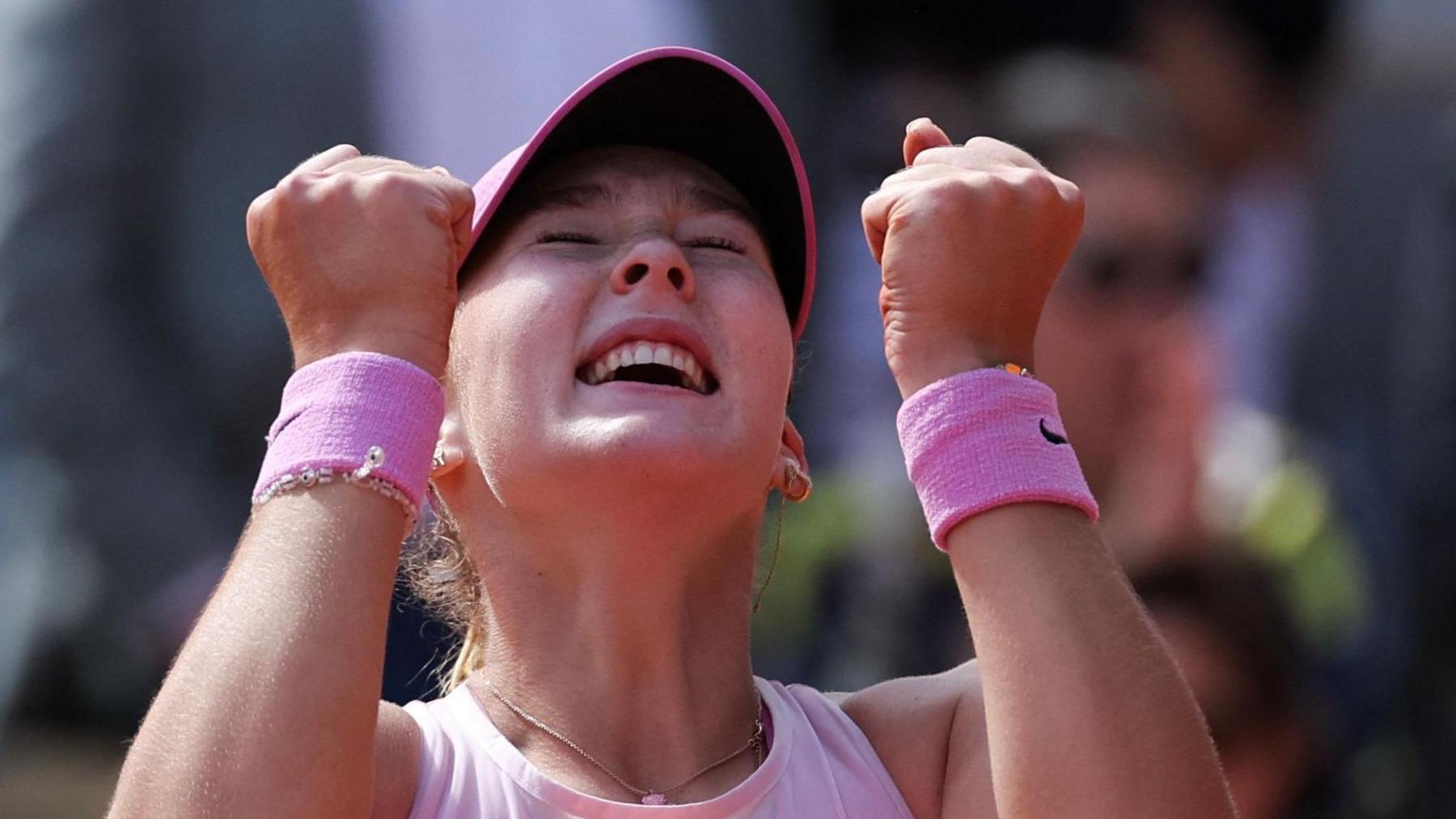
At 19, Mirra Andreeva walked onto the clay courts of Roland Garros as a teenager with an expectation hanging over her name—that she was destined to win a Grand Slam—and she did not disappoint. The Russian player kept her composure through a fraught fortnight in Paris, holding her nerve in a semi-final against Ukraine's Marta Kostyuk amid political tensions, then staying calm in a first Grand Slam final where her opponent received the louder crowd support. When she lifted the trophy, Andreeva became the face of a tournament that delivered something few had predicted: seismic shocks, compelling drama, and fairytale stories that have made this Roland Garros one of the best in recent memory.
This year's French Open was supposed to be predictable. With Carlos Alcaraz sidelined by a wrist injury, Jannik Sinner—who had won nine of the last ten Grand Slams between them—arrived as the heaviest favourite since Rafael Nadal. Instead, the tournament exploded. Sinner's early exit in the second round to Argentina's Juan Manuel Cerundolo blew the draw wide open, and when 39-year-old Novak Djokovic fell in the third round, a new champion was guaranteed. That champion turned out to be Germany's Alexander Zverev, who claimed his first Grand Slam title after three previous final defeats, finally securing his place among tennis's elite. The men's draw became less a coronation and more a free-for-all, with seeded players tumbling early and five-set matches creating the kind of tension that signals genuine uncertainty.
Beyond Andreeva's breakthrough, a constellation of young stars announced their arrival at the highest level. Czech player Jakub Mensik, only 20, reached his first major semi-final and showcased a combination of explosive serve, powerful baseline game, and athleticism that caught the attention of the global tennis audience. Brazilian teenager Joao Fonseca and 19-year-old Spaniard Rafael Jodar made their Grand Slam breakthroughs by reaching the quarter-finals, while 17-year-old Moise Kouame, ranked 318th in the world, became the youngest man to reach a Grand Slam third round since Rafael Nadal at Wimbledon in 2003. These youngsters underlined why the future of the sport looks bright.
The most moving story may have belonged to Poland's Maja Chwalinska, a 24-year-old who had never earned direct entry into a Grand Slam before this tournament. A 500-to-1 outsider, she reached the final and finished runner-up to Andreeva, collecting 1.4 million euros in prize money—nearly triple what she had earned in her entire previous career. Most of Chwalinska's professional life has been spent on the lower rungs, traveling smaller circuits just to survive financially. Her run from the qualifying draw to a Grand Slam final has transformed her future and offered genuine hope to lower-ranked players fighting for financial viability in professional tennis.
Unseasonably high temperatures exceeding 30 degrees Celsius in the first week added another layer of unpredictability. The heat hardened the clay and created a faster surface, while nine mid-match retirements in the opening four days—including Britain's Cameron Norrie—underscored its toll. When temperatures cooled in the second week, conditions shifted again, upending the strategies of favorites like world number one Aryna Sabalenka. What had been predicted as a dud tournament instead proved to be one where youth seized opportunity, underdogs triumphed, and tennis reminded the world why it endures.