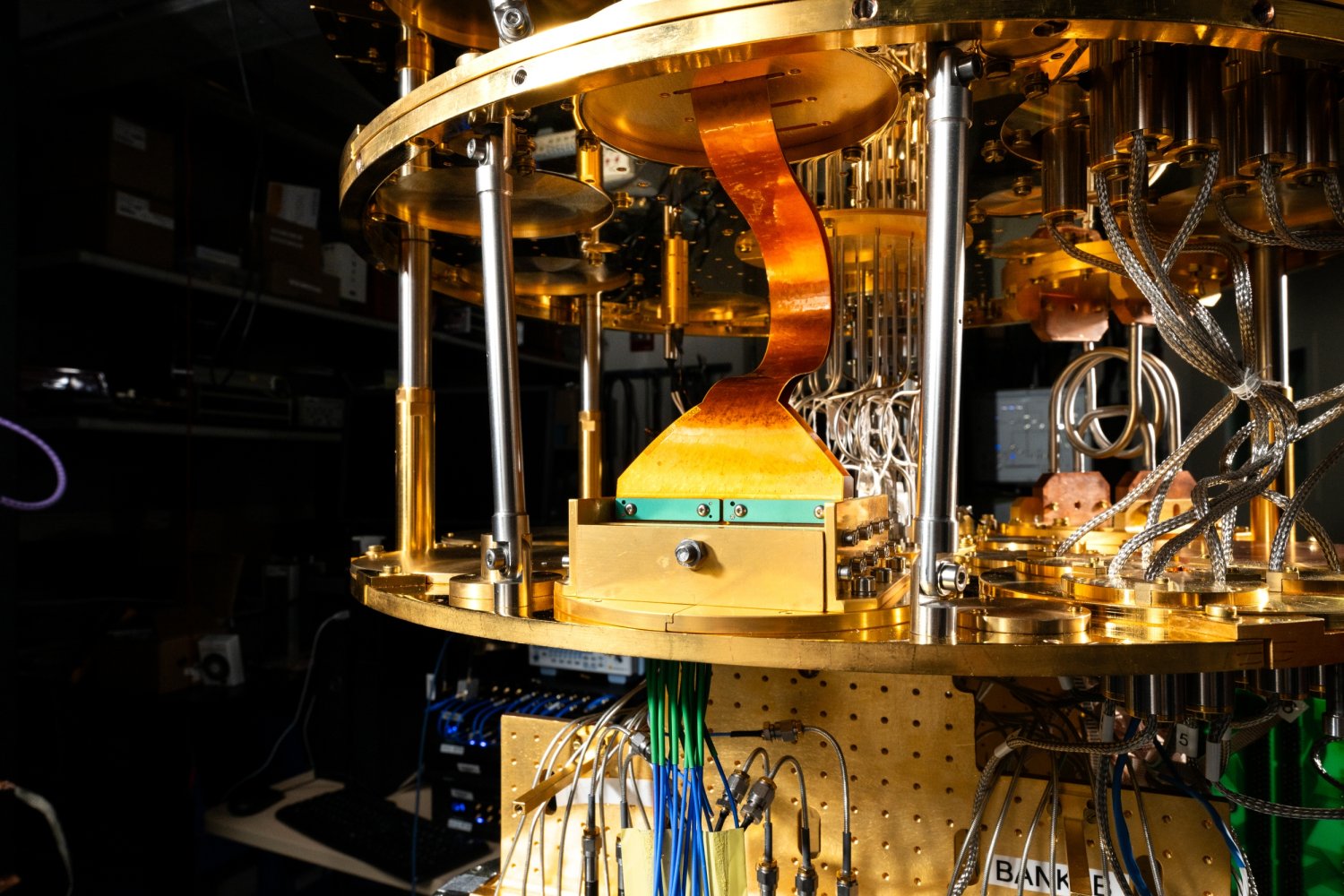
When Lasse Nielsen first unspooled the ribbon-like cable at Maybell Quantum’s lab in Colorado, it didn’t look like a breakthrough—just a thin, flexible strip of polymer and metal. But this unassuming strip, developed by MIT Lincoln Laboratory, could be the quiet hero in the race to build practical quantum computers. Quantum systems demand extreme conditions: temperatures as low as 5 millikelvins, colder than deep space, sustained in dilution refrigerators where even a whisper of heat can disrupt fragile qubits. For years, engineers have relied on rigid coaxial cables to transmit power and data into these frigid chambers, but those cables bring heat, bulk, and installation headaches. Now, a new solution is emerging—one that’s not only more efficient but could reshape how quantum hardware is built.
The challenge has been scaling. As quantum computers grow from a handful of qubits to hundreds or thousands, the tangle of coaxial cables needed becomes unmanageable. They’re stiff, generate thermal noise, and take days to install. MIT Lincoln Laboratory’s team, led by principal investigator John Cummings, saw an opportunity: what if quantum wiring could be manufactured like a printed circuit board? Their answer was the LF CryoTrace—a flexible, stripline-based cable with conductive layers sandwiched between polymer films, shielding signals and minimizing loss. Unlike traditional cables, these can be mass-produced using standard PCB fabrication, slashing costs and complexity.
Maybell Quantum has licensed the design and plans to integrate LF CryoTrace across all thermal stages of its dilution refrigerators. Initially, the cables will handle low-frequency tasks like thermometry and sensor readings, but future use could expand to higher-frequency applications. Nielsen notes that assembly tasks once taking days can now be completed in hours, thanks to the cable’s durability and ease of handling. Breakage from delicate coaxial handling—a common frustration in labs—is drastically reduced. “Over time, we think ribbonized, quantum-specific internal wiring can reshape manufacturing norms: faster and more consistent builds, easier field service, and more modular upgrades,” Nielsen says.
This shift matters because quantum computing is inching toward industry. Today’s systems are lab-bound, requiring expert teams and custom setups. Maybell’s mission is to change that—building tools that let commercial developers focus on innovation, not infrastructure. The LF CryoTrace cables are a step toward standardized, scalable quantum hardware. As Cummings puts it, “If you want to scale to hundreds of chips, you need interconnects that won’t drown the system in heat or complexity.” With this new wiring, the path to industrial quantum computing just got a little clearer.