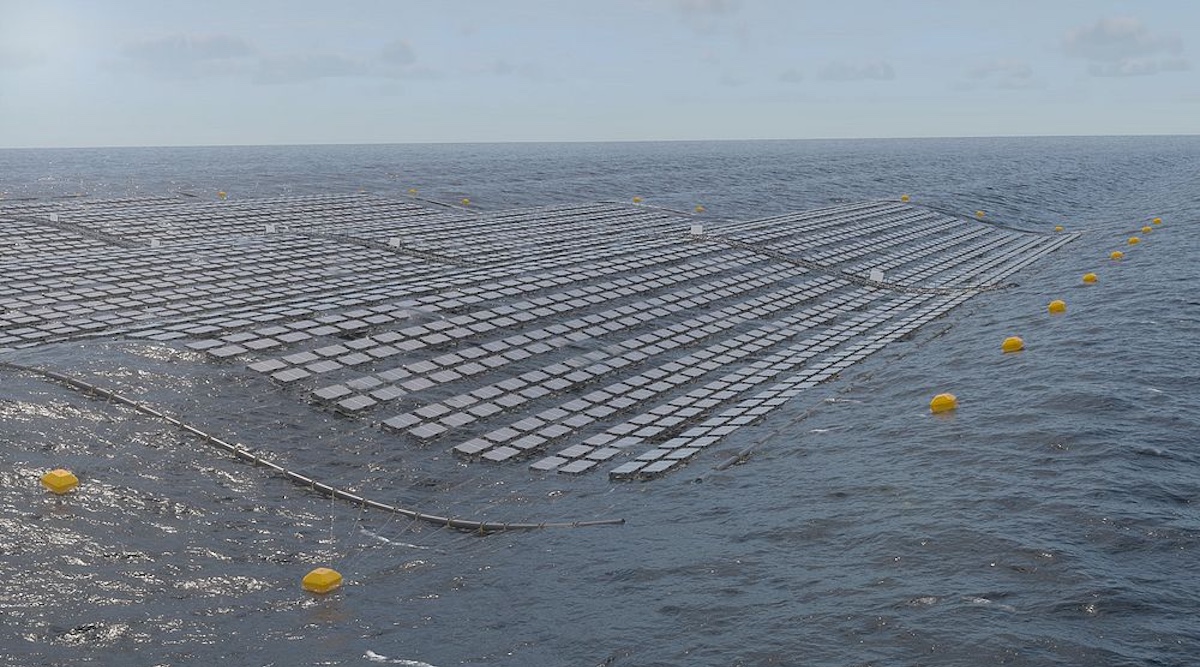
Imagine a field of solar panels floating on the ocean, swaying with waves up to 3.5 meters tall — roughly the height of a small giraffe — and still generating clean electricity. That future just got closer, thanks to a Norwegian company called Fred. Olsen 1848.
Their new floating solar system, called "Brizo," was recently verified by DNV, an independent company that checks whether new energy technology actually works as promised. This stamp of approval is a big deal — it tells investors and project developers that Brizo is ready for real-world use, not just laboratory experiments.
So what makes Brizo different from regular floating solar panels? Most floating solar setups only work in calm, sheltered water — think quiet lakes or protected bays. Brizo was specifically built to handle rougher conditions. It uses a flexible rope mesh and tensioning system that lets it move with the waves instead of fighting against them. This means it can survive waves up to 3.5 meters high, opening up possibilities in nearshore ocean areas and wave-prone inland waters that were previously off-limits for solar farms.
"Floating solar is entering a new phase of maturity, where the industry must move beyond sheltered waters to unlock meaningful scale," said Prajeev Rasiah, a senior executive at DNV. He pointed out that many regions around the world face shortages of land or competing demands for how land is used. Floating solar on water bodies could help those places generate more renewable energy without taking up precious space on shore.
The technology could be especially useful in coastal countries where flat, available land is scarce. Instead of building solar farms on expensive or environmentally sensitive land, communities could place these rugged panels on the water itself. The verification from DNV gives banks and investors confidence to fund pilot projects, so announcements about new test sites could come soon.
Fred. Olsen 1848 designed Brizo to support the growth of an emerging market in places previously considered too risky for floating solar. As climate goals push countries to scale up renewable energy, innovations like this one could help fill the gap — by turning bodies of water that were once off-limits into power-producing landscapes.