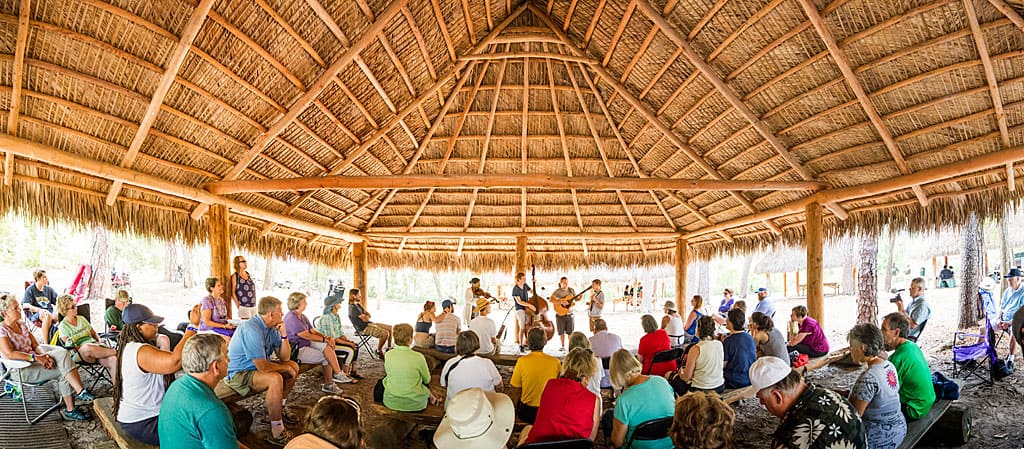
When Pete Seeger and the Weavers sent "Goodnight, Irene" soaring up the charts in 1953, they couldn't have known that a small gathering of folk music lovers in North Florida would still be celebrating that same spirit of acoustic guitars, banjos, and sing-alongs more than seven decades later. The Florida Folk Festival, held every Memorial Day weekend on the banks of the Suwannee River at Stephen Foster Cultural Center State Park in White Springs, has grown from a celebration of traditional folk music into something far more expansive — a living archive of Florida's cultural identity, where the past isn't cordoned off in museums but alive on a dozen stages and in the hands of visitors learning to square dance or weave pine needle baskets.
What makes this festival resonate is that it has never stopped evolving. While folk music remains its heartbeat, the event now stretches across blues, gospel, country, Latin, jazz, bluegrass, Caribbean, and zydeco — reflecting the many communities that have made Florida home. Over 300 performances will take the stage this May 22-24, drawing crowds who consistently rank it among the top 20 festivals in the Southeast.
The breadth of the musical lineup tells you everything about the region's character. Ben Prestage, who honed his craft in Florida fish camps and biker bars before touring more than a dozen countries, shares billing with Walter Parks, a sideman to Woodstock legend Richie Havens who has been invited by the Library of Congress to archive music from Suwannee River homesteaders. The Ben Flournoy Trio brings modern pop inflections to bluesy folk from Quincy, while Cortadito performs Son, one of Cuba's earliest folk traditions — the same style made famous by Buena Vista Social Club. Elder Charlot & the Akoustiks blend Haitian acoustic soul with Caribbean rhythms, and The Lee Boys carry forward the African American sacred steel tradition born in their Miami church, where family members began playing instruments at ages seven and eight.
But performances tell only half the story. The festival's mission centers on keeping cultural traditions alive through doing, not just watching. Workshops teach visitors how to play mandolin, construct split rail fences, or apply henna tattoos. The food vendors aren't serving generic festival fare — you'll find blue crab burritos, Jamaican patties, shrimp gumbo, and Beulah Baptist Church's storied chicken and dumplings alongside contemporary Caribbean and Cuban offerings.
It's this commitment to authenticity that distinguishes the Florida Folk Festival from countless other events. Rather than packaging culture as entertainment, the festival treats traditions as skills worth learning, recipes worth sharing, and stories worth preserving. The recognition of Jeanie Fitchen, who first performed at the festival in 1967 and received a Florida Folk Heritage Award in 2001, underscores the event's role as custodian of the state's artistic legacy.
This year's 70th anniversary feels like the right moment to witness what folk traditions look like when they're woven into daily life rather than stored away. The Suwannee River banks will be alive with music, craft, and the kind of cultural cross-pollination that happens when a community decides that keeping traditions alive means inviting people to join in.