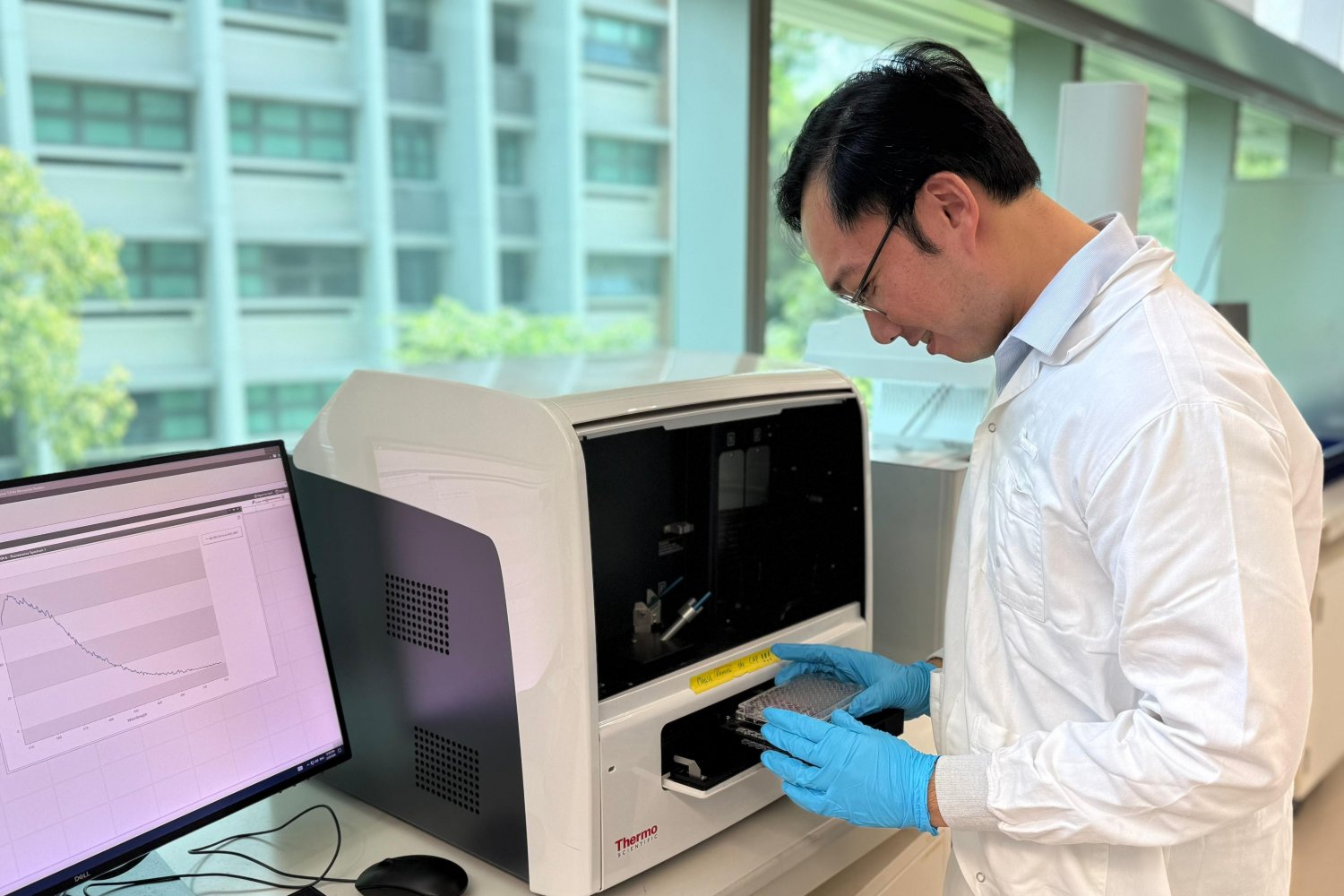
Mervin Ang watched as a vial glowed under ultraviolet light, its soft blue fluorescence revealing something invisible to the naked eye — a gut health biomarker called indole-3-propionic acid (IPA) — in less than ten minutes. This moment, rooted in a Singapore lab, marks the first time IPA has been detected in human plasma using a rapid, optical nanosensor, a breakthrough that could transform how we monitor gut health. IPA, a metabolite produced when gut bacteria break down dietary tryptophan, plays a crucial role in reducing inflammation and oxidative stress. Low levels have been linked to inflammatory bowel disease (IBD), Type 2 diabetes, and liver disease. Yet until now, measuring IPA required expensive, slow mass spectrometry, limiting its use in routine care. The new sensor, developed by researchers at Nanyang Technological University’s National Institute of Education (NIE), MIT, and the Singapore-MIT Alliance for Research and Technology (SMART), changes that paradigm. Built on carbon nanotube technology originally designed to monitor plant stress, the platform was re-engineered to detect IPA with remarkable precision. In collaboration with clinicians from the National University Hospital and NUS Medicine, the team tested the sensor on 125 human plasma samples — and found stark differences. Patients with Crohn’s disease and ulcerative colitis had IPA levels up to 50% lower than healthy individuals, a finding that could one day help doctors diagnose and track disease progression in real time. What sets this sensor apart is its dual-mode fluorescence: one visible light mode for quick, low-cost lab screening, and a near-infrared mode that paves the way for wearable, in vivo monitoring. Because near-infrared light can penetrate tissue, future versions could be integrated into patches or implants, alerting patients to gut inflammation before symptoms arise. For those living with chronic conditions like IBD, this could mean earlier interventions and greater control over their health. The study, published in Advanced Healthcare Materials, underscores a growing shift — from reactive medicine to proactive, personalized monitoring. As Michael Strano, the Carbon P. Dubbs Professor of Chemical Engineering at MIT, puts it: “We were able to apply it to this long-standing challenge in gut health.” This isn’t just a lab curiosity; it’s a tool inching toward clinics and homes, where it could turn a glowing signal into actionable insight.
← News
Medicine Breakthroughs Medicine Breakthroughs Health
Fluorescent nanosensor enables rapid, first-of-its-kind detection of key gut health biomarker
Optical/Fluorescent Detection method
Costly Mass Spectrometry Replaces
Rapid Results In Minutes Output
Indole-3-Propionic Acid (IPA) Biomarker
IBD, Diabetes, Liver Disease Monitoring Applications