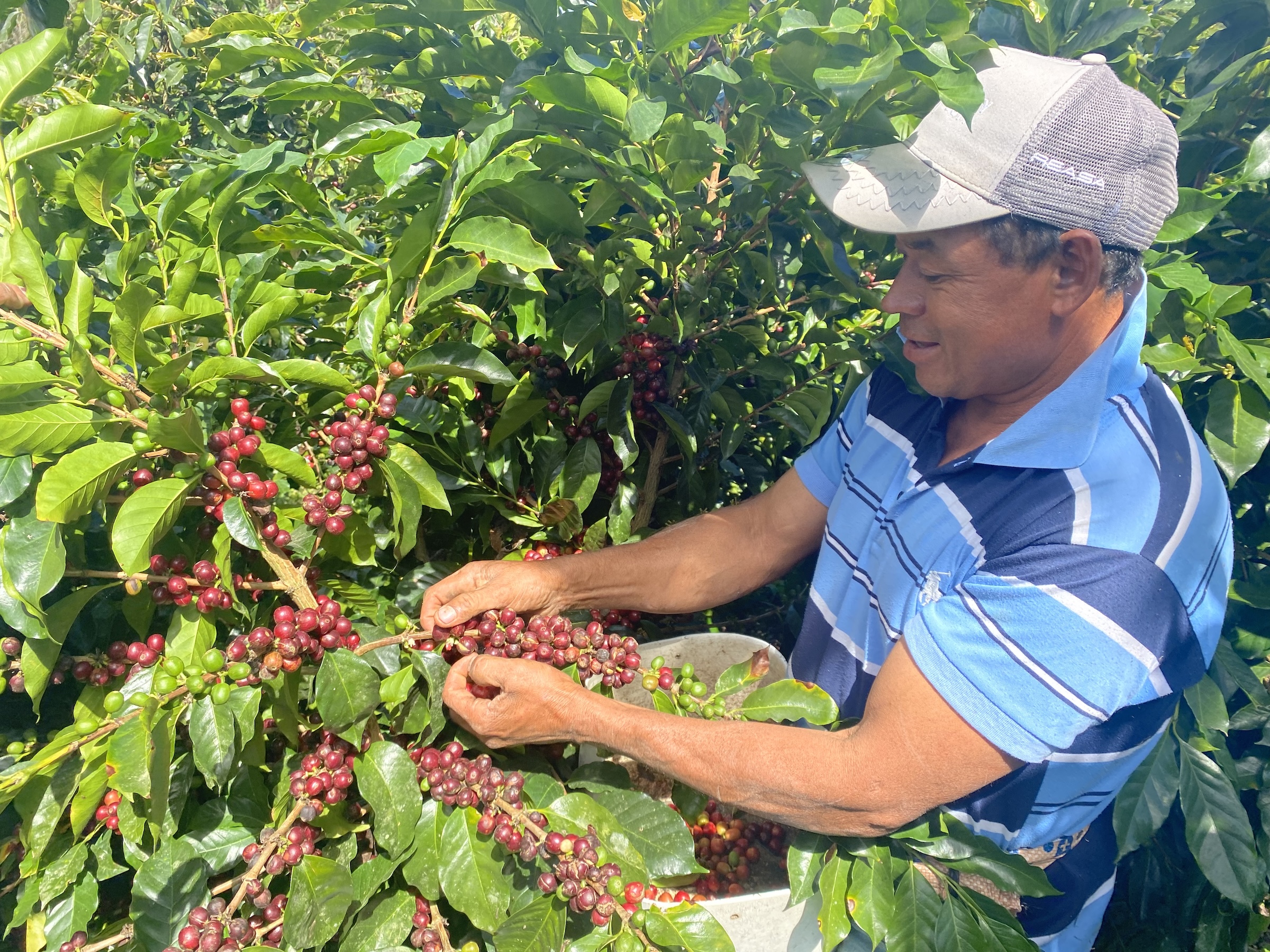
In the mountains of Concepción de Soluteca, Roberto González inherited a piece of land that his parents had cleared decades earlier with chainsaw and machete, planted with corn, beans, and bananas for bare survival. Twenty years ago, when coffee cultivation took off across Honduras, middlemen promised good money and banks offered loans. For a time, it worked—the crop brought income and lifted farming families toward dignity. Then came the collapse: depleted soil, vanished forests, destroyed water sources, and in 2012, a fungal disease called coffee rust that threw thousands into poverty and forced migration. "We destroyed the foundations of our livelihoods, but it was out of ignorance; we just didn't know better," González tells Mongabay.
Now, unexpectedly, European regulation is becoming the force that reverses this cycle of destruction.
The European Union's Deforestation Regulation, or EUDR, requires companies importing coffee into Europe to track their supply chains all the way back to small-scale farmers. For a nation whose economy depends on coffee exports—Honduras ships 69 percent of its coffee to Europe—compliance has become non-negotiable. But rather than crushing farmers, the regulation is forcing a modernization that many see as overdue. González, now 39, is one of 19 members of the Union and Strength Agricultural Cooperative, which sells to Becamo S.A., one of Honduras's largest exporters. Becamo buys beans from nearly 10,000 small farmers spread across remote regions built on decades of informal practices.
The real work has been transforming that informality into verifiable systems. Beginning in 2021, well before the regulation officially took shape, Becamo's biggest client in Germany, Neumann Kaffee Gruppe, developed a traceability app now used across its entire supply chain. The app demands documentation of everything: land titles, certifications, fertilizers, employee counts, and salaries. Farmers must complete lengthy questionnaires and allow agronomists to survey their fields. They're trained to build latrines for harvest workers, manage soil and shade, and protect water sources—practices that were never incentivized before.
The investment has been substantial. Since 2021, Becamo has tripled its agronomic consultants from 16 to 40 regional representatives and nearly doubled its sustainability staff from 26 to 51 employees. Every consultant has been sent into the field to work directly with farmers, translating EU requirements into actionable guidance. José Manuel Calero Moraga, director of sustainable producer services at Becamo, explains the necessity plainly: "The whole process has forced us to pay even more attention to production conditions on the farms."
What's remarkable is that farmers themselves recognize the benefit. Gonzalo López, a neighboring farmer, acknowledges the difficulty but sees the outcome clearly—his harvests have improved as practices have modernized. For González, it means a pathway forward that doesn't require abandoning his inheritance or joining the rural exodus that has emptied Honduras's highlands for decades.
The EUDR is still new, compliance challenges remain, and questions linger about digital accessibility and data ownership in remote regions. Yet for Honduran coffee farmers who spent generations in ignorance of better ways, facing a choice between irreversible decline and transformation, the regulation has become an unexpected opportunity to build livelihoods that regenerate rather than destroy.