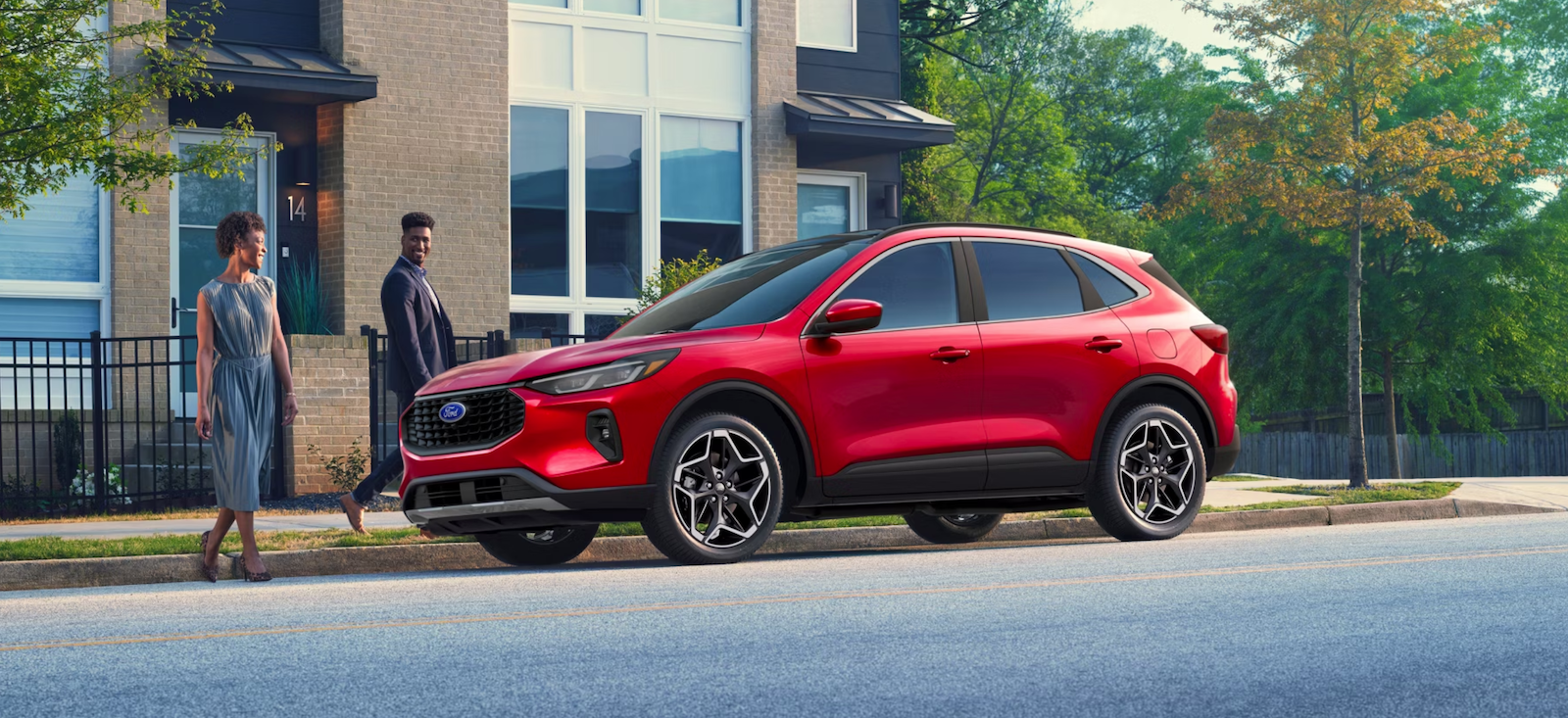
In 2029, Ford plans to resurrect the Escape nameplate—but this time as a fully electric vehicle built on the company's new Universal EV platform at the Louisville Assembly Plant in Kentucky. The move signals a dramatic shift for one of America's most popular compact SUVs, discontinued after the 2026 model year to make room for Ford's nearly $2 billion retooling effort aimed at mass-producing affordable electric vehicles.
The timing matters. The U.S. EV market is cooling just as competition from low-cost Chinese manufacturers heats up, making the affordability question increasingly urgent for legacy automakers. Ford's solution: the Universal EV platform, or UEV, designed from the ground up to bring down production costs without sacrificing capability. CEO Jim Farley has been explicit about the stakes. "We've designed this vehicle to be the most affordable and have the lowest operating costs of any EV for customers," he said of the first vehicle to use the platform—a mid-size pickup launching in 2025 from the same Louisville facility. That same philosophy will carry forward to the new electric Escape, currently code-named U833.
What makes this particularly significant is the platform's flexibility. The UEV architecture can support up to eight different body styles: compact and mid-size crossovers, three-row SUVs, pickups, cargo vans, and passenger vans. Ford's roadmap shows plans for both two- and three-row SUVs, a subcompact sedan, a larger sedan, and additional vans—all arriving on undisclosed timelines. The electric Escape will be the second vehicle built on this foundation, following the new pickup.
The original Escape was a revolution in its own right when it launched—a fuel-efficient, affordable compact crossover that helped define the segment. Bringing it back as an EV, priced competitively against gas-powered rivals, could prove disruptive in a market starved for cheap electric options. Right now, American shoppers interested in affordable EVs have few choices. That gap is precisely what inspired Ford to pursue the UEV strategy in the first place: watching how Chinese manufacturers like BYD scaled affordable, advanced electric vehicles at volumes legacy automakers couldn't match.
The Louisville Assembly Plant itself represents Ford's largest commitment to domestic EV production. Once retooled, it will anchor the company's push to compete on cost rather than waiting for battery prices to fall naturally—a race against time as foreign competitors tighten their grip on the low-cost segment.
Still, skepticism is warranted. Legacy automakers have announced ambitious EV timelines before, missed targets, and pulled back on investment. Ford's track record on platform promises doesn't inspire blind confidence. But the bet on affordability rather than luxury positioning, the commitment of $2 billion to a single facility, and the willingness to resurrect a beloved nameplate suggest Ford is taking this seriously. If the electric Escape arrives in 2029 at a genuinely competitive price point, it could reshape how Americans think about the transition to electric vehicles—not as a premium purchase, but as an accessible choice.