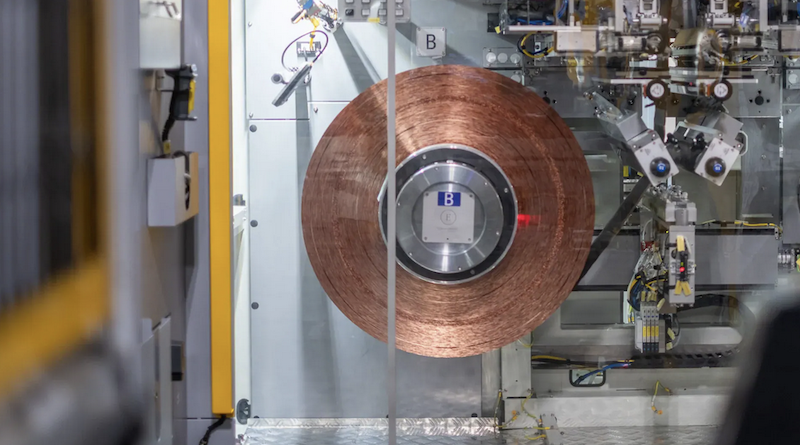
At BlueOval Battery Park in Marshall, Michigan, 500 workers have already traded resumes for hard hats, welding gear, and robotics training — and by year’s end, that number will swell to 800, all building the next chapter of American auto manufacturing. Ford isn’t just electrifying its lineup; it’s reigniting its industrial footprint with a bold bet on lithium-iron-phosphate (LFP) battery technology, a move poised to make electric vehicles accessible to millions of budget-conscious drivers. While political winds have shifted and federal incentives wavered, Ford’s commitment to affordability and domestic production remains on track, anchored by the development of its Universal EV Platform and a new generation of safer, longer-lasting, lower-cost batteries.
This push matters because the biggest barrier to EV adoption isn’t desire — it’s dollars. Ford’s LFP batteries, set to debut this year, are engineered to slash upfront costs without sacrificing durability or safety. Unlike traditional lithium-ion batteries that rely on expensive and ethically fraught materials like cobalt, LFP chemistry sidesteps supply chain risks while offering superior cycle life — a key factor in long-term ownership costs. The company has made a compelling promise: its upcoming midsize electric truck, the first vehicle on the Universal EV Platform, will be cheaper to own over five years than a three-year-old used Tesla Model Y. That’s not just competitive — it’s transformative.
The factory at the heart of this effort, BlueOval Battery Park Michigan, is expected to create 1,700 American jobs, a significant investment in local workforce development. Employees aren’t just assembling batteries — they’re being trained in electrochemistry, robotics, and software systems, building skills that will power the future of manufacturing. Ford’s partnership with CATL, the leading Chinese energy storage firm, brings cutting-edge battery design to U.S. soil, with technology licensed and adapted for domestic production. Meanwhile, Rivian, another American EV pioneer, has recently laid off hundreds of workers — about 2% of its workforce — as it recalibrates its own cost-reduction strategy, highlighting the high-stakes race to crack the affordable EV code.
Ford’s timeline is aggressive: LFP prismatic batteries are slated to begin shipping this year, powering a vehicle designed from the ground up for efficiency and value. This isn’t a side project — it’s a strategic pivot toward democratizing electric mobility. As off-lease EVs flood the used market and reshape consumer expectations, Ford is positioning itself not just to compete, but to lead in the next era of transportation. The message is clear: the future of driving isn’t just electric — it’s equitable.