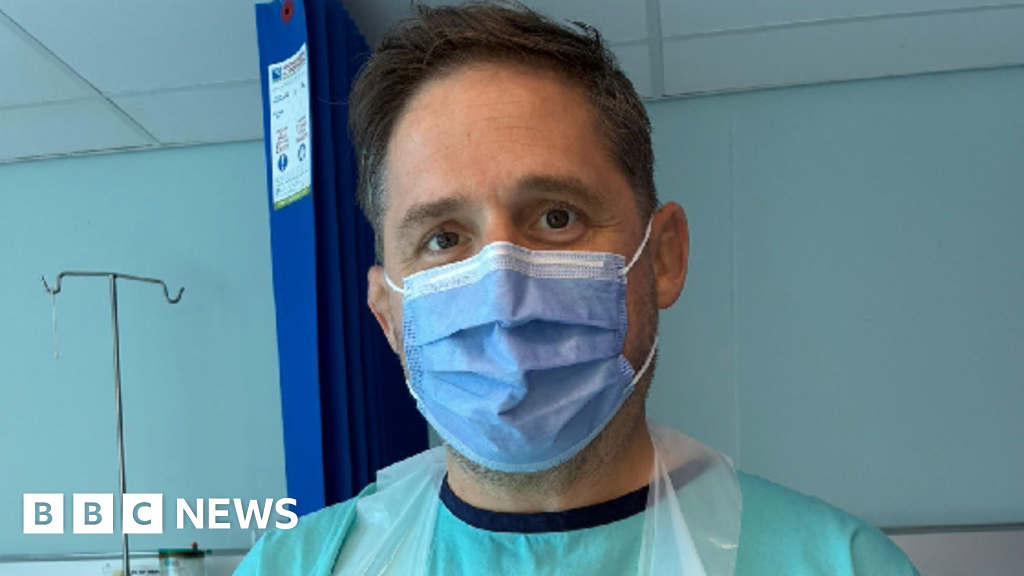
Rhys Thomas held his own beating heart in his hands after surgeons removed it, a moment he describes as "crazy" and "very special." The 43-year-old former Wales rugby international had just received a life-saving transplant in Cape Town after spending nearly a decade on the UK transplant list, watching his health slip away while waiting for a donor organ that never seemed to come.
Thomas first developed heart problems in 2006 after suffering a minor heart attack while playing for Dragons RFC. That incident led to emergency quadruple bypass surgery, which he survived but which effectively ended his rugby career when he collapsed with another heart attack during Scarlets training in 2012. For the next twelve years, he lived tethered to a battery-powered left ventricular assist device (LVAD)—a mechanical pump connected to an external controller and batteries worn outside his body—that kept his failing heart pumping. His model had become the longest-lived LVAD on record, a grim reminder that his device could fail at any moment.
By 2024, Thomas's situation had become desperate. Despite spending almost a decade on the UK transplant list, he was classified as "routine" rather than "urgent" or "super urgent"—the system's assessment that he wasn't sick enough to warrant priority. Frustrated with a system that wasn't working for him, Thomas made the bold decision to move back to his hometown of Cape Town, South Africa, leaving his four adult children in Wales. "It was a big move, a big, brave decision," he said. "But it was what I believed was right for me."
Just 18 months after joining the Cape Town transplant list, everything changed. In April, sitting in traffic, Thomas received the call every transplant patient dreams of: three donor hearts had become available in a single day, all matching his blood type and size. With only three hours to reach the hospital—doctors prefer a donated heart to remain outside the body for no more than six hours—Thomas picked up his partner, spent half an hour at the beach in prayer and meditation, and arrived at the hospital ready.
The surgery took six hours as surgeons carefully worked through scar tissue from his third open-heart operation. When the donor heart was implanted, it began beating immediately. When Thomas awoke two days later, his children were waiting at his bedside. Without the transplant, doctors revealed, he might have had only two weeks left to live.
The transformation has been profound. "I can't really explain how it feels to have a transplant, to be walking around without my machine and to be alive," Thomas said. "It's very special." Before the surgery, he couldn't walk forty metres without stopping four or five times to catch his breath. The past twelve years had forced him into a painful reckoning with mortality. "I was filled, at moments, with fear—fear of dying, what I was leaving behind, my children, my partner, my friends and family," he reflected. "So it's just an absolute blessing, to be honest, that I'm still here."
Thomas credits meditation, self-improvement work, and spirituality with helping him accept death and find peace before the transplant. That acceptance, he says, freed him to truly live when he was given a second chance. "I was just in tears most days, just with immense gratitude," he said of waking up after surgery.