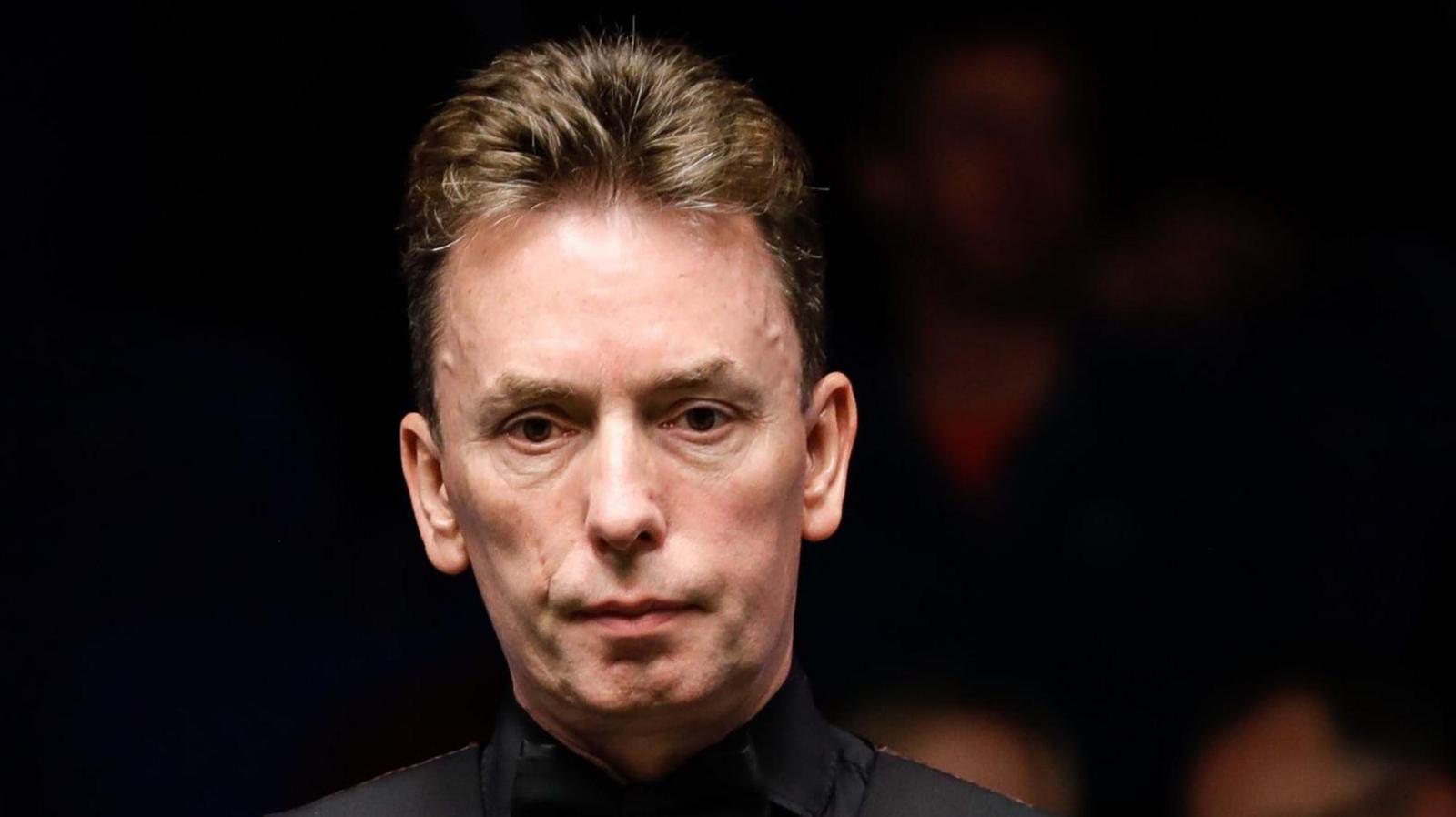
Ken Doherty, the Irishman who won snooker's greatest prize with a cue that cost just £2, has announced his retirement after 36 years as a professional player. At 56, the Dublin native is stepping away from a sport that shaped his entire adult life—one he pursued with nothing but a bag, a cue, and £500 in his pocket when he moved to London as a young dreamer in the late 1980s.
Doherty's legacy is singular and enduring: he remains the only player from the Republic of Ireland to ever win the World Snooker Championship, a distinction that looms large in his homeland's sporting history. That triumph came in 1997 at the Crucible in Sheffield, when he defeated seven-time champion Stephen Hendry 18-12 in a final that ranks among the sport's great upset victories. The improbability of the moment—an Irish underdog toppling a seemingly invincible Scottish giant with humble equipment—cemented his place in snooker folklore. "When I first picked up a cue as a kid, winning the World Championship was my dream," Doherty reflected. "After Alex Higgins winning it in 1982 and Dennis Taylor in 1985, these were inspirational moments for me. To emulate what they achieved and lift that cup up was a real honour and a sense of pride."
Beyond that singular crowning achievement, Doherty built a substantive professional record. He turned professional in 1990 and accumulated six ranking titles and seventeen other trophies. He reached the World Championship final twice more—in 1998 and 2003—and came tantalizingly close to winning snooker's other elite competitions, the Triple Crown events. He reached three UK Championship finals and finished runner-up in the Masters twice. At his peak during the 2006-07 season, he climbed to world number two, a testament to his consistency and skill.
Yet like many athletes, Doherty faced the inevitable arc of decline. He hadn't qualified for the World Championship since 2014, and in recent years had split his energy between playing and punditry work, competing on the main tour only through an invitational card as his ranking slipped. The decision to retire came not with bitterness, but with clarity. "I wasn't going anywhere and even if I played for another couple of years, I'd come to the realisation I wasn't going to get any better," he said. "I wasn't going to compete like I used to. I probably should have done it a few years ago, but I love the game. I love competing and I love playing."
What strikes most is not regret but relief. Doherty admits the initial sadness of retiring gave way to acceptance and, ultimately, peace. "It was sad initially when I made the decision, but I'm happy with it now," he said. "I'm going to miss it for sure, but it has come as a relief." He held out hope that something might change, that the hunger might return or the form might reignite, but snooker had other ideas. The chance to return to the Crucible for one final World Championship appearance—a fitting bookend to his career—had slipped beyond reach.
What remains is a legacy of inspiration, particularly for Irish snooker players. Doherty's 1997 victory opened a door in the imagination of a generation. He showed that greatness could come from unlikely places, that determination and a £2 cue in the hands of a kid from Dublin could move mountains. As he puts away his cue after nearly four decades, that dream—the one he carried in his pocket alongside his £500 all those years ago—has long since been realized.