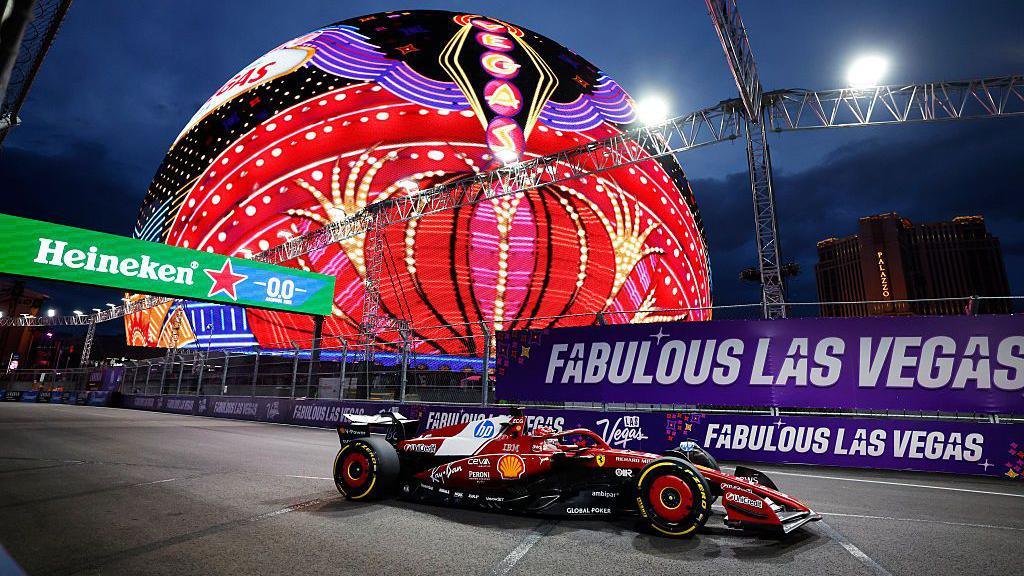
Las Vegas locked in a Formula 1 partnership through 2037, securing one of the sport's most spectacular and unlikely chapters for at least another decade. What began as a gamble—the city's least profitable weekend of the year, the one before Thanksgiving, had become one of its most coveted slots on the global racing calendar in just three years.
The success didn't come by accident. Formula 1's willingness to invest its own capital in Las Vegas proved to be the decisive factor that convinced the city to embrace the event and permit the legendary race to thunder down the Strip in front of the casino hotels that define the cityscape. That commitment from the sport's leadership signaled serious intent, transforming skepticism into partnership.
The numbers tell the story of transformation. Since the race began in 2023, it has delivered $3.2 billion in cumulative economic impact for Las Vegas—a staggering validation that this wasn't merely a spectacle, but a genuine economic engine. The 2025 race alone generated $43 million in tax revenue for the city, meaning Las Vegas isn't just hosting an event; it's fundamentally reshaping its revenue calendar.
For decades, the weekend before Thanksgiving was the weakest link in Las Vegas's year—a period when visitors stayed away and casinos ran lean. Now that same weekend hosts the glittering parade of Formula 1's fastest cars, A-list celebrities, and the world's media attention. The transformation is absolute. The race has become not just an economic windfall but a cultural marker, a moment when the spotlight of the entire world turns toward the desert and its neon-lit heart.
Steve Hill, president and CEO of the Las Vegas Convention and Visitors Authority, called the contract extension "a major moment for both Las Vegas and the grand prix." In his view, the race has already accomplished something rare: "In just three years, the race has become a signature global event—putting Las Vegas at the centre of culture, competition and entertainment during race week." Hill sees the grand prix as more than a single weekend; it's part of a broader reinvention of how Las Vegas presents itself to the world. "The event continues to reinforce our evolution as a premier sports and entertainment destination," he said.
That evolution matters. For generations, Las Vegas marketed itself primarily around gambling and nightlife. The Formula 1 race opened a new chapter—one where world-class athletics, cutting-edge technology, and global competition became central to the city's identity. Families who might never set foot in a casino came for the racing. International visitors who knew Las Vegas only by reputation experienced its energy and hospitality directly.
Looking ahead to 2037, the partnership represents stability for Formula 1 and a sustained economic boost for Las Vegas. The race isn't a novelty anymore; it's infrastructure, woven into the city's calendar and identity. For a sport always seeking to expand its global reach, Las Vegas has become a flagship venue—proof that with investment, vision, and the right location, a new race can become instantly legendary.