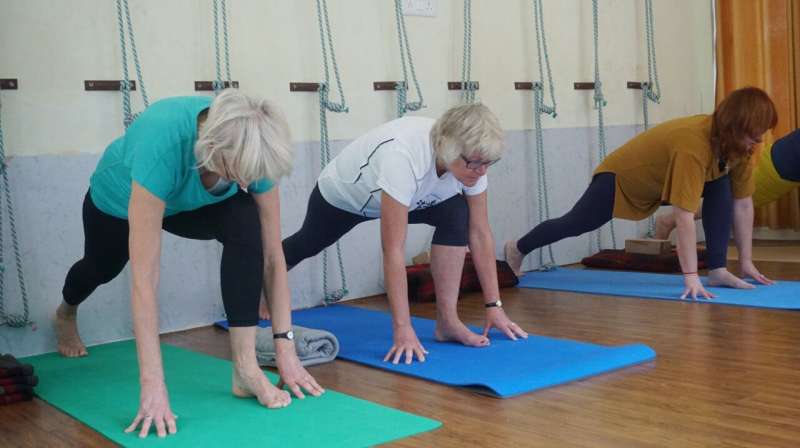
Christopher Sciamanna sat with a simple, almost heretical idea: what if older adults didn't need hour-long gym sessions to transform their strength? What if four minutes a day could be enough?
That question has just been answered, and the results may reshape how millions of people over 65 think about staying strong and independent. A new study from Penn State College of Medicine, published in PLOS One, shows that just four minutes of daily resistance training produces dramatic improvements in mobility and physical capability within 12 weeks. For adults who have written off exercise as too time-consuming or too demanding, these findings arrive as genuine relief.
The research builds on growing evidence that the human body responds rapidly to even minimal resistance training. In the current study, called FAST-2, researchers tracked 97 participants with an average age of 74. Half received a specific four-exercise regimen—pushups, chair stands, two-arm rows, and stair stepping—performed for 30 seconds each, with 30-second rest intervals in between. The other half received no intervention. The results were striking: participants who stuck with the routine showed significant improvements in standing up quickly and balancing on one leg, the very movements that matter most in daily life.
Why does this matter? Falls rank among the leading causes of death and serious injury for adults over 65, according to the Centers for Disease Control and Prevention. Strength, mobility, and balance are the barriers between independence and dependence, between staying in your home and needing institutional care. When Sciamanna's team measured participants' ability to rise from a chair or stand steadily on one leg, they were measuring not just fitness metrics but the capacity to live without help.
The current participants started by averaging just 18 minutes of exercise per week—well below the recommended 150 minutes of moderate activity. Many had avoided strength training altogether, often because they believed it demanded more time and pain than they could manage. "The human body is designed to improve very quickly," Sciamanna said. "And just a few repetitions of an exercise performed regularly can lead to huge improvements."
The program itself was deliberately accessible. Participants received elastic resistance bands and an adjustable stepper. For those who couldn't manage full pushups, modifications allowed them to work from a countertop or wall. Chair stands could be performed with hands resting on the knees. As participants grew stronger, they advanced to harder versions—the full pushup, a higher step height—keeping the work challenging without overwhelming them.
This wasn't theoretical speculation. The team had tested similar ideas before: an earlier study called FAST-1 had shown that just 30 seconds of daily pushups and squats produced measurable improvements in squat performance over six months. Other research globally has confirmed that a few sets per week can produce nearly the same gains as longer routines. Yet most older adults—fewer than one in five—actually meet the recommended two days per week of muscle-strengthening activity.
The barrier, researchers have found, isn't capability but belief and friction. "If we can make it short, we're part of the way there," said co-author Smita Dandekar. Four minutes removes the excuse. It fits into morning routines, requires no commute and no special equipment beyond resistance bands. For a generation told that meaningful change demands sacrifice, this study whispers something gentler: sometimes small, regular actions create outsized results.