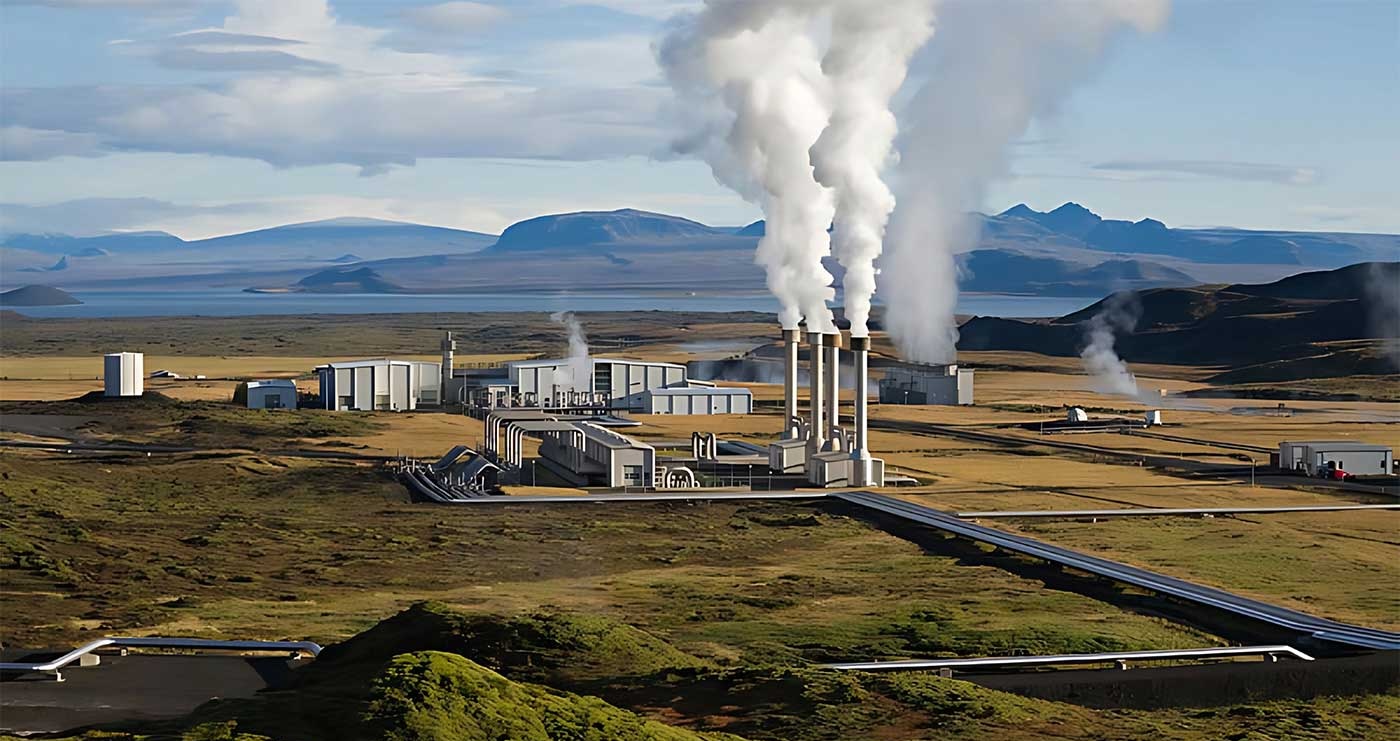
Four Western US states have just formed an unlikely alliance to unlock one of America's most underutilized energy resources. Arizona, Colorado, New Mexico, and Utah announced the Mountain West Geothermal Consortium, a coordinated push to harness the hundreds of gigawatts of geothermal energy lying beneath their feet—and to prove that clean, reliable power can emerge from the very same drilling expertise that built the oil and gas industry.
Geothermal energy has long been America's forgotten stepchild in the renewable energy world. For decades, natural geothermal conditions—the precise combination of heat, rock, and water needed for power generation—existed only in scattered pockets across the Pacific Northwest and western regions beyond the Rocky Mountains. As a result, geothermal accounts for just around 1% of total installed US generating capacity, dwarfed by wind and solar competitors.
But the picture shifted dramatically in the early 2000s, when geothermal innovators began adapting drilling techniques and technologies borrowed directly from the oil and gas sector. These advanced and enhanced geothermal systems create the underground conditions needed to generate power where nature hasn't provided them naturally, suddenly opening vast new territories for development. Now, where recovery once seemed impossible, geothermal energy is becoming economically viable across much broader regions of the country—including the Mountain West.
The new Consortium reflects serious momentum. The US Geological Survey recently deployed cutting-edge underground mapping tools to reassess geothermal potential in light of these technological advances. In June 2025, the agency announced that New Mexico alone harbors 163 gigawatts of potentially recoverable geothermal resources. That single state's potential dwarfs the nation's current total installed geothermal capacity. Meanwhile, the think tank Center for Public Enterprise calculated that the entire US holds approximately 5,500 gigawatts of geothermal potential, with much of it concentrated in Western states.
The Mountain West Geothermal Consortium brings together the governors of all four member states alongside experienced energy office personnel, environmental regulators, and financial officers responsible for both managing public resources and attracting private investment. The group has already begun producing research papers while focusing on planning and coordination to remove barriers that have historically slowed geothermal development—outdated regulations, interconnection challenges, capital access, and restrictions on state and federal land use.
What makes this moment particularly striking is how the old energy establishment is making room for the new. Energy Secretary Chris Wright, who leads the Department of Energy under the Trump administration, built his career in oilfield services and previously served as CEO of Liberty Energy. In 2022, Wright's company invested $10 million in Fervo Energy, an emerging geothermal innovator that has since attracted backing from other fossil fuel firms like Devon Energy. The Mountain West Geothermal Consortium itself lists Halliburton—a major oilfield services company—among its advisors.
This convergence isn't cynical; it's practical. The drilling knowledge and capital networks that developed the fossil fuel industry are now being redirected toward scaling geothermal energy. "There are hundreds of gigawatts of always-on, clean baseload energy underlying the Mountain West," the Consortium states. "We've learned how to harness it. Now it's time to scale it." For a region sitting on an energy treasure that could transform America's power grid, that moment may finally be arriving.