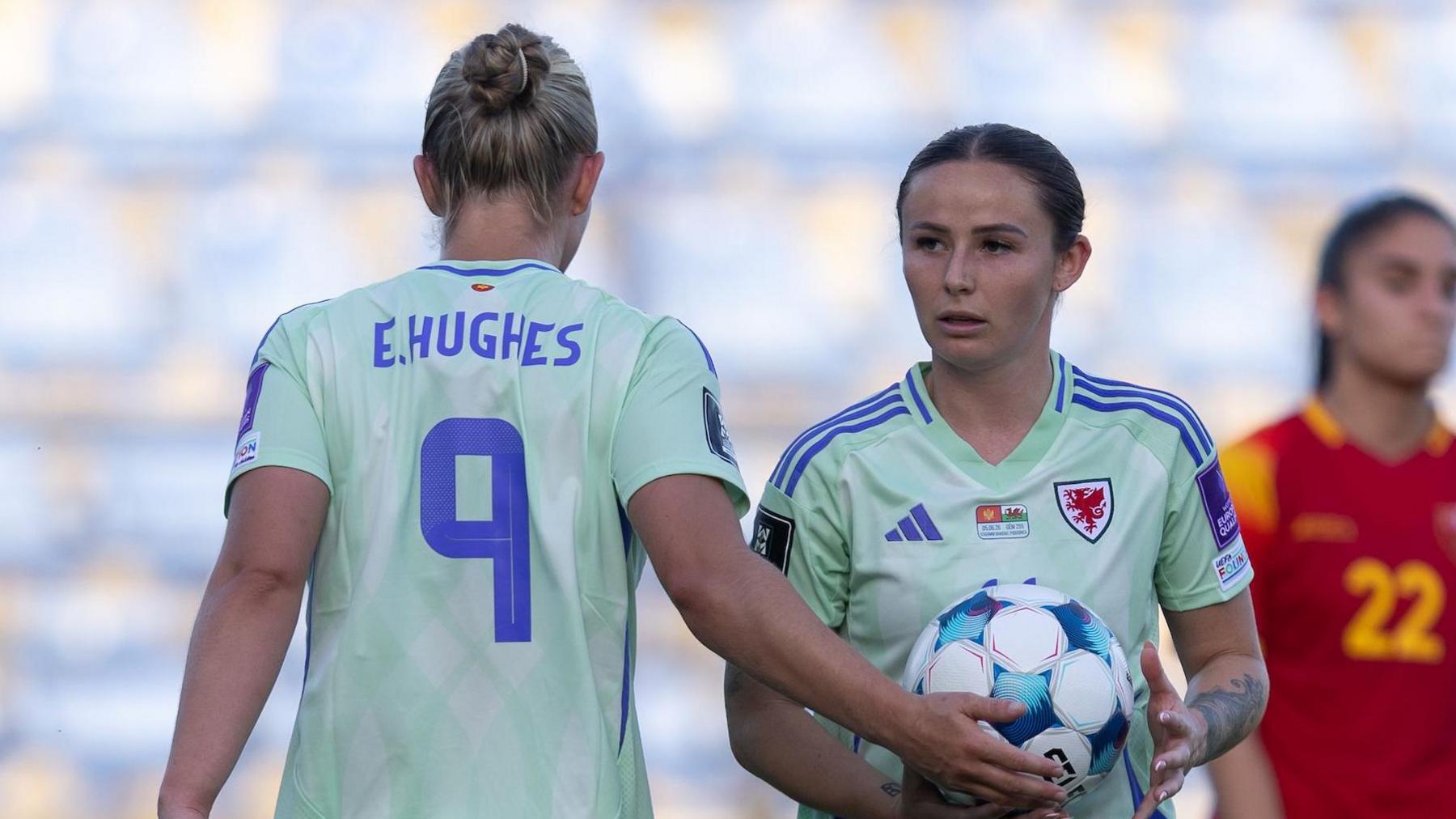
Twenty-year-old Tianna Teisar sits at a crossroads—a talented Wales forward without a club after Bristol City Women announced her departure this summer, and yet perfectly positioned to catch the attention of potential suitors. The timing is not incidental. Wales's top finish in Women's World Cup qualifying has created an unexpected stage for free agents like Teisar, thrusting them into the spotlight at precisely the moment when they need visibility most.
It's a paradox of modern football: success brings scrutiny, and scrutiny brings opportunity—but only if players and their support systems can navigate the uncertain weeks between seasons. Teisar spent last season on loan at Plymouth Argyle, building experience away from her academy home, and now finds herself searching for her next chapter just as Wales prepares for what could be the most consequential moments of the team's history.
Manager Rhian Wilkinson understands the stakes intimately. She leads a squad that has earned a place in the World Cup qualifying play-offs by topping their qualifying group, an achievement that has already begun reshaping the careers of her players. Several squad members are currently without club contracts, a vulnerability that would trouble any manager. Yet Wilkinson has chosen not to see this as crisis—instead framing it as an inescapable part of the rhythm of professional women's football.
"It's tough because I want my players to be in the best possible situations at club level and equally in situations that are nurturing them and supporting them," Wilkinson explained. Rather than abandon her players to navigate the transfer market alone, she has committed to offering whatever support she can muster. "I hope very much I can give them any support possible to make sure that they have a club as soon as it works for them."
This stance reflects a deeper truth about women's football development in Wales. These players are not simply waiting passively; they are performing at one of the highest levels of international competition, and that performance is their resume. The visibility that comes with qualifying for the play-offs—a two-legged semi-final tie in October that represents Wales's first-ever genuine chance at reaching a Women's World Cup—transforms free agents from unknowns into prospects.
The draw for those October play-offs takes place on 18 June, meaning Wilkinson's squad will soon learn not only their opponents but also have a clearer timeline for their next phase. Between now and then, players like Teisar have a window in which to secure new homes. The convergence of timing is intentional: international tournaments have long served as shop windows for club scouts and managers, and the stakes have rarely been higher for Wales.
What makes this moment distinctive is not simply individual ambition but collective momentum. Wales's qualification success creates a halo effect, suggesting that players from this group possess something worth investing in. For Teisar and others in similar positions, that perception could prove transformative. The road to the World Cup begins not in October, but in the club negotiations happening right now.