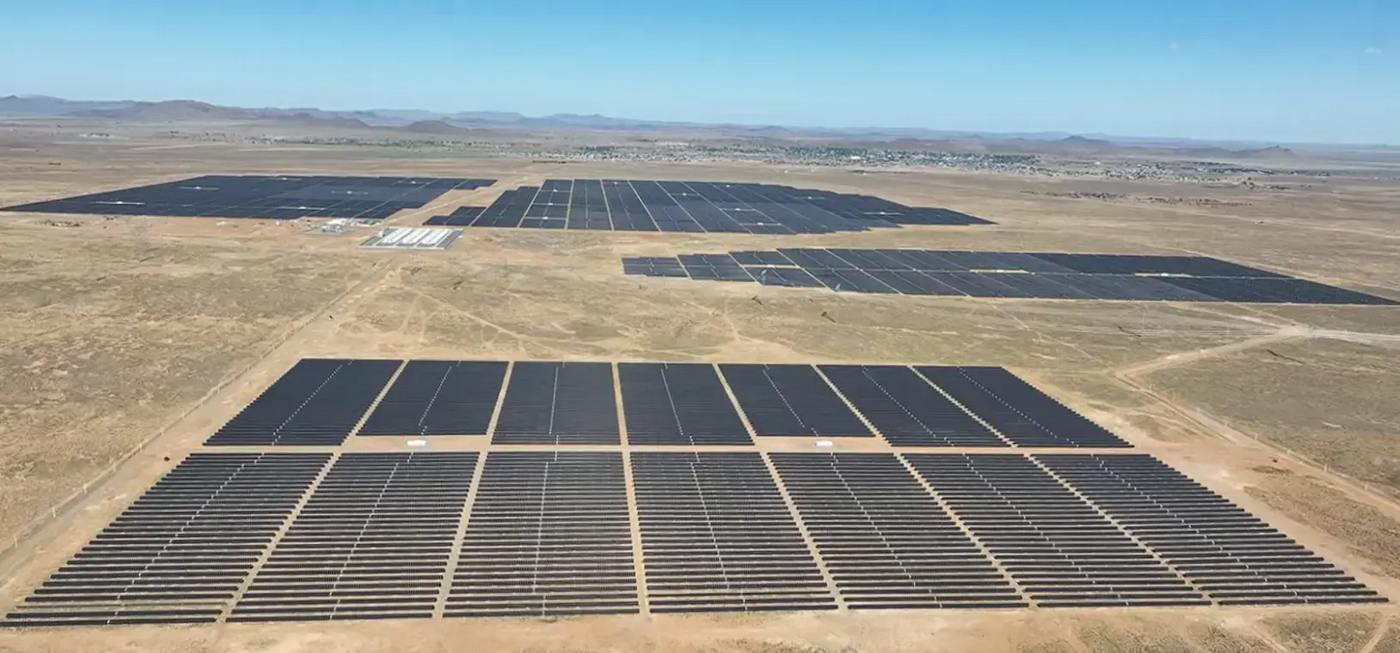
Just before sunrise in South Africa's Northern Cape province, a stretch of desert quietly began doing something remarkable: it started feeding clean electricity to the national grid for the very first time. That moment marked the switch-on of the Hydra Project, the largest hybrid renewable energy plant in all of Africa — and it will light up around 200,000 homes.
The project belongs to TotalEnergies, the big French energy company, which built it with two South African partners: Hydra Storage Holding and Reatile Renewables. Together they combined a 216-megawatt solar farm with a giant battery that can hold 500 megawatt-hours of energy. Think of the battery as a storage tank for sunshine — it collects solar power during the day and releases it later, so the plant can keep delivering electricity even after the sun goes down.
That steady supply is the heart of the design. Between 5:00 a.m. and 9:30 p.m., the facility guarantees 75 megawatts of renewable electricity flowing constantly into South Africa's national grid, under a 20-year power purchase agreement. In total, the plant will generate a staggering 400 gigawatt-hours of electricity every year — enough to power roughly 200,000 South African households.
Why does this matter? South Africa still relies heavily on coal, and its grid has faced serious strain in recent years. Projects like Hydra help ease that pressure while cutting planet-warming emissions at the same time. "It enables us to supply dispatchable renewable power to the South African grid, thereby strengthening the country's energy security while decarbonizing its electricity generation," said Magali Pailhé, Managing Director of TotalEnergies Southern Africa.
Hydra also marks a milestone for the whole continent. It is now Africa's largest combined renewable energy and storage project — a title that may not last long, since Egypt is planning an even bigger solar, wind, and battery complex along the Red Sea coast with the firms Orascom Construction, Engie, and Toyota Tsusho. That project could add up to 6,000 megawatts of capacity.
For South Africa, the benefits are immediate: this one plant boosts the country's clean energy security while creating a template other nations can copy. It also grows TotalEnergies' renewable portfolio to just under 36 gigawatts of gross capacity worldwide, proving that even the world's largest oil and gas companies can be part of the clean-energy transition.
Hydra is more than a solar farm — it's proof that Africa can harness its world-class sunshine to build a cleaner, more reliable energy future, one desert panel at a time.