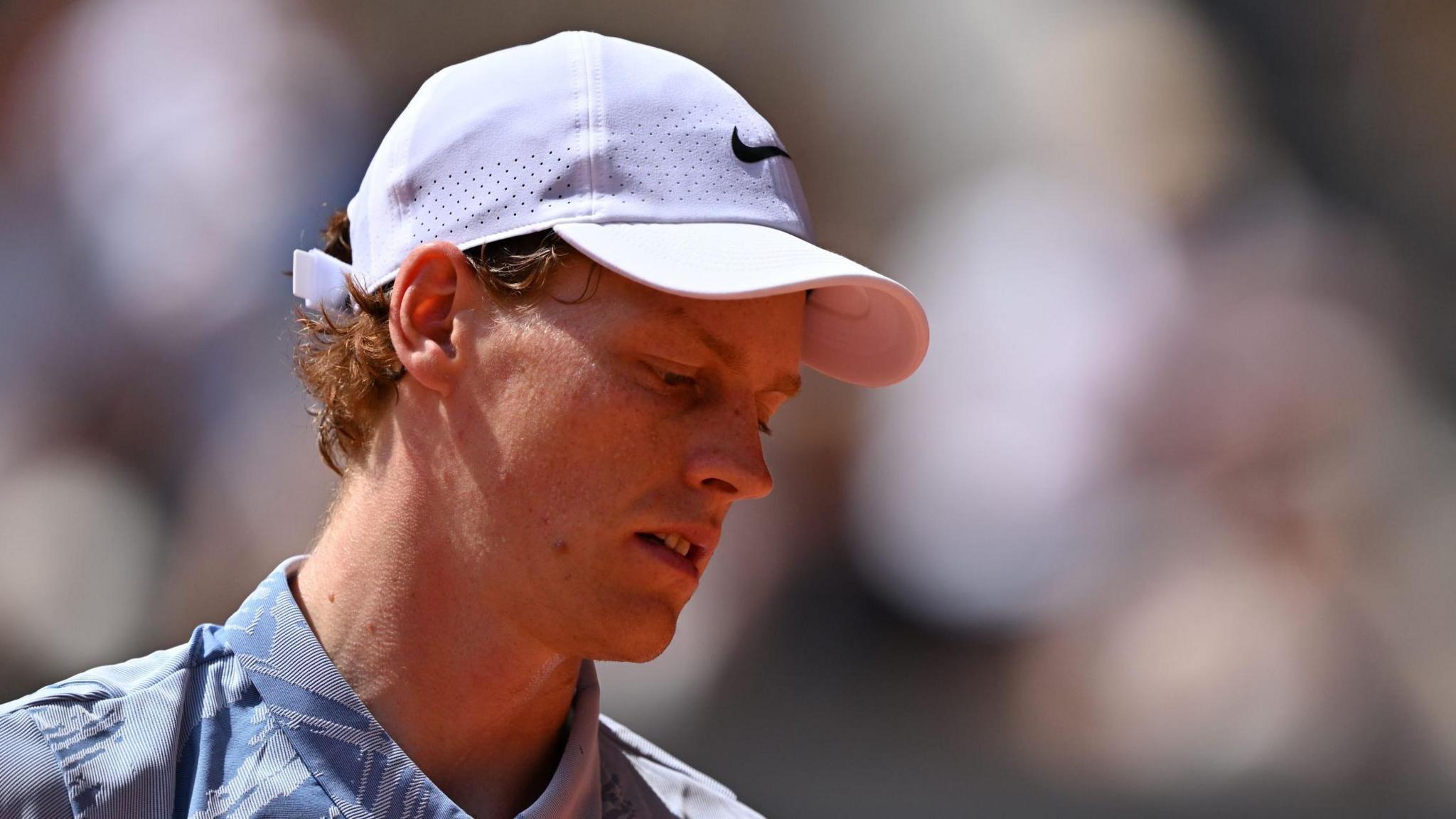
Jannik Sinner arrived at Roland Garros on a 30-match winning streak, but on Thursday, sweltering heat and battling illness defeated him where opponents had failed. Argentina's Juan Manuel Cerundolo, keeping his composure amid the Paris furnace, took down the top-seeded Italian 3-6, 2-6, 7-5, 6-1, 6-1 in the second round—a result that has fundamentally reshaped the entire men's draw.
For months, the tennis world had braced for another predictable outcome. Sinner and Carlos Alcaraz had won nine consecutive Grand Slams between them, meeting in three major finals. When Alcaraz withdrew with a wrist injury, Sinner's dominance seemed assured. But sport, as always, punishes complacency. With the Italian top seed gone, a dozen players across the draw suddenly see a path to the Coupe des Mousquetaires that looked impossible mere days ago.
The primary beneficiary appears to be Novak Djokovic. The 39-year-old, who celebrates birthdays with Grand Slam semi-final appearances and remains the only remaining player who truly understands what it takes to win a major, has received an unexpected reprieve. He sits as the third seed, searching for a record 25th Grand Slam title—a milestone he has chased since lifting the 2023 US Open. Having beaten Sinner in the Australian Open semi-finals this year before losing to Alcaraz in the final, Djokovic now faces a draw stripped of both men who have systematically blocked him for the past year.
Friday's test against exciting 19-year-old Brazilian Joao Fonseca on the Chatrier court, with temperatures expected to reach 34 degrees Celsius, will prove telling. If the Serb navigates that crucible and temperatures drop as forecast, he possesses the experience and tactical mastery to build through the tournament.
Yet Djokovic's emergence as the most plausible title contender speaks to a wider truth: the next generation remains maddeningly unproven. Alexander Zverev, the German second seed and perennial favourite bearing the unwanted tag of best player of his generation never to win a major, now faces his golden opportunity. Yet his record tells a cautionary tale. He squandered a two-set lead against Dominic Thiem in the 2020 US Open final and surrendered majors at last year's French Open and this year's Australian Open. With Sinner and Alcaraz removed from his half of the draw, Zverev may never see a clearer path to glory—but whether he can bear the weight of that knowledge remains an open question.
In Zverev's half sit other contenders: Casper Ruud, the 27-year-old Norwegian twice runner-up here, brings clay-court expertise and has the knowledge to make a deep run. But perhaps the most electric prospect is 19-year-old Spanish sensation Rafael Jodar, seeded 27th after a meteoric rise. Making his Roland Garros debut, Jodar has already reached quarter-finals at Madrid and Rome and possesses the raw baseline power to trouble anyone. Toni Nadal, who steered his nephew Rafael to 16 of his 22 major titles, has already weighed in with high praise, calling Jodar "the best player of this new generation and the one with the greatest potential." Jodar won't face another seed until the quarterfinals—a luxury that could accelerate his journey further than anyone expects.