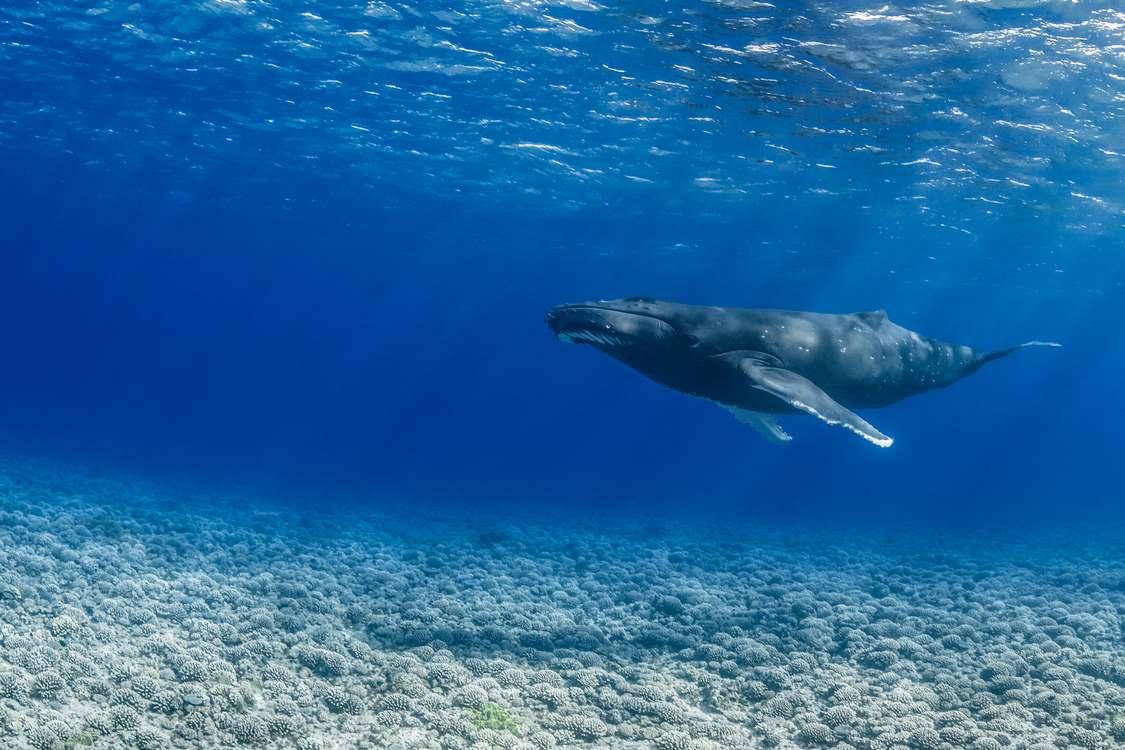
Beneath the vast Pacific, 200,000 square miles of ocean near the Austral, Marquesas, and Western Society islands are now entering history as Te Tai Nui a Hau Marine Protected Area—a sprawling sanctuary twice the size of Arizona that will transform how the world thinks about large-scale ocean conservation rooted in local leadership.
This announcement by the French Polynesian government matters because it signals a fundamental shift in global ocean protection: it shows that ambitious environmental goals and community livelihoods don't have to compete. As the world races to meet the "30 by 30" target—protecting at least 30% of the ocean by 2030—French Polynesia is demonstrating a model where indigenous stewardship and modern conservation work in tandem.
The newly protected waters bring French Polynesia's total conserved ocean territory to approximately 540,500 square miles—an area twice the size of Texas. This builds on work from last year, when French Polynesia fully protected around 350,000 square miles near the Gambier and Society islands while also designating sustainable fishing zones. Now, across the expanded preserve network, the government has added 3,088 square miles of artisanal fishing zones in the waters surrounding the Austral Islands and nearly 7,336 square miles around the Marquesas, covering coastal areas and nearby seamounts.
What makes this conservation approach distinctive is that it preserves traditional ways of life. Fishing in these artisanal zones is limited to single pole-and-line catch from boats less than 12 meters in length, allowing local people to continue feeding their communities through methods their ancestors perfected over generations. Donatien Tanret, who leads Pew Bertarelli Ocean Legacy's work in French Polynesia, captured this philosophy plainly: "Communities across the Austral and Marquesas islands have spent years shaping a collective vision for conserving their ocean that reflects both their cultural traditions and their future needs."
The ocean being protected here pulses with life found nowhere else on Earth. French Polynesian waters are home to exceptional marine biodiversity—including seabirds, sharks, whales, and endemic species—and serve as critical migration routes and breeding grounds for marine life across the Pacific. Once these protections are fully implemented, 30% of French Polynesia's entire ocean territory will be shielded from all extractive activities, with other human uses carefully limited.
This achievement didn't emerge overnight. More than a decade of work led by Polynesian communities and local leaders, supported by partner organizations including the Pew Bertarelli Ocean Legacy, the Bezos Earth Fund, Blue Marine Foundation, and the Wyss Foundation, made the announcement possible. These international philanthropic partners are helping establish long-term financing mechanisms, governance frameworks, scientific monitoring systems, and management capacities to ensure these protections endure.
French Polynesian President Moetai Brotherson sees this moment as a template for the world—proof that large-scale ocean conservation can be rooted in local leadership and traditional stewardship simultaneously. As Minister Taivini Teai stated, "By combining large-scale conservation, traditional stewardship, and sustainable use, we aim to lead by example and demonstrate that ambitious ocean protection and local livelihoods can go hand in hand." In a global moment where conservation often feels like sacrifice, French Polynesia's vision offers something rarer: a path where protection and prosperity move together into the future.