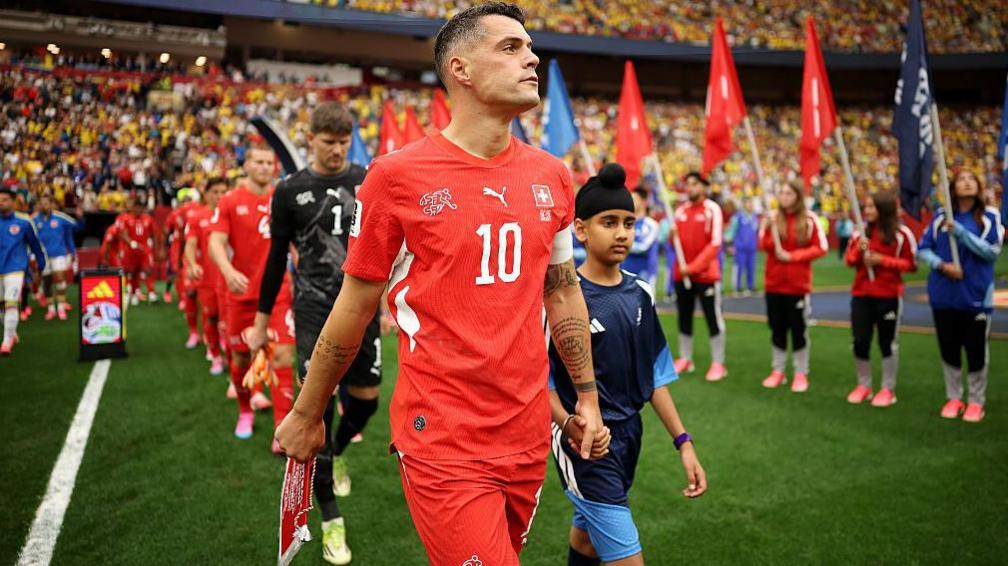
Granit Xhaka once stood frozen on a football pitch while thousands of fans jeered him. Seven years later, he's being called one of the most influential signings in North East football history. It's the kind of comeback that reminds us why sports can inspire.
It was October 2019. Xhaka was playing for Arsenal when he was substituted during a draw with Crystal Palace. The crowd let him have it. Frustrated and fed up, he cupped his ears at his own supporters — a moment that made headlines for all the wrong reasons. His manager stripped him of the captain's armband. Most thought his Arsenal career was finished.
But Xhaka didn't give up. When Mikel Arteta took over as manager, Xhaka worked his way back. He won over the fans with his leadership and tough, never-say-die performances. By 2020, he had the armband back — and he captained Arsenal to FA Cup victory.
"You could always hear him," said Theo Walcott, who played alongside Xhaka at Arsenal. "No matter where you were in the training ground, you could hear him speaking to someone — if it was a staff member, a younger player, or a more experienced player. He was like that on day one."
Next came Bayer Leverkusen in Germany. There, Xhaka helped the club go unbeaten on their way to winning both the league and cup — a rare double. The move, Walcott said, "really enhanced his levels of leadership."
Then came Sunderland. Xhaka joined the club last summer, shortly after it earned promotion to the Premier League. Nobody expected much. But Xhaka's leadership transformed the team. Sunderland didn't just survive — they finished seventh, earning a spot in the Europa League, European competition for the coming season.
Chelsea came calling that summer, offering a move to a club with much higher ambitions. Xhaka said no. He stayed at Sunderland.
"He's the most influential signing in the North East since Kevin Keegan at Newcastle in 1982," said Ian Murtagh, a football journalist for BBC Radio Newcastle. "I'm not saying necessarily the best, but in terms of influence, in terms of driving up standards, in terms of communicating with his teammates — there are huge similarities between the two, even though they're 40 years apart."
From being the target of boos to leading teams to glory, from losing the captain's armband to earning it back twice over, Granit Xhaka's story is proof that the loudest voices aren't always right — and that resilience can drown out even the cruelest jeers.