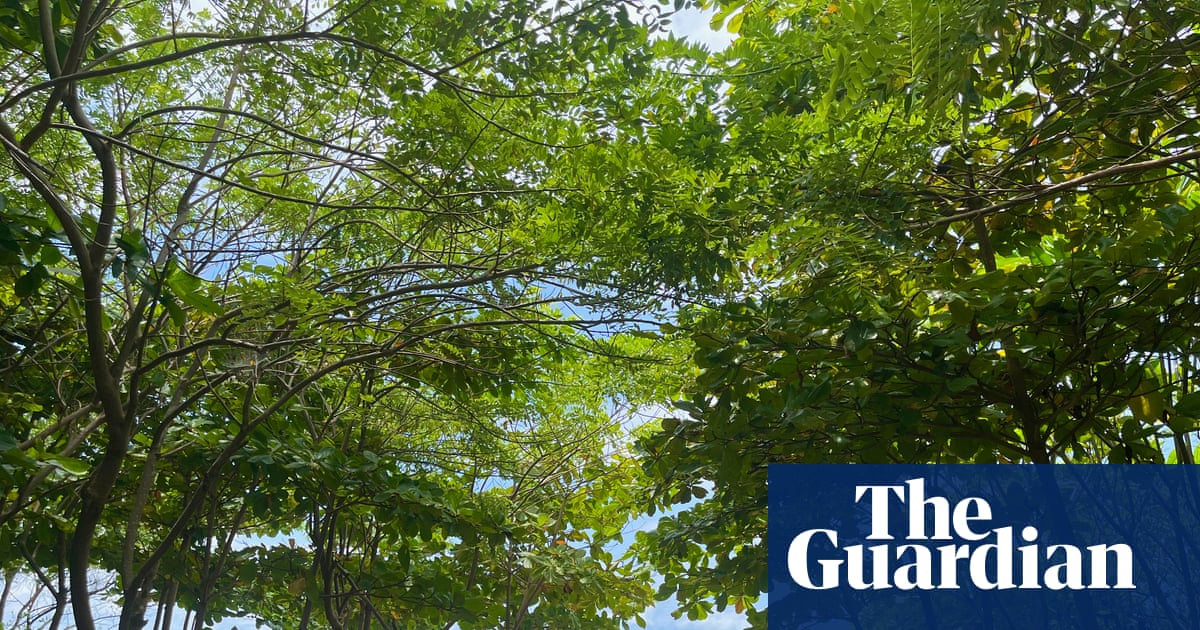
When Max Tattenbach promised his girlfriend he would reforest Playa Hermosa so she'd have shade to read on the beach, he set in motion a transformation that would bring green life back to 34 deforested Costa Rican beaches. What began as a surfer's personal mission in 2009 has become Costas Verdes, a nonprofit that has planted more than 100,000 native trees across the Pacific coast, reviving ecosystems that cattle farming had stripped bare over decades.
The Pacific shorelines of Costa Rica tell a story of loss and recovery. Between the 1940s and 1970s, Costa Rica lost 70 percent of its forest cover as livestock farmers burned coastal ecosystems to create grassland for cattle. The north Pacific region, where Costas Verdes now works, suffered particularly aggressive deforestation. Playa Hermosa in 2011, when the organization began its work, was nearly treeless—a single stretch of shade along six kilometers of beach was all visitors had. The beach Tattenbach loved had been hollowed out.
Today, walking along the seafront in Nosara, over 100 kilometers down the coast, you find thousands of tropical almond trees, madero negro, and frangipani lining the trails. Where howler monkeys once had nowhere to rest, they now call from branches. Where beachgoers once sat exposed to the merciless sun, shade is abundant. The change is not subtle—it is the difference between brown, bare ground and a living forest.
Gerardo Bolaños, who joined Costas Verdes as a volunteer in 2011 and now serves as executive director, walks beaches with before-and-after photographs that document the shift. Playa Guiones in 2011 shows only dry brown grass clinging to barren earth. The same beach today bristles with flourishing green vegetation. This is what sustained commitment looks like—not a one-time gesture, but a community-driven project that has worked year after year to restore what was lost.
The reforestation effort succeeded partly because Costa Rica's government created the conditions for it to happen. In the 1970s, after decades of deforestation linked to the so-called "hamburger connection"—the expansion of cattle ranching for beef exports—the country shifted course. A 1977 maritime zoning law protected the 200-meter coastal strip as state property and guaranteed public access to the first 50 meters. The 1996 Forestry Law and 1998 Biodiversity Law followed, building a legal framework that prioritized ecological conservation over development.
But laws alone do not plant trees. Costas Verdes succeeded because it brought communities together—volunteers, local residents, and committed leaders—to do the patient work of restoration. Bolaños notes that the deforestation of the 1940s through 1970s was "extremely aggressive, poorly planned," but the reforestation that followed has been deliberate, measured, and rooted in place. The organization has moved beyond the north Pacific, scaling its model to protect ecosystems that, left to cattle ranching and tourism development, would have remained barren.
As Costa Rica demonstrates, recovery is possible when commitment meets policy and local action. The lush coastlines of today were not inevitable—they required someone to keep a promise, an organization to keep working, and a country to protect the space for forests to grow. The howler monkeys that echo through those trees now are proof that transformation, however long it takes, can be real.