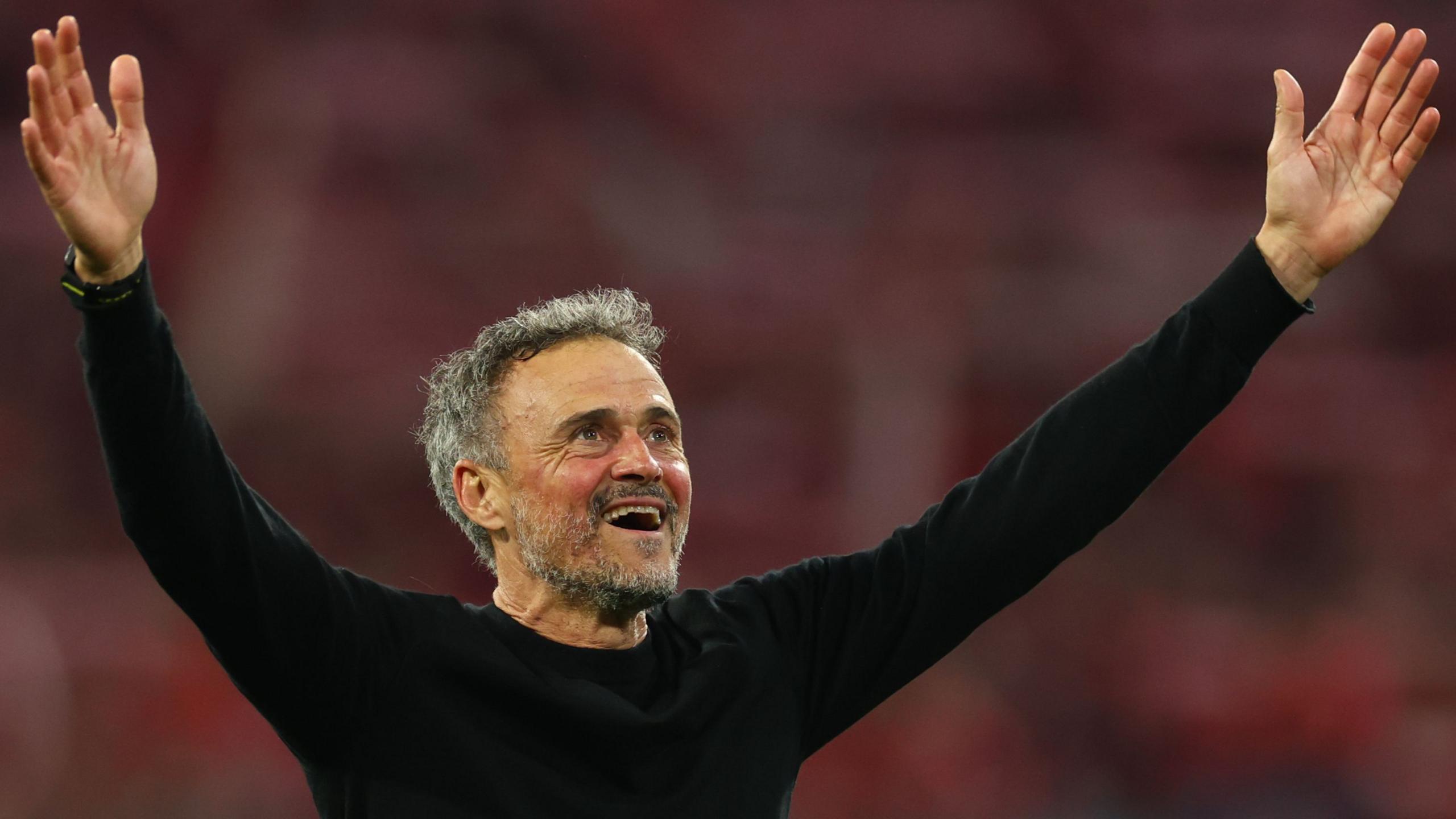
Khvicha Kvaratskhelia burned down the wing at the Allianz Arena, and in a singlefluid motion set up Ousmane Dembele to finish high past Manuel Neuer — all inside three minutes. It was the kind of goal that announces a team arriving at its moment. Paris Saint-Germain are now in the Champions League final for the second year running, having just knocked Bayern Munich out 6-5 on aggregate in one of the most gripping two-leg ties in recent memory, and the transformation behind this moment is as remarkable as the football itself.
Just two years ago, PSG were synonymous with dysfunction — a galaxy of individual stars that never cohere into anything resembling a team. Lionel Messi, Kylian Mbappe, and Neymar formed the centrepiece of an ego-ridden outfit that Luis Enrique inherited when he took charge in the summer of 2023. The former Barcelona coach, who already has one Champions League trophy from his 2015 Camp Nou triumph, made a simple, radical demand: park your pride at the door, or make way. The ones who refused were shown out. In their place: a squad that plays for each other.
"Where is the weakness?" said former Liverpool defender Stephen Warnock on Match of the Day, struggling to find an answer. "You look right through the pitch and think 'where is the weakness?' They are so strong in every area." The question is a fair one. Marquinhos, the Brazil centre-half who has been at PSG since 2013, still leads the backline with peerless calm at 31, forming a formidable partnership with Willian Pacho, who was instrumental in shackling Harry Kane for most of the second leg. In the middle, the trio of Vitinha, Fabian Ruiz — whose gliding pass set up Dembele's opener was "a thing of beauty," according to one observer — and Joao Neves provides the engine room. Up front, 20-year-old Desire Doue, the youngest face of this new era, tormented Bayern's defenders and came close several times in the second half.
The scale of what Luis Enrique has built becomes clearer when you look at the journey. Last year PSG won the final 5-0 against Inter Milan, one of the most dominant performances the competition has ever seen. This year, they dismantled Liverpool 4-0 on aggregate in the quarter-final, winning at Anfield for the second season running. Against Bayern, they dazzled in the first leg at the Parc des Princes, then dug deep and defended with discipline when the pressure cranked up in Munich. They are, in every sense, the complete package.
On May 30, Arsenal — in their first Champions League final in 20 years — will face them in Budapest. They will come up against a side that has turned collective hunger into its greatest weapon. Whatever happens, Luis Enrique has already delivered something worth celebrating: proof that building a culture can be more powerful than buying a collection of stars.