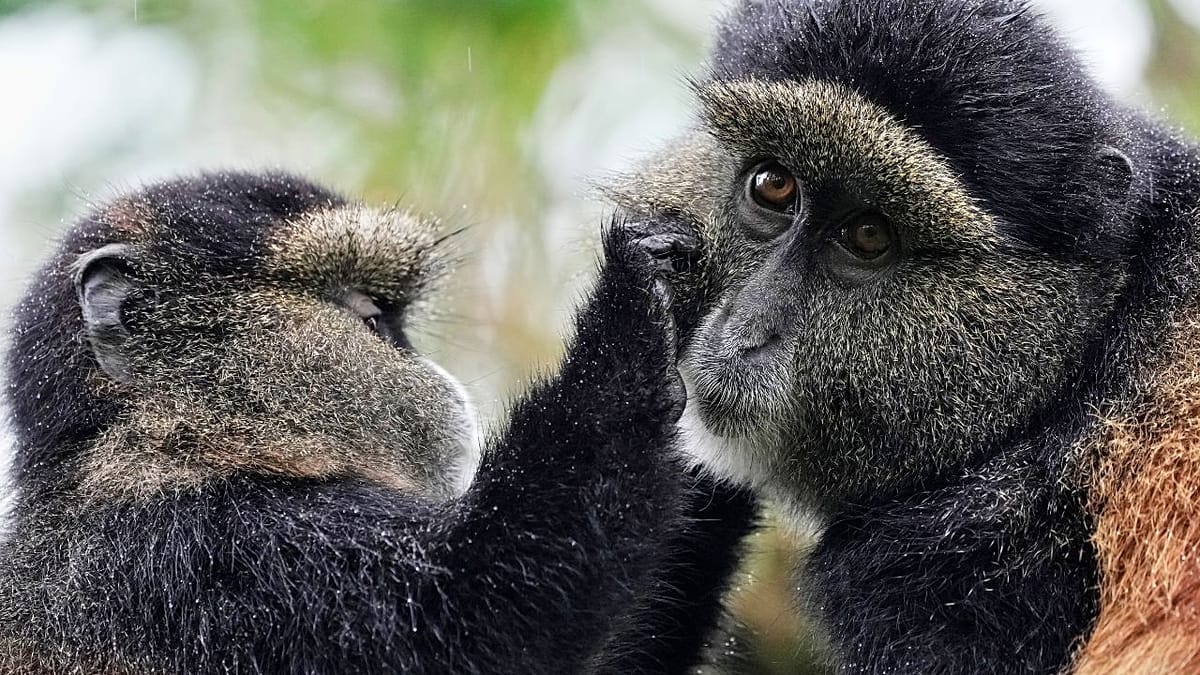
In Rwanda's misty Volcanoes National Park, scientists are abandoning the machete-heavy hunts of traditional wildlife monitoring in favor of something far more elegant: reading the genetic whispers that animals leave behind. Environmental DNA—eDNA—has arrived as a game-changer for protecting the park's endangered mountain gorillas and golden monkeys, using nothing more than fur and faeces traces left in soil and water to tell researchers which species live in the terrain above.
The technology matters because the stakes are high. Rwanda's biodiversity, like much of Africa's, faces mounting pressure from climate change and population growth. Mountain gorillas and golden monkeys are flagship species, but they're far from alone—and traditional methods of finding them are exhausting, expensive, and sometimes impossible. Rangers moving through rugged, insecure border terrain face real constraints, making physical surveys a logistical nightmare. eDNA sidesteps that entirely. Samples collected from downstream ponds can reveal which species inhabit the higher ground, offering a window into ecosystems without requiring researchers to trek through them.
"With one kit, you can assess multiple species, amphibians, mammals, birds and many others which cannot be detected using traditional techniques," explains Deogratias Tuyisingize of the Dian Fossey Gorilla Fund, underscoring the breadth of what eDNA can accomplish in a single collection effort. The African Wildlife Foundation introduced the technology in Rwanda through a partnership with the Rwandan government, aiming to build a complete picture of the country's biodiversity and establish baselines against future change.
The innovation is not without boundaries. eDNA cannot estimate population numbers at any given moment, since genetic material can linger long after a species has moved on. Africa's genetic reference libraries—the catalogues scientists use to match unknown samples to known species—remain sparse compared to those in Europe and North America, a legacy of research funding and infrastructure patterns that reflect global inequalities. That gap matters: you can only identify what you have a baseline for.
Yet the momentum is shifting. Researchers are now building region-specific genetic databases tailored to African species, moving beyond reliance on foreign reference materials. Equally important, they're training local communities to collect samples themselves, a move that promises to democratize the technology and make it genuinely African-led rather than merely deployed on African soil. This localisation is essential. When communities are equipped to do the work themselves, they gain ownership over conservation outcomes and build expertise that compounds over time.
The implications ripple outward. eDNA could transform how conservationists monitor not just flagship species like gorillas but entire ecosystems—detecting the presence of invasive species, tracking disease spread through wildlife populations, or documenting biodiversity in places where human researchers rarely venture. For a continent where conservation resources are chronically stretched, a technology that yields more data with fewer boots on the ground is transformative.
Rwanda's Volcanoes National Park is not waiting for perfection. It's moving ahead with a tool that works, refining it in real time, and crucially, ensuring that the next generation of African scientists and rangers will lead the way.