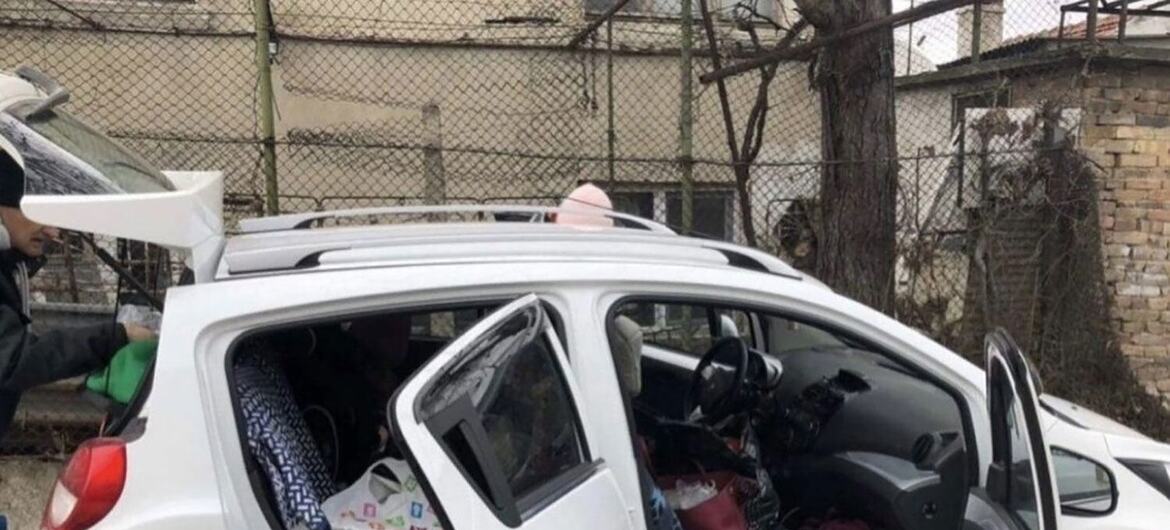
Dr. Inna Soldatenko was driving a small car packed with her two daughters, her parents, and a cat through the darkness of Ukraine when she realized the life she had spent decades building was gone. It was February 2022, the day Russian forces launched their full-scale invasion, and the consultant rheumatologist from Kharkiv had only hours to say goodbye to the home she never thought she would leave. More than 26 hours of driving through Ukraine, Moldova, Romania, and Bulgaria later—sustained by strangers who shared food and safety—she arrived in the United Kingdom in May 2022, carrying little more than a few documents and the memory of those who helped her escape.
Inna's journey is one shared by more than 260,000 Ukrainians who have sought safety in the UK since the invasion began. But her story reveals something deeper than survival: what happens when skilled refugees are not merely welcomed, but given the genuine chance to rebuild their lives and contribute their expertise.
When Inna arrived in London, she faced the barriers that confront most displaced professionals—language challenges and the question of whether her medical qualifications would be recognized. Rather than waiting passively, she began working in an administrative role at the Lewisham and Greenwich Trust, part of the UK's National Health Service in southeast London. What transformed her experience was not a program or policy, but people. Her NHS colleagues became what she calls her "work family." They helped her improve her English, built her confidence, and encouraged her to sit the exams required to practise medicine in the UK. "They believed in me much more than I believed in myself," she said. She passed all the required exams and returned to her chosen specialty of rheumatology, providing direct patient care once more.
Her personal success, however, was only the beginning. Inna recognized that other displaced healthcare professionals faced the same obstacles she had. Working alongside fellow refugee doctors, nurses, and health workers, she helped establish the Ukrainian Medical Charity, a national network designed to help refugees access NHS employment opportunities. Her advocacy contributed to shaping the NHS Refugee Employment Programme, which now assists refugees from many backgrounds into roles across the UK health service. The impact is measurable: of the more than 260,000 Ukrainians who have arrived in the UK since the invasion, over 60,000 are now employed across different sectors of the economy.
Today, Inna balances work and family life in London as what she describes simply as "an ordinary person." Yet she remains acutely aware of the extraordinary gift she received. What stays with her most is not the loss that forced her to flee, but the kindness she encountered across borders and within hospital corridors—the power of genuine welcome. "When you're forced to flee, it's like your roots are cut," she reflects. "The NHS and the people around me helped me grow new ones. That stability, that kindness, it changes everything—like the sunshine on your garden."