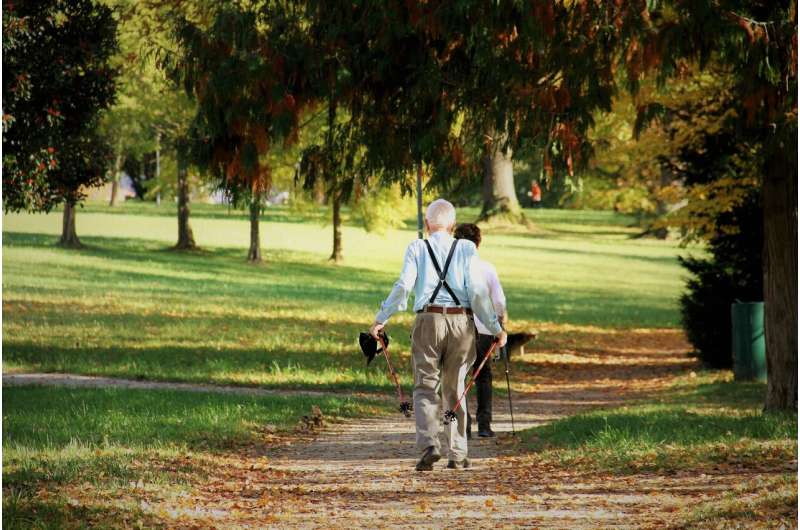
When Dr. Cody Lindsay and his team at Flinders University watched 107 healthy adults walk—ranging in age from 26 to 86—they noticed something subtle but telling: the older the person, the stiffer their ankles became with each step. This wasn't weakness or wear. It was, paradoxically, the body protecting itself.
Australian researchers have uncovered why aging changes the way we walk, revealing a fascinating trade-off that explains why older adults tire more easily and face higher risks of falling. As we age, the body adopts what scientists call a "safety-first" walking style, sacrificing speed and energy efficiency to stay upright. The findings, published in the journal Gait & Posture, offer hope—not just for understanding aging, but for preventing falls and maintaining independence in later life.
The key discovery centers on the ankle. As people get older, their muscles increasingly activate in pairs around the ankle joint simultaneously, a pattern called co-contraction. This stiffens the joint, which does improve stability when the foot hits the ground. But it comes at a significant cost. "Stiffening the joint makes walking safer, but it also means the muscles are working harder without generating as much forward movement," explains Dr. Lindsay, from the Flinders Caring Futures Institute. The result: older adults produce less push-off power with each step, generating shorter strides and slower walking speeds while expending more energy to do so.
This reflects a broader shift in how the nervous system controls movement with age, according to Associate Professor Maarten Immink, lead of the Active Lives Research Program at Flinders University. "The nervous system adopts a safety-first approach, compensating for age-related changes by favoring stability over performance," he says. These changes don't just affect how far someone can walk—they erode confidence. People notice they tire more quickly, especially on uneven ground, and feel less steady. That loss of confidence can trigger a vicious cycle: reduced activity leads to weaker muscles, which further compromises both balance and independence.
But the research points toward solutions that go beyond traditional strength training. Rather than focusing solely on muscle power, Dr. Lindsay and his colleagues emphasize that exercise programs should target balance, coordination, and how muscles work together during movement. For older Australians, practical interventions make a measurable difference: regular physical activity, balance exercises such as tai chi, lower-leg strengthening, and activities that challenge coordination. "Staying active is one of the most important things people can do," Dr. Lindsay notes, "and small, consistent exercises can help you stay confident, mobile and independent for longer."
The implications extend beyond individual health. Falls among older adults are a leading cause of injury and loss of independence, placing enormous pressure on healthcare systems. By understanding the biomechanics of aging—how the body adapts, and where those adaptations create vulnerability—researchers can design better prevention and rehabilitation strategies. The findings suggest that supporting healthy aging isn't about fighting the aging process itself, but about working with how the body naturally adapts, and then strengthening the systems that keep us stable, strong, and able to move through the world with confidence.