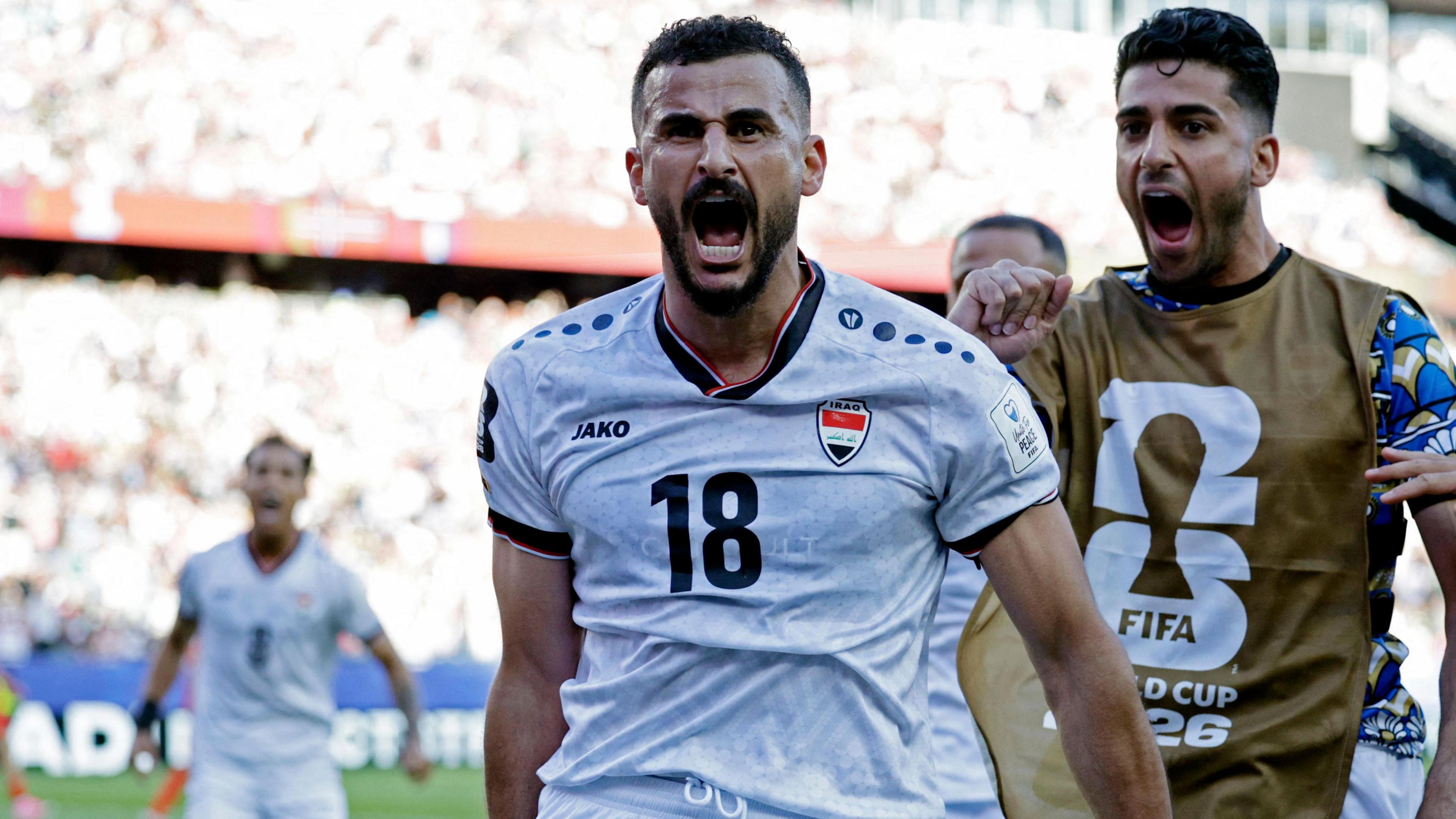
Aymen Hussein rose from Baghdad’s fractured streets to the World Cup pitch, his head meeting the ball with the weight of a nation behind it. In June 2024, in a packed stadium in Guadalupe, his powerful leap sent the ball past Norway’s goalkeeper Orjan Nyland, sealing a 1–0 victory that echoed far beyond the scoreline. That goal wasn’t just a moment of athletic triumph—it was the culmination of a journey shaped by war, loss, and unwavering resolve. Hussein’s story is one of Iraq’s most powerful narratives in decades, a tale where football becomes both refuge and redemption.
Growing up during one of Iraq’s darkest periods, Hussein found solace in football while his country grappled with violence. In 2008, when he was just 12, his father—a soldier—was shot dead by al-Qaeda militants while buying construction supplies for their home. Years later, his older brother vanished during a wave of kidnappings and has never been seen again. Grief nearly pulled him from the pitch. “I decided to quit playing football to take care of my family, but my mother refused,” Hussein recalled. Her insistence became a lifeline, steering him toward a destiny few could have imagined.
That destiny crystallized during Iraq’s historic 2026 World Cup qualification campaign. Scoring 12 goals—more than double any other teammate—Hussein carried the Lions of Mesopotamia through a grueling inter-confederation play-off. His decisive strike in a 2–1 win over Bolivia in March 2024 secured Iraq’s first World Cup appearance since 1986, reigniting national pride in a country long absent from football’s grandest stage. Yet his path remained fraught: just weeks before the tournament, he was detained for seven hours at Chicago’s O’Hare Airport, while Iraq’s team photographer, Talal Salah, was denied entry entirely.
Despite limited playing time at his club Al-Karma and a season marred by injuries, Hussein silenced doubters with a full 90-minute performance against Norway. “He has had quite a few injuries during the season and for him to get through 90 minutes with that energy and scoring a goal was fantastic,” said coach Arnold. Now, Iraq faces a formidable Group I, including 2022 finalists France and Senegal. But with Hussein leading the charge, belief has taken root—not just in victory, but in resilience.
As the final whistle blew in Guadalupe, fans across Iraq lit fireworks and poured into the streets. In a country once fractured by conflict, a footballer’s leap became a symbol of unity. And for Aymen Hussein, it was proof that even in the face of unimaginable loss, hope can still find the back of the net.