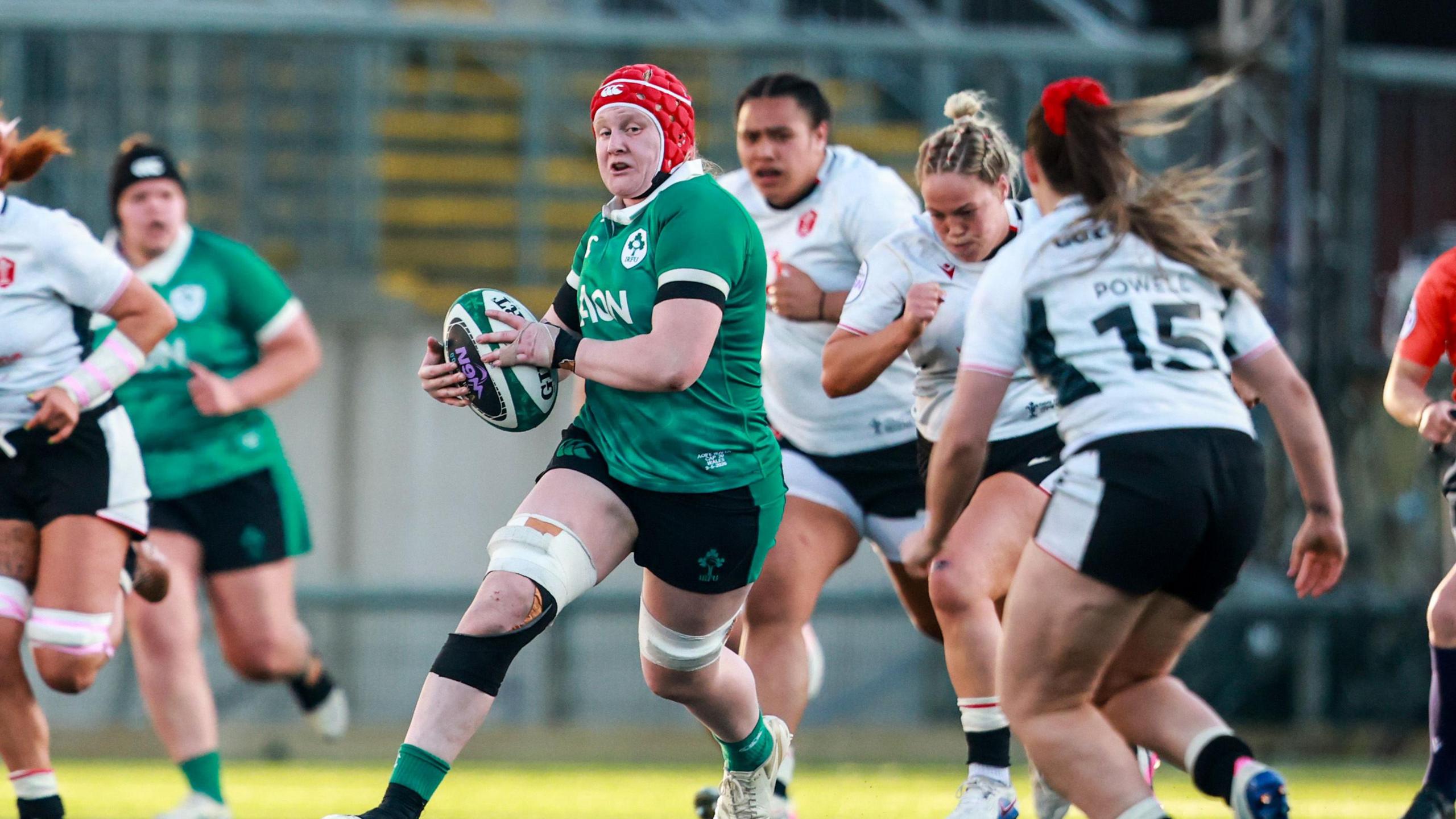
At 23, Aoife Wafer has already learned that being brilliant isn't the same as being complete. The Harlequins flanker, named 2025 Women's Six Nations player of the tournament, walked off the pitch last weekend after Ireland's commanding 33-12 victory over Wales convinced she'd left something on the field — even as she picked up the player of the match award.
That drive for incremental perfection is what separates good players from transformative ones. Wafer's tournament has been a masterclass in momentum building. She began the competition slowly, finding her feet as the stakes climbed, and has since emerged as one of the campaign's most dynamic forces. Three tries, third for the most carries in the entire competition — the numbers tell one story. But Wafer's own assessment tells another: there's more.
"I left a few per cent out in certain parts of my game," she said after facing Wales, sitting down with coaches to identify exactly where those gaps lived. It's the kind of honesty that suggests a player still rising, not one resting on accolades. Her self-critique cuts to the heart of modern rugby's physical demands. She knows her superstrength — the carrying game, that explosive movement forward with the ball — but she's chasing dominance in collision, the grinding, unglamorous moments where matches are genuinely won.
"Was I dominant in every collision? No and I could have bossed a few more situations," Wafer reflected, laying bare the perfectionism driving her performance. It's not enough to carry the ball well; she wants to carry it so effectively that she wins the collision, secures the ground, and dictates what happens next. Defensively, she sees similar terrain to explore — more dominance, more control, more moments where she's the most influential player in the ruck rather than simply a good one.
This weekend, Wafer will have her chance to chase those improvements at the Aviva Stadium in Dublin as Ireland faces Scotland. The stage is only bigger now that she's been crowned the tournament's standout player. But if her words since the Wales match are any guide, the recognition won't soften her hunger. If anything, it sharpens it.
What strikes most is how Wafer frames excellence: not as a destination but as a direction. "I'm not just happy being dominant, I want to be the most dominant," she said, a statement that sounds simple until you recognize what it demands. It means rewatching every collision, every carry, every defensive set. It means finding one more percentage point when you're already playing at 95. It means coming back after winning player of the match and believing you can do better.
Ireland has always produced rugby players with that kind of relentless drive. But when it combines with technical brilliance and the physical capability Wafer clearly possesses, something special takes shape. At 23, she's not at full circle — she's somewhere far more interesting: still climbing, still chasing, still convinced that dominance is something you earn in the details rather than declare from the headlines.