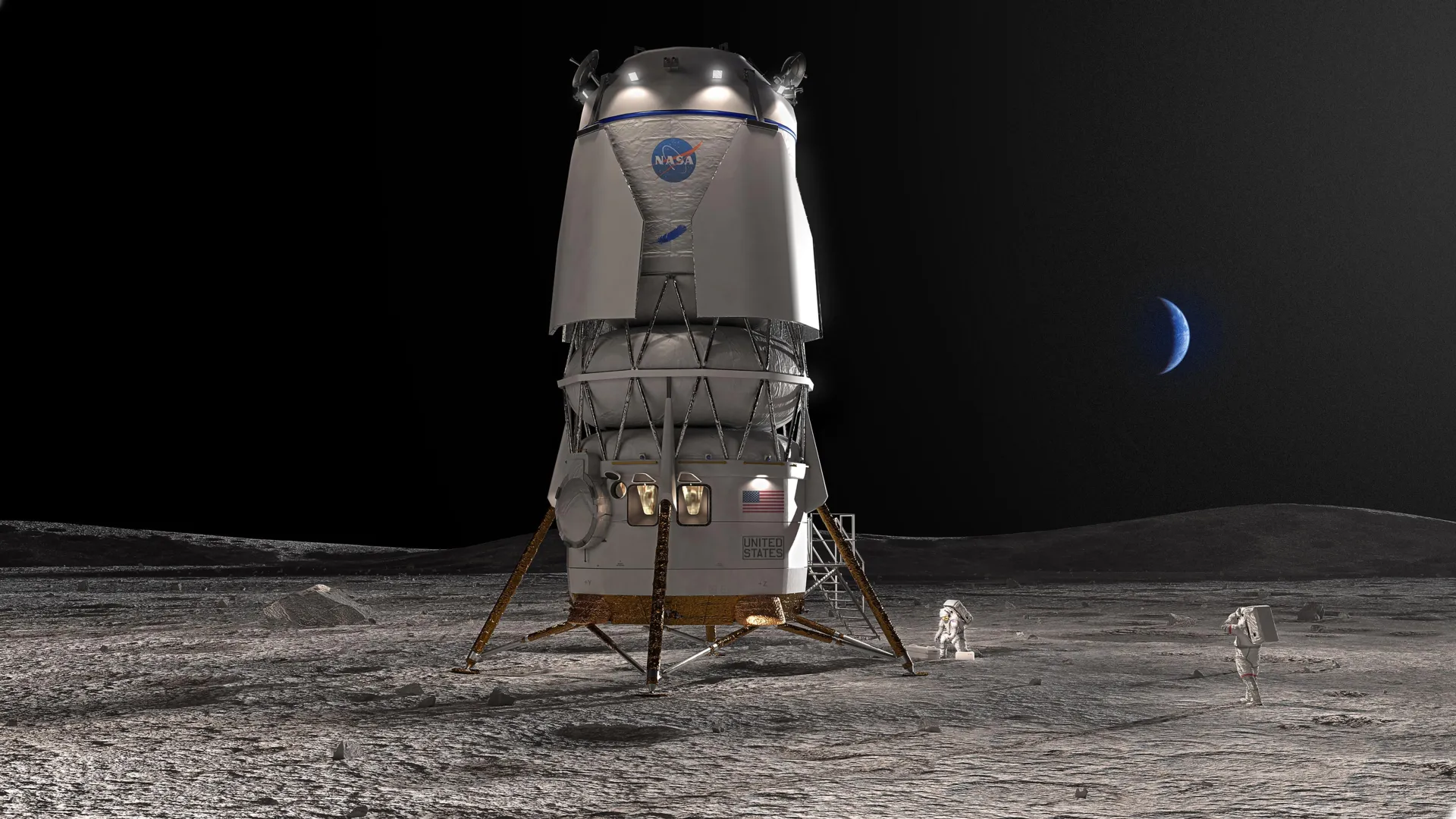
Before humans ever set foot on the moon again, scientists are already working to protect the science that makes the trip worthwhile. A new study reveals that methane from spacecraft exhaust could spread across the lunar surface faster than anyone expected, potentially reaching areas that hold secrets to how life began on Earth. But here's what makes this story worth telling: researchers discovered this problem before it happened, giving humanity a chance to fix it.
The research, published in the Journal of Geophysical Research: Planets, found that methane released during a landing near the moon's South Pole could "hop" its way all the way to the North Pole in less than two lunar days. Within seven lunar days (almost seven months on Earth), more than half of all methane released would become trapped in the frozen polar regions that scientists most want to study. Twelve percent would end up at the North Pole, with 42 percent accumulating at the South Pole.
The moon's poles contain craters that never see sunlight, keeping them extremely cold for billions of years. These frigid traps may hold ice deposits carrying ancient material delivered by comets and asteroids. Scientists believe those deposits could include prebiotic organic molecules, the chemical ingredients that eventually combined to form the first building blocks of life, including DNA. Because Earth's surface constantly changes, most of this ancient evidence has been erased here. The moon offers a rare archive of the early solar system, but visiting spacecraft could smudge that archive with their own exhaust.
Francisca Paiva, a physicist at Instituto Superior Técnico in Portugal who led the study, developed a detailed computer model using the European Space Agency's planned Argonaut mission as a test case. She and her team simulated how thousands of methane molecules would move across the lunar surface after landing, tracking how they bounced, collided, and interacted with the ground. "Their trajectories are basically ballistic," Paiva explained. "They just hop around from one point to another." Without an atmosphere to slow molecules down, they travel freely under gravity, making the moon's near-total lack of air both a blessing and a curse.
"The timeframe was the biggest surprise," said Silvio Sinibaldi, planetary protection officer at the European Space Agency and senior author of the study. "In a week, you could have distribution of molecules from the South to the North Pole."
But the scientists emphasize this contamination isn't necessarily inevitable. Paiva found that landing at colder sites might help keep exhaust molecules more contained. Sinibaldi is now investigating whether certain exhaust compounds might stay put rather than spreading. "We are trying to protect science and our investment in space," he said. "The moon offers a rare opportunity to study the early history of the solar system, but paradoxically, our activity can actually hinder scientific exploration." By identifying the problem now, before moon missions multiply, researchers are giving humanity the chance to explore responsibly.