When Ma Jingjing drove her electric car up to a gas station in Guangdong, China last spring, she expected to wait half an hour for a charge. Instead, she was back on the road in eight minutes. "I couldn't believe it," she told a local news outlet. "I barely had time to buy a bottle of water."
That quick turnaround is no accident. Across Asia, oil giants and car companies are turning ordinary gas stations into something new — part charging hub, part convenience store, part smart energy network. The shift is moving faster than many experts predicted.
In China, the transformation is happening on a breathtaking scale. Sinopec, the country's largest fuel retailer, operates more than 30,000 service stations nationwide. Rather than building charging infrastructure from scratch, the company partnered with BYD, one of the world's biggest electric car makers, to install BYD's second-generation Flash Charging systems at hundreds of those existing locations. These chargers can deliver up to 1,500 kilowatts of power — roughly ten times what a typical home charger provides. At that rate, a car with a compatible battery can go from nearly empty to nearly full in under ten minutes. BYD already runs more than 6,100 charging stations and aims to hit 20,000 by the end of 2026.
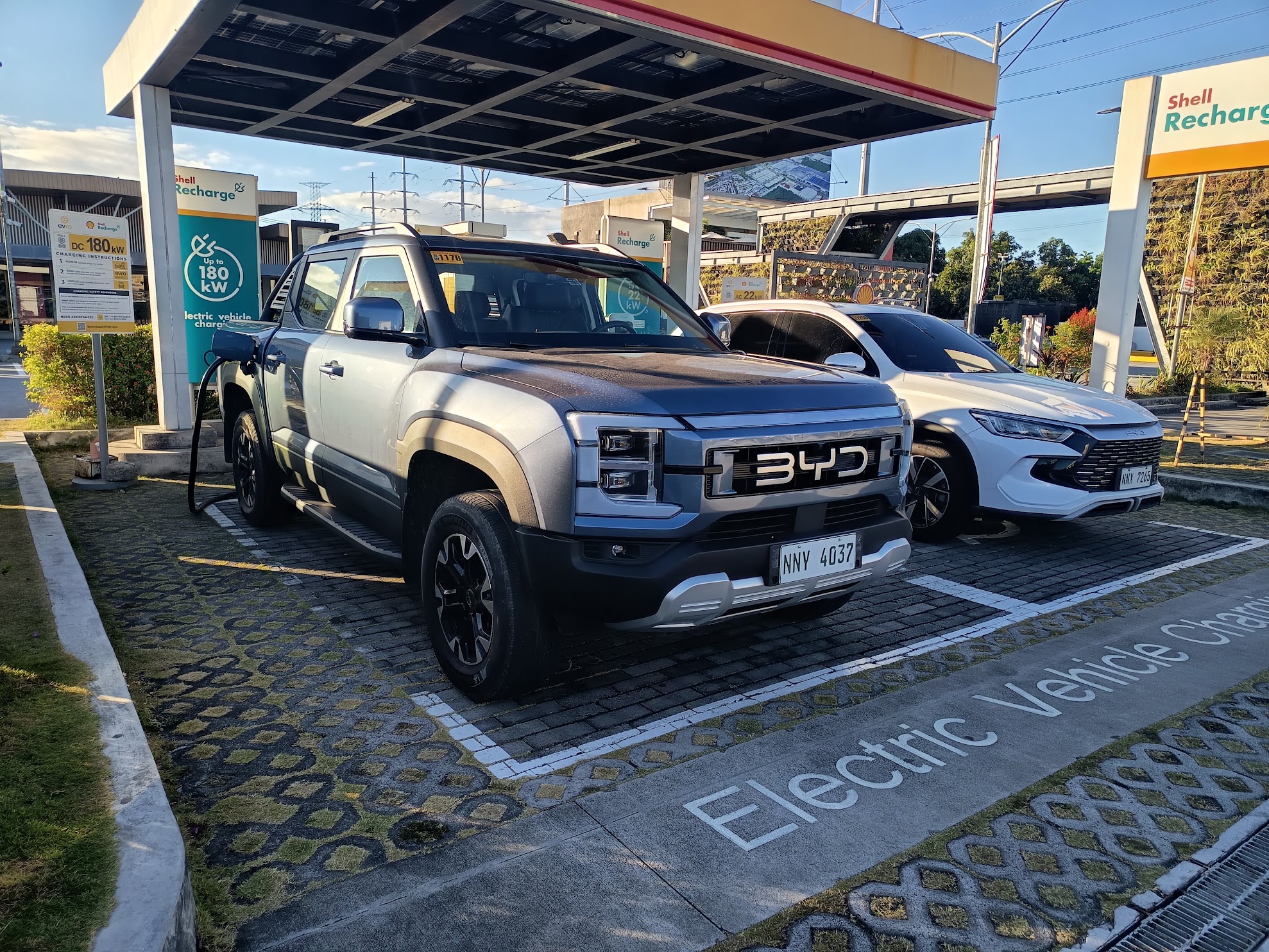
The same pattern is repeating across Southeast Asia. In the Philippines, ACMobility teamed up with Shell Pilipinas to install over 2,500 charging points at 50 key stations along a major highway route called the Philippine EV Spine. In Indonesia, the public charging network known as SPKLU already supports more than 1,100 stations, and the state power company PLN signed new deals with VinFast to keep expanding. Over in Malaysia, the national utility Tenaga Nasional Berhad joined forces with carmaker Perodua to add both chargers and solar panels to existing retail locations.
Even tiny Singapore is getting in on the act. A collaboration between SP Mobility and Huawei brought 480-kilowatt liquid-cooled chargers to the city-state, where drivers can now recharge in under fifteen minutes — about the time it takes to grab a coffee.
Why does this matter? Because range anxiety — the fear of running out of power far from a charger — is one of the biggest reasons people hesitate to go electric. By tucking fast chargers into gas stations that already sit along busy roads, companies are making the switch far more convenient. Drivers don't have to seek out a special charging center; the infrastructure arrives where they already stop.
The changes are still unfolding. Not every station has fast chargers yet, and many older EVs aren't compatible with the ultra-rapid systems. But the momentum is real. Oil companies that once resisted the shift are now racing to get ahead of it, betting that the gas station of tomorrow will look a lot different than the one Ma Jingjing's parents grew up visiting.