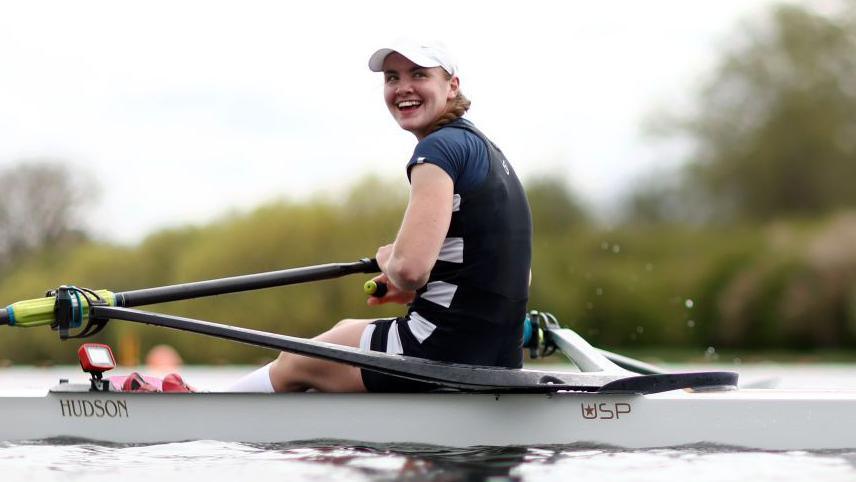
Lauren Henry's hand touched the finish line just 0.14 seconds before Lithuania's Viktorija Senkute, a margin so thin that the moment hung in the balance long enough to earn its name—a photo finish. It was the tightest margin imaginable in women's singles sculls at World Rowing Cup I in Seville, yet it handed Great Britain their second gold of the day and announced that the rowing season is well underway.
The double gold haul matters because it signals momentum at a pivotal moment. Rowing sits at the intersection of grueling physical conditioning, technical precision, and mental resilience. When a nation wins at the top level, it reflects years of coordinated effort across coaching, athletic development, and team culture. For Great Britain, these victories in Seville—the men's four and the women's singles sculls—suggest the rowing program is firing on multiple fronts as the season opens.
The men's four dominated their final, crossing the line 5.22 seconds ahead of France, with the Netherlands claiming third. It was the kind of decisive victory that leaves no room for interpretation. Henry's race, by contrast, tells a more nuanced story. "I think my first half was maybe a bit sluggish; I'm not sure I got my heat strategies right," she reflected afterward, with the self-awareness of an athlete who knows exactly where she faltered. But she trusted something deeper—the second half of the race, where she builds, where she closes, where she finds another gear. "I just have so much belief in the training I do and my coach," she told World Rowing.
That belief proved warranted. Henry's victory came with an interesting footnote: Ireland's Fiona Murtagh, the woman who beat her by just 0.03 seconds at the World Rowing Championships in Shanghai last year, took bronze in Seville. The margins in elite rowing are often measured in the fractions of seconds that separate gold from heartbreak, making each victory a testament to weeks of anonymous training—thousands of meters pulled across water, repeated until muscle memory becomes competitive advantage.
Great Britain's medal haul extended beyond those two golds. The women's quadruple sculls team secured silver, just 0.43 seconds behind Germany. In the men's eight, GB took silver while the Netherlands, defending world champions, claimed gold comfortably. And in the women's eight, the British finished with bronze as Australia won the race and the Netherlands held silver.
The World Rowing Cup circuit matters because it functions as both a proving ground and a pathway. These early-season races test whether training cycles have worked, whether crew cohesion has gelled, and whether athletes have made the gains they hoped for during the off-season. For Henry and her teammates, Seville offered tangible evidence that the work is paying dividends. For the coaches and support staff, it validated their strategies heading into a season that will culminate in major championships where these margins, measured in centimeters and hundredths of seconds, determine which nations stand on the podium and which go home to train harder for next time.
As the World Rowing Cup season unfolds, Great Britain has set an early standard: gold is possible, consistency is there, and the hunger remains sharp.