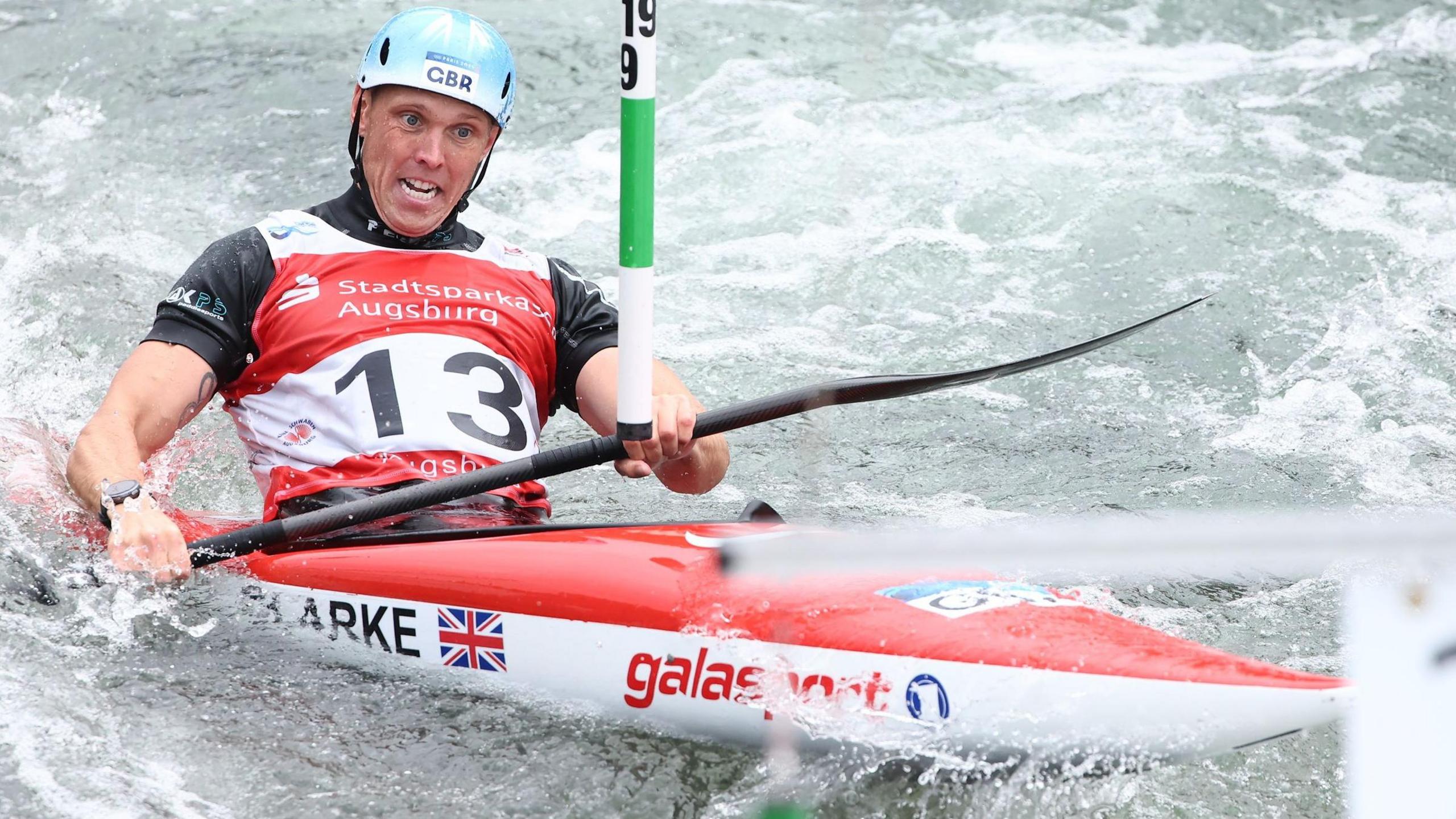
Joe Clarke claimed his first World Cup gold of the season in the kayak cross final in Augsburg, Germany, a victory that carried special meaning for the 33-year-old British paddler. The race didn't unfold as cleanly as his usual style — he's the kind of racer who prefers to fly out of the blocks and stay ahead — but the win was hard earned, and Clarke cherished every scrappy moment of it.
The drama of the final was heightened by his British teammate Ben Haylett's bittersweet near-miss. Haylett crossed the line first in his inaugural World Cup final, a moment that would have been a breakthrough for any athlete. But a penalty for a fault sent him tumbling to fourth place, a cruel twist that underscored how unforgiving kayak cross can be. For Clarke, the win came partly because of that misfortune, though it was no less legitimate.
"It was hard earned, there was a lot of scrapping out there," Clarke reflected, his words capturing the intensity of the competition. What made the victory even more significant was its impact on his season trajectory. Clarke has now moved to second place in the overall World Cup kayak cross standings, sitting just one point behind Slovenian teenager Ziga Lin Hocevar, who leads the competition. The gap is razor-thin, and with the World Championships approaching in Oklahoma, every point counts.
Augsburg holds particular resonance in Clarke's career. He claimed his first World Cup medal at this same venue twelve years ago, a milestone that marked his arrival on the international stage. More recently, in 2022, he won the second of his four kayak cross world titles here, making Germany a place where he has found consistent success. This latest gold adds to that storied history.
Clarke's hunger for the World Championships is palpable. "I'm hungry for more at the World Championships in Oklahoma," he said, his focus already turning to what lies ahead. He acknowledged that the competition will only intensify as athletes sharpen their skills in the coming weeks. His strategy is clear: refine the team's processes, trust the work, and let the results follow. "I know everyone will up their level even more, so the next few weeks are about refining our processes and hopefully the outcome will take care of itself," he explained.
The sentiment was bittersweet when he reflected on the moment itself. "It wasn't the usual style of win that I go for, the 'fly out the blocks and stay out front', but it was special to be on the start line with Ben." That kind of camaraderie — competing at the highest level alongside a teammate — speaks to the tight-knit world of British paddling.
Back in the men's canoe slalom, fellow Briton Adam Burgess came agonizingly close to gold, taking silver and losing to Italy's Raffaello Ivaldi by the narrowest of margins: just 0.07 seconds. It was a reminder that at the elite level, victory and heartbreak are often separated by the smallest fractions.