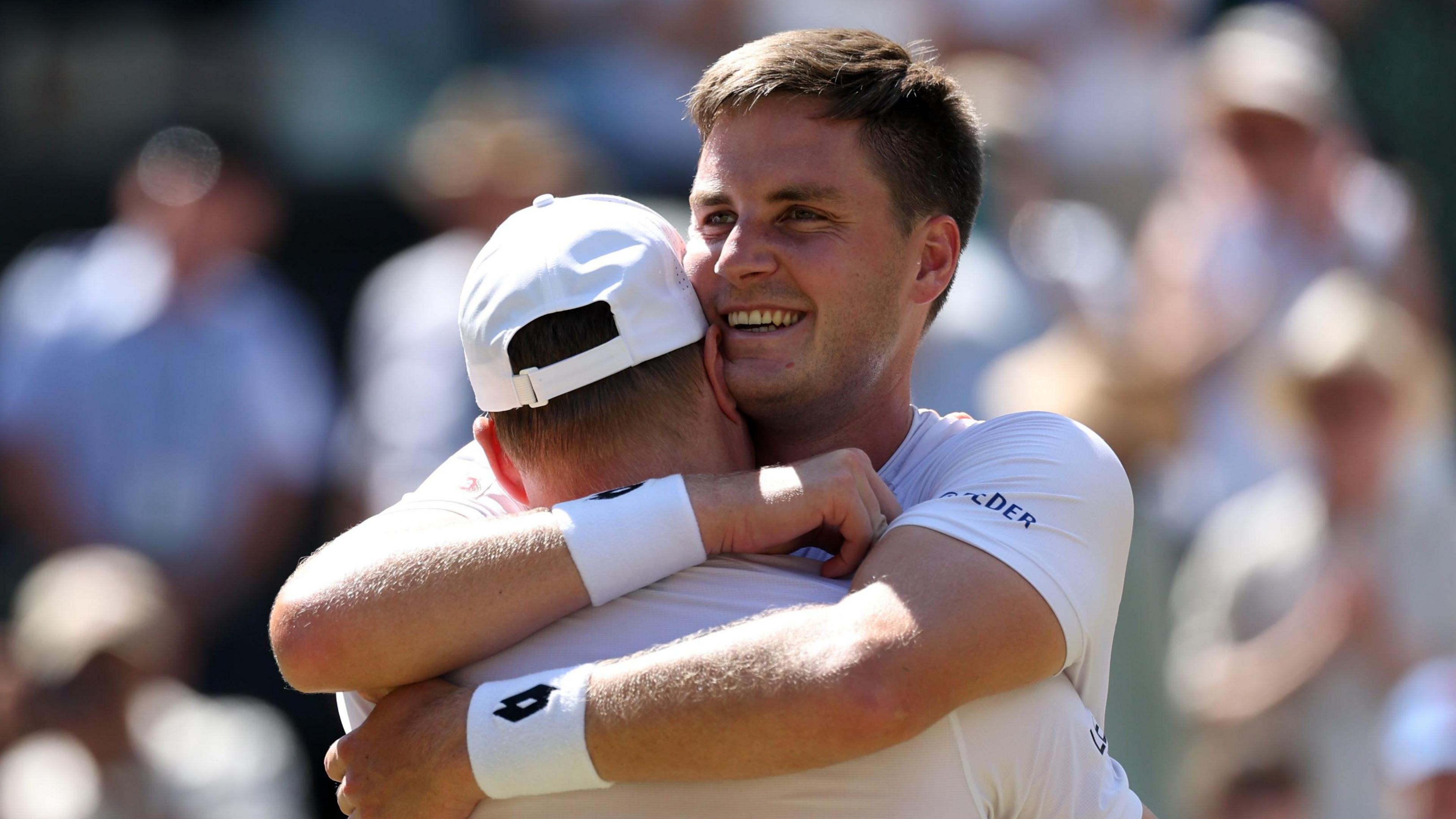
Henry Patten didn't just want to win — he wanted to celebrate. After firing down an ace on match point Saturday at Wimbledon, the British tennis player threw himself to the ground in pure joy before his Finnish partner Harri Heliovaara rushed over to embrace him. It was a moment the Centre Court crowd will not forget, and it capped off something genuinely rare: a second consecutive Wimbledon men's doubles title.
Patten and Heliovaara beat Marcelo Arévalo of El Salvador and Mate Pavić of Croatia in two tightly contested sets, both decided in tie-breaks: 7-6 (7-4) and 7-6 (7-3). Neither team managed to break the other's serve in either set — a testament to how flawless both pairs were on their own service games. But when it came to the tie-breaks, Patten and Heliovaara were simply unstoppable. Throughout the tournament, they won six out of seven tie-breaks, including deciding-set tie-breaks in three of their five matches.
This was no fairy-tale run — it was dominance built over years. The pair only teamed up in early 2024, yet they won their first Wimbledon title that same July. Then came the Australian Open in January 2025. They stumbled at the French Open final in June and lost to the same Arévalo and Pavić pairing just a week before Wimbledon at Queen's Club. But they bounced back exactly when it mattered most.
The victory places them in elite company. They are the first team to win multiple Wimbledon men's doubles titles since the legendary American Bryan brothers, Bob and Mike, who last did it in 2011. Patten himself has made history too — he is now the first British player in the Open era to win the Wimbledon men's doubles title more than once. And for those keeping count at home, this marks the fourth year running that a home player has taken home the trophy.
They entered Wimbledon as the world's top-ranked doubles team, a spot they claimed for the first time in June. This latest win only reinforces why. With their fifth title of the season, they are the undisputed pair to beat on the doubles circuit. The question now isn't whether they can stay at the top — it's how much higher they can climb.