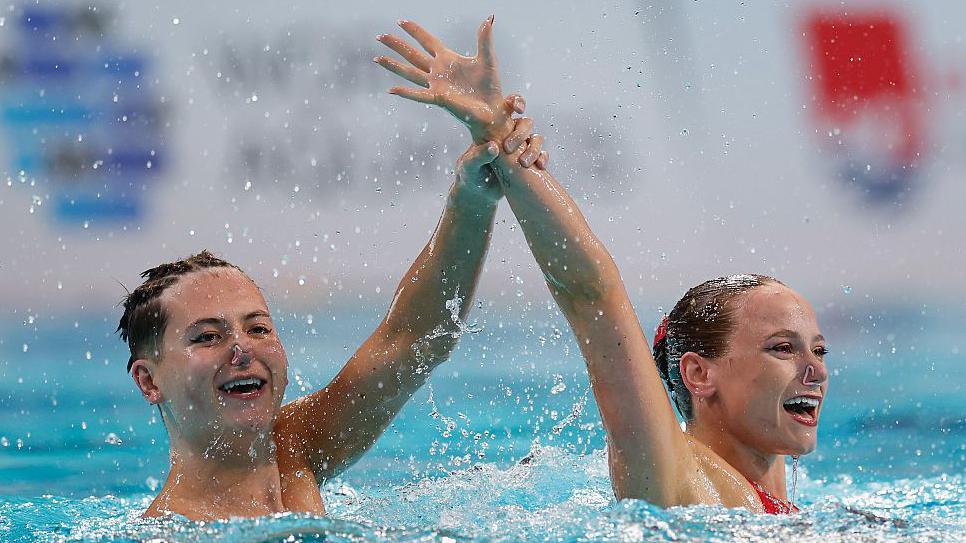
Isabelle Thorpe and Ranjuo Tomblin turned the pools of Pontevedra, Spain into a showcase of British excellence this past weekend, claiming three gold medals at the Artistic Swimming World Cup and cementing their status as rising forces in the sport. The 25-year-old Olympic silver medallist and her 20-year-old partner didn't just win—they dominated, bringing technical precision and athletic power to every routine, reminding the world why artistic swimming demands both artistry and strength.
What makes their success so remarkable is the breadth of their dominance. The pair first struck gold in the mixed duet technical event on Friday, executing movements that caught the judges' attention with their control and clarity. Artistic swimming at the world level rewards not just beauty but the exacting difficulty of synchronized movement, and Thorpe and Tomblin delivered both. This was their third victory in mixed duet events across World Cup meetings in 2026 alone—a season that's just getting underway—signalling that Great Britain has built something sustainable in this discipline.
But Tomblin's brilliance extends beyond partnership. The young swimmer, who has already established himself as one of the world's best male artistic swimmers despite his age, added a men's solo gold to his weekend haul on Saturday. In a sport where men have historically been underrepresented, Tomblin's presence at the top of the podium matters. He's not just competing; he's reshaping what's possible in an event that demands both artistic interpretation and physical virtuosity from swimmers often working alone in the water.
The momentum carried through Sunday, when Thorpe and Tomblin capped the weekend with a commanding performance in the mixed duet free event, scoring 259.5159 points. This was their fourth gold medal together in a single season—a pace that suggests they're not just having a good few months, but genuinely building toward something larger on the international stage.
For those unfamiliar with artistic swimming, the sport sits at the intersection of dance, gymnastics, and swimming. Athletes hold their breath, perform acrobatic movements underwater, and synchronize with partners or team members while maintaining the appearance of effortless grace above the water line. It's punishing to train for and thrilling to watch, and it has often struggled for visibility beyond Olympic years. Performances like those Thorpe and Tomblin delivered in Pontevedra remind us why the sport deserves attention: these aren't just swimmers, they're athletes at the absolute peak of a discipline that demands precision, strength, and artistry in equal measure.
Great Britain's success in artistic swimming has been growing steadily, and this World Cup weekend in Pontevedra shows no signs of it slowing. With Thorpe's Olympic pedigree and Tomblin's emerging dominance, the sport has found compelling ambassadors who are writing their own success story one gold medal at a time.