In Swisher County, Texas, a landscape of solar panels stretching across 2,400 acres is about to double down on a bold renewable experiment. Vesper Energy, a developer already operating the 600-megawatt Hornet solar plant in the county, has just announced the Nazareth array, a 201-megawatt neighbor that will sit adjacent to Hornet and represent yet another bet that this remote corner of the Texas Panhandle is becoming a renewable energy powerhouse.
What makes this moment worth attention is not just the scale of solar infrastructure being built, but what it signals about how rural communities without traditional fossil fuel wealth are securing their economic futures. Swisher County, unlike much of Texas, has no oil and gas operations to speak of—only a few dozen idle wells gathering dust. That scarcity forced local policymakers to look elsewhere, and they landed on an opportunity that could reshape agriculture and energy generation together.
The Hornet plant, which started operations last year, already demonstrates the financial momentum. In its first year alone, Hornet generated more than $5 million in tax revenue for Swisher County, directed across multiple institutions: over $2.6 million to the Tulia Independent School District, more than $1.3 million through the Swisher County Tax Assessor, over $600,000 through a Payment in Lieu of Taxes agreement, and over $300,000 to the Swisher County Memorial Hospital District. Over 40 years, Hornet is expected to deliver $100 million to the county. Beyond taxes, Vesper has contributed over $31,000 to local nonprofits and first responders—including a $4,000 donation that enabled the Tulia Volunteer Fire Department to purchase a trailer for their emergency equipment.
The forthcoming Nazareth project, backed by $236 million in financing from a consortium including the Japanese financial institution MUFG and the Development Bank of Japan, signals serious momentum. The flat terrain and supportive local community have made Swisher an increasingly attractive destination for developers scouting solar locations across the United States.
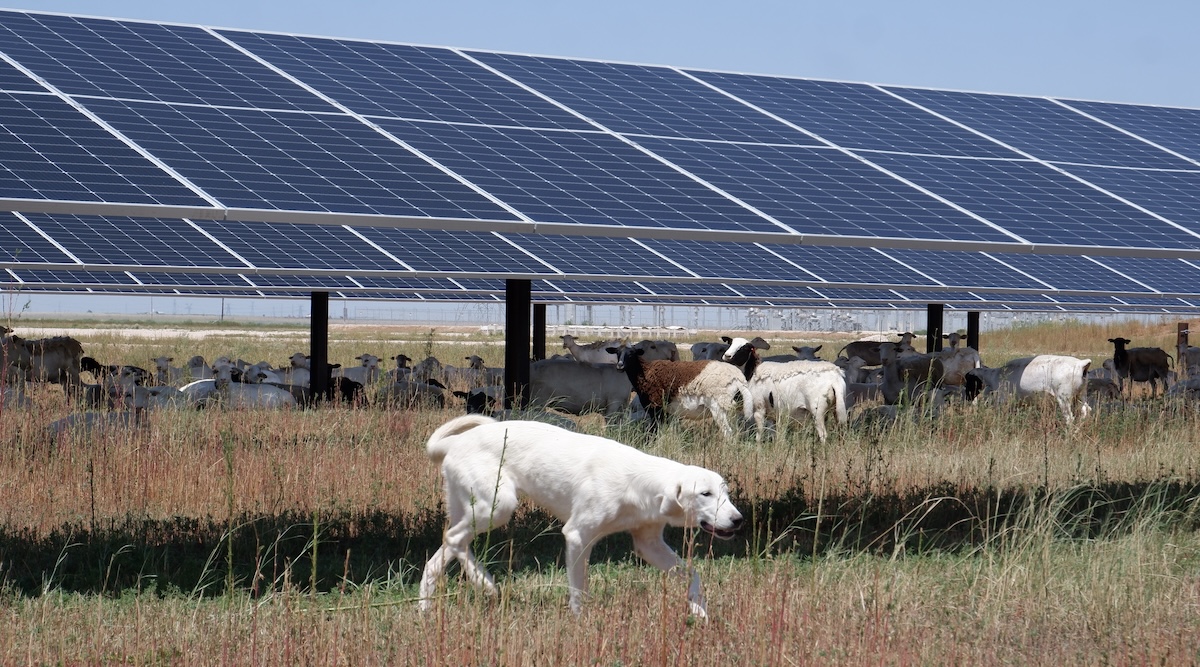
But what distinguishes Vesper's approach is an innovation gaining traction in the solar industry: agrivoltaic solutions that integrate farming with power generation. At Hornet, more than 2,000 sheep and 11 sheep dogs now graze beneath the solar panels—a practice known as solar grazing. The sheep control vegetation naturally, dramatically reducing diesel fuel consumption for maintenance while creating new grazing opportunities for ranchers. In a state where land access has become a critical barrier for young farmers and established ranchers alike, solar sites are beginning to function as shared agricultural land. As Texas Solar Shepherds notes, solar grazing allows ranchers to "access the farmable acres they need" while "preserving land stewardship and their farming heritage."
The pairing of renewable energy infrastructure with revitalized farming opportunities reflects a deeper economic truth: rural communities do not have to choose between energy transition and traditional livelihoods. They can build both simultaneously. For Swisher County, the formula is working. With Nazareth on the horizon and Hornet already delivering millions in new revenue alongside ecological innovation, the county is writing a different kind of Texas story—one where solar panels and sheep graze together under the same wide sky.