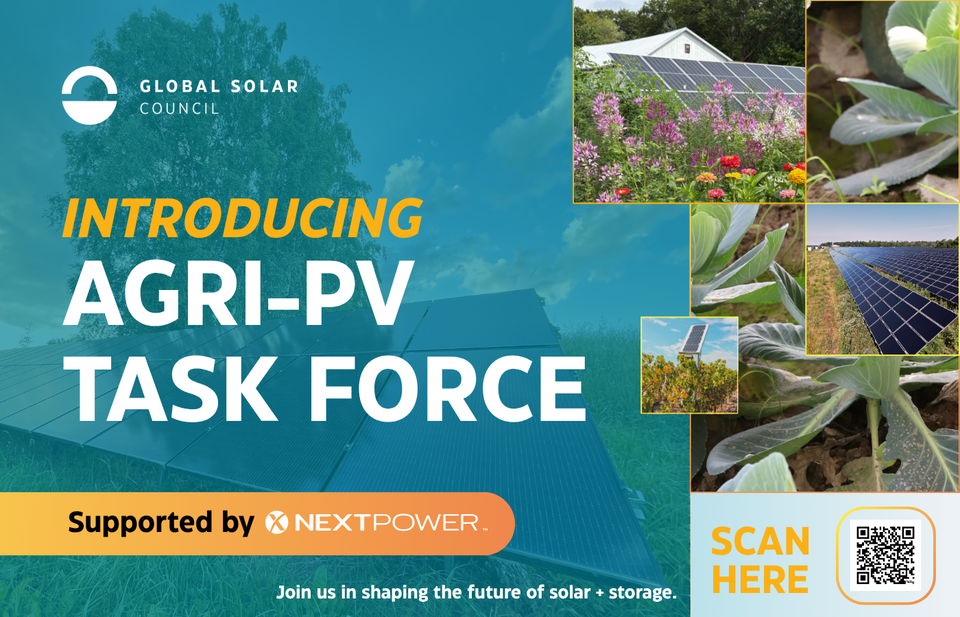
Phillip Kunze stood beneath a canopy of solar panels in southern Germany last spring, watching sheep graze peacefully in the dappled shade — a scene that embodies the quiet revolution now gaining global momentum. Today, at Intersolar Europe 2026 in Munich, the Global Solar Council (GSC) launched its AgriPV Task Force, a bold new initiative chaired by Kunze and his team at NextPower, to accelerate the integration of solar energy and agriculture on shared land. As the world grapples with shrinking arable space, climate volatility, and soaring energy demand, agrivoltaics — the practice of co-locating solar panels and farming — is no longer a fringe experiment but a scalable solution with staggering potential.
With global solar capacity now at 3 terawatts (TW), researchers estimate that deploying AgriPV on just 1% of the world’s farmland could unlock nearly 33 TW of additional solar power — more than ten times the current global total. This isn’t about choosing between food and energy; it’s about producing both more efficiently, sustainably, and equitably. The Task Force brings together farmers, solar developers, policymakers, and scientists to bridge regulatory gaps, refine financing models, and scale best practices worldwide — especially in the Global South, where dual-use land systems could transform rural resilience.
NextPower, a pioneer in AgriPV deployment, has already demonstrated success across Europe, optimizing panel height, spacing, and crop selection to boost both yield and energy output. But the vision extends far beyond Europe. From drought-prone fields in Kenya to rice paddies in Southeast Asia, AgriPV systems are being adapted to conserve water, reduce soil erosion, and even increase biodiversity. In the UK, Jonathan Scurlock of the National Farmers Union emphasizes that farmers are on the front lines of climate change — and AgriPV offers them a lifeline. "When designed well, with grid connections enabled, AgriPV can help farmers diversify income, improve land productivity, and support long-term rural sustainability," he said.
Yet despite its promise, most AgriPV projects remain in pilot phase. Regulatory uncertainty and limited financing have slowed adoption. The GSC Task Force aims to change that by advocating for supportive policies, standardizing technical guidelines, and ensuring farmers remain central to the conversation. As Jochen Hauff, GSC’s Ambassador for Agrivoltaics, put it: "This is not a niche technology — it is a major opportunity to scale both clean energy and food & water security, globally."
The road ahead is one of collaboration — between sectors, disciplines, and continents. But the foundation is set. With the right support, the fields of the future won’t just feed us. They’ll power our homes, cool our cities, and help heal the planet.