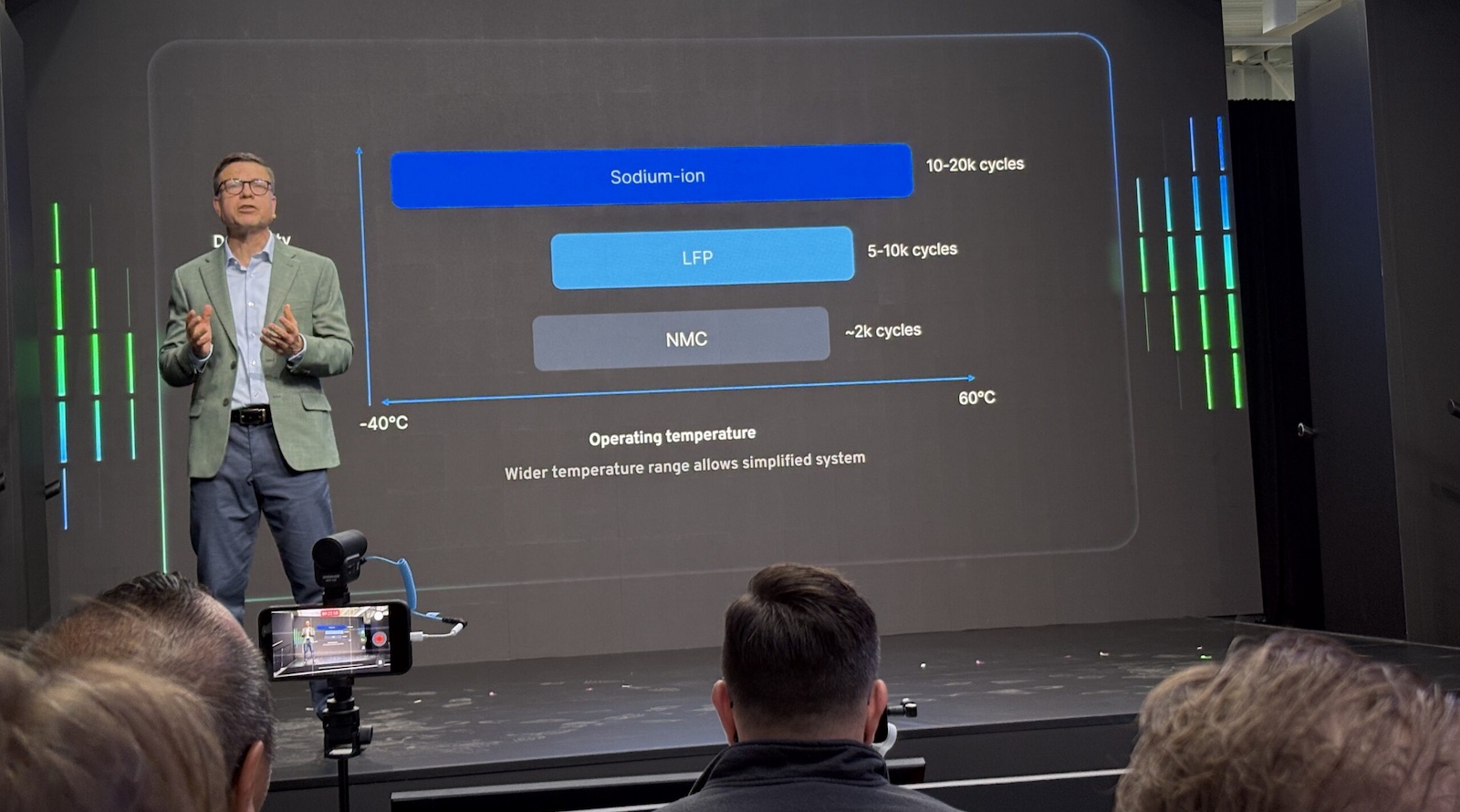
Deep in GM's Warren, Michigan research hub, scientists are testing a chemistry that could reshape how the power grid stores renewable energy. The automaker has announced a major investment in sodium-ion battery technology for grid-scale storage, a deliberate pivot that underscores a simple insight: the batteries that power cars and the batteries that power cities don't need to be the same.
For two decades, battery development has been a singular obsession—optimizing for electric vehicles meant chasing higher energy density, faster charging, and lighter weight. But as data centers proliferate and renewable energy floods the grid, utilities face a different puzzle. They need reliable, affordable power that lasts for hours in real-world conditions, preferably without the maintenance headaches of active cooling systems. Sodium-ion chemistry, it turns out, checks those boxes in ways that lithium-ion does not.
GM's decision to partner with Peak Energy on sodium-ion development, backed by GM Ventures, reflects this reorientation. The two chemistries share fundamental principles—ions moving between electrodes during charge and discharge—and sodium sits just beside lithium on the periodic table. But the differences are telling. Sodium-ion cells tolerate wider temperature ranges and deliver more cycles, meaning they can function reliably in many locations without expensive liquid cooling systems. Over 20-plus years of operation, those engineering simplifications translate into meaningfully lower total cost of ownership.
What sets GM's approach apart is leverage. The company is channeling its battery expertise directly from the vehicle world. The same team in Warren developing lithium-manganese-rich chemistry for future electric cars is now applying that knowledge to sodium-ion for stationary storage. Prototyping of purpose-built sodium-ion cells is scheduled to begin this year at GM's Wallace Battery Cell Innovation Center. Because the architectures share similarities, GM can repurpose existing design and industrialization capabilities instead of beginning from scratch—a compounding advantage in speed and cost.
The company isn't waiting for sodium-ion to mature. Through its Ultium Cells joint venture with LG Energy Solution, GM is already producing lithium-iron-phosphate batteries for commercial storage. And second-life EV batteries are actively deployed: roughly 10,000 repurposed packs from GM vehicles, created in partnership with Redwood Materials, are now powering energy infrastructure, including systems at Crusoe's AI data center in Sparks, Nevada. Starting next year, another 100 packs will supply roughly 7.2 megawatt-hours of dispatchable energy to one of GM's own Michigan facilities, expected to save more than $3 million in local electricity costs over the project's lifetime.
The longer-term opportunity lies in sodium-ion's youth as a technology. Lithium-iron-phosphate chemistry has improved over 25 years, but gains are slowing as the field matures. Sodium-ion, by contrast, sits early on its development curve with substantial room for gains in energy density and cost. Sodium is also among Earth's most abundant elements, a pathway toward battery systems less vulnerable to supply-chain concentration and geopolitical risk.
GM unveiled this sodium-ion commitment alongside two other grid-focused announcements: vehicle-to-grid capability for existing customers and a unified charging interface called Energy Pass. Together, they sketch a vision of energy flowing seamlessly between vehicles, homes, and grids—a full-ecosystem strategy where charging is simplified, parked cars become grid resources, and purpose-built stationary batteries store the power that keeps the lights on.