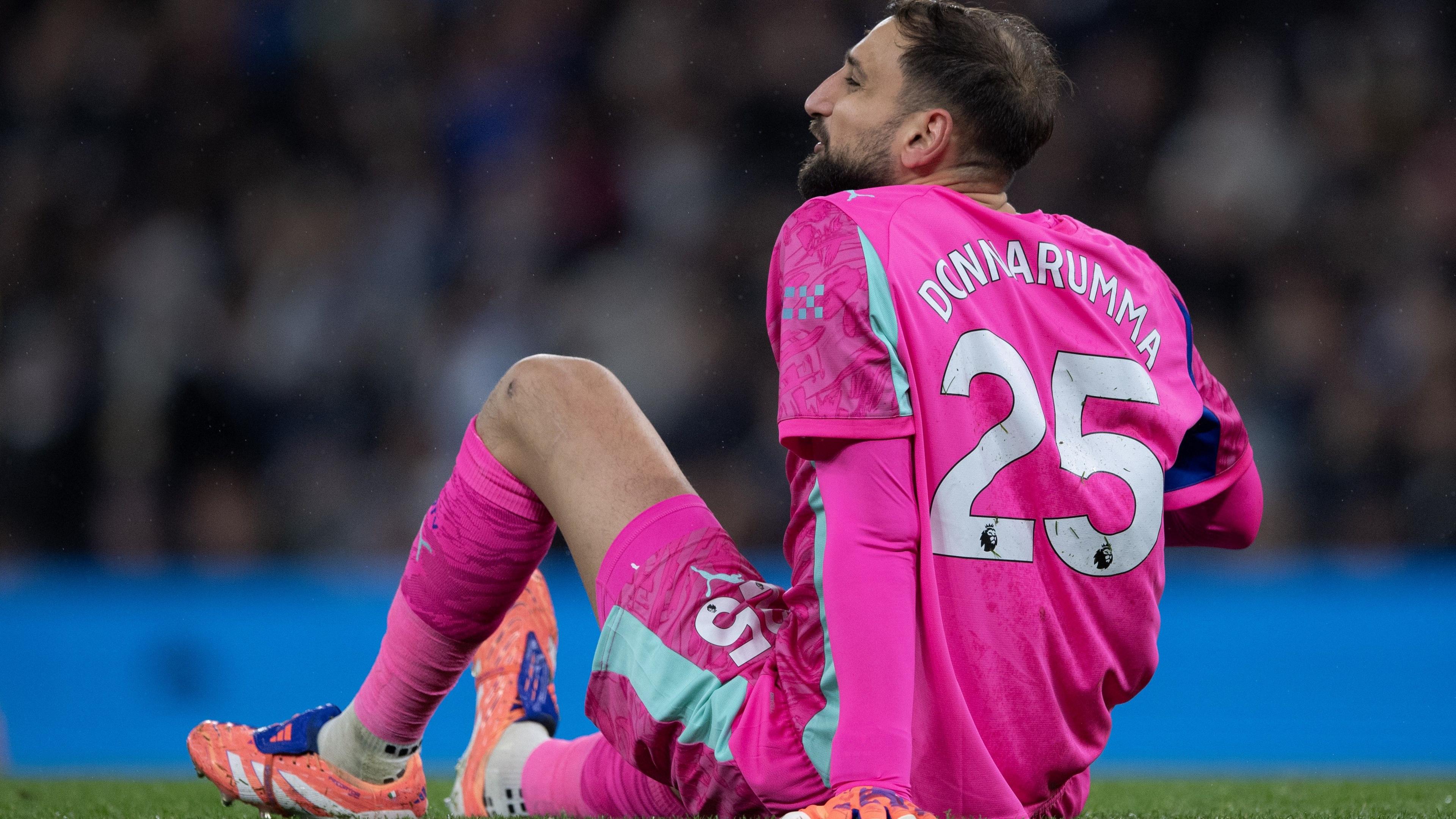
When Gianluigi Donnarumma dropped to the turf during a match last November, Leeds United boss Daniel Farke suspected what many have long observed in modern football: the goalkeeper's "injury" was strategically timed, a convenient break in play designed to disrupt Manchester City's momentum and give his own team a chance to regroup. This moment crystallized a problem that has nagged at football's elite for years — the so-called goalkeeper tactical timeout, where an injury stoppage becomes a clever tactical weapon rather than a genuine medical concern.
Now, FIFA referees' chief Pierluigi Collina has decided the practice has gone too far. At the 2026 World Cup, players will no longer be permitted to rush to the technical area to confer with coaches when a goalkeeper is injured. The International Football Association Board (Ifab) has formally approved the ban, making it official policy for the tournament across all 48 teams.
The tactic itself is simple but effective: a goalkeeper sits down and signals for the physio, triggering a flurry of activity along the sideline. Players flood the technical area for an impromptu team talk, receiving fresh instructions while the opposition can do nothing but watch. Once the coach has delivered his message, the keeper stands up and play resumes — injury cured, tactical objective accomplished.
Collina explained the reasoning with characteristic bluntness during a workshop with coaches from all participating nations. "It's quite weird that there really is only the referee, the physio and the goalkeeper on the field," he said. "All the other players leave the pitch, and it is not good." The ban mirrors a temporary measure already introduced by the National Women's Soccer League (NWSL) earlier this year, which requires players of both teams to remain on the pitch or gather in the centre circle when a goalkeeper is injured.
However, the measure carries a notable limitation. Even with players confined to the pitch, a goalkeeper can still feign injury purely to break the opposition's momentum — and there will be natural timeouts anyway. The 2026 World Cup will feature a three-minute hydration break in each half, creating scheduled opportunities for coaches to communicate. Collina emphasized that referees would be "proactive" in enforcing the new rule, though notably there will be no yellow cards or disciplinary action against players who attempt to speak with their coaches during the stoppage.
The ban is part of a broader package of reforms Collina has championed. The Ifab has also approved changes to VAR protocol to allow reviews of attacking fouls that occur before the ball is in play — a shift prompted by incidents like England's controversial goal against Uruguay in March, where an attacker was able to block a defender's run during a corner kick. Under the new guidelines, VAR can now recommend a retake if such an attacking foul directly leads to a goal, penalty, or disciplinary decision on corners or free-kicks.
These changes represent football's ongoing effort to police not just the rules themselves, but the grey spaces where cunning can masquerade as legitimate gamesmanship. Whether the goalkeeper timeout ban will prove effective remains to be seen, but Collina's message is clear: referees will be watching, and the days of the injury that conveniently resolves once its tactical purpose is served are coming to an end.