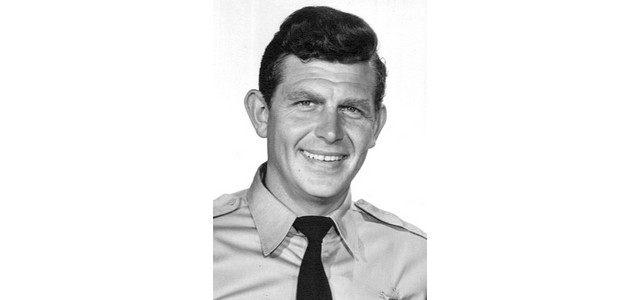
Andy Griffith was born in Mount Airy, North Carolina, 100 years ago today, and the world gained a performer whose warmth would define American television for generations. His journey from a small-town boy drawn away from his family's Moravian ministerial tradition tells the story of how one person's creative instincts can reshape an entire medium.
Griffith's early ambitions steered him toward performance rather than the pulpit. He began his career as a "monologist," crafting long-form comedic scripts for radio—an unassuming entry into show business that would eventually lead to Broadway and Hollywood. His big break came through Ira Levin's "No Time for Sergeants," a comedic story about a country boy in the United States Air Force. Griffith first performed the role in a one-hour teleplay on The United States Steel Hour, an ambitious television anthology series. The performance was compelling enough to earn him a Tony Award nomination when he expanded it into a full-length theatrical version on Broadway, and again when Warner Brothers adapted it into a 1958 film.
But it was his role as Sheriff Andy Taylor in "The Andy Griffith Show" that cemented his legacy. Beginning in September 1960 on CBS, the show was set in the fictional town of Mayberry, North Carolina, where Taylor—a widower and town sage—embodied a kind of moral backbone that audiences craved. For nine years, Griffith inhabited this character, creating a space where decency and humor coexisted without sentimentality. The show became more than entertainment; it became a cultural touchstone during a turbulent decade.
Griffith's earlier film role in Elia Kazan's "A Face in the Crowd" had already demonstrated his range as a dramatic actor, stunning moviegoers with a talent that was then unknown to wider audiences. Yet it was his ability to work across genres—drama, comedy, and music—that made him such a vital force in American culture. He earned not one but two Tony Award nominations for his stage work, proving that his gifts extended far beyond television.
When Griffith stepped away from "The Andy Griffith Show" after nine years to pursue a career in film and music, he had already left an indelible mark. He would go on to star as folksy defense attorney Ben Matlock in the long-running series "Matlock," introducing another beloved character to American screens. But it was those early decades—the radio monologues, the Broadway stages, the pioneering television work—that showed what was possible when an actor approached his craft with genuine respect for the audience.
Ron Howard, who grew up on the set of "The Andy Griffith Show" and would himself become an award-winning director, captured something essential about Griffith's influence: the way he brought joy and professionalism together, the way he treated the opportunity to create something people could enjoy with what Howard called "respect and passion" and an "unpretentious and earthy" spirit. That combination—excellence without pretension—may be Griffith's greatest legacy, one that continues to inspire performers a century after his birth.