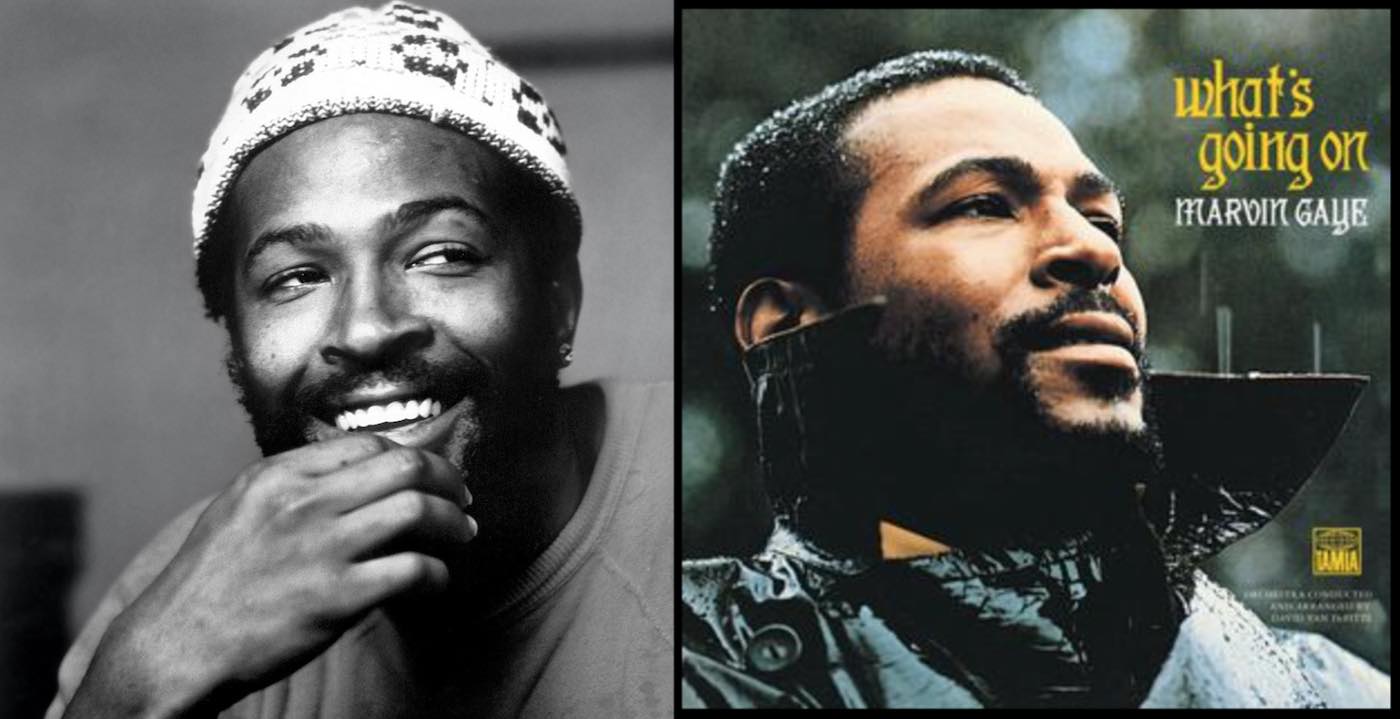
On May 21, 1971, Marvin Gaye released What's Going On, an album so uncommon for its time that Motown Records itself had resisted it—but the DC-born singer persisted, and in doing so created what would become the label's best-selling album and one of the greatest records of the twentieth century.
What made this moment remarkable wasn't just the music, though the soaring title track—with its timeless lyric "war is not the answer, for only love can conquer hate"—became a smash hit. It was that Gaye had dared to transform Motown, a label built on crossover appeal and commercial polish, into a vehicle for artistic conscience. The concept album flowed with songs written from the perspective of a Vietnam veteran returning home to see only hatred, suffering, and injustice. This was uncharted territory for the man who had made his mark with romantic chart-toppers like Let's Get It On and Heard It Through the Grapevine. Motown had resisted any protest themes, yet Gaye, acting as his own producer—a first for the label—pushed through.
The album's second single, Mercy Mercy Me (The Ecology), revealed an even more prescient ambition. With lyrics that asked "where did all the blue skies go?" and warned that "poison is the wind that blows," the song has been credited with pioneering ecological awareness in popular music, arriving just one year after the first Earth Day. Gaye had woven together two of the era's most urgent causes—ending war and protecting the planet—into a single, unified vision. The public responded. The album's commercial success gave permission to a generation of artists to speak up about the world they inhabited.
On the same day, 46 years ago, The Empire Strikes Back opened in UK and North America cinemas. Produced by George Lucas and known now as Star Wars Episode V, the film became the highest-grossing movie of 1980 and is now regarded as the best film in the Star Wars saga and one of the greatest films ever made. Set three years after the original 1977 film, it deepened the mythic scope of the universe while splitting its ensemble—Han Solo, Princess Leia, Chewbacca, and C-3PO—across a galaxy relentlessly pursued by Darth Vader and Emperor Palpatine.
Further back in history, on May 21, 1958, American soprano Leontyne Price sang the lead role in Giuseppe Verdi's Aida at the Teatro alla Scala in Milan, becoming the first African American and first African American woman to perform that role at the legendary theater. Born in Laurel, Mississippi, and educated at Central State University and Juilliard, where she graduated cum laude, Price had already made waves with a televised 1955 performance of Tosca. But her triumph at La Scala was different—it was a breaking point. A Milanese critic wrote that "our great Verdi would have found her the ideal Aida," a recognition that acknowledged not just her talent but the significance of her presence on that particular stage.
These moments—an album that wed social conscience to pop music, a film that expanded the possibilities of science fiction storytelling, and a singer who claimed a historic stage—remind us that culture has always been a terrain where hope and justice get their voice heard. May 21 belongs to them.