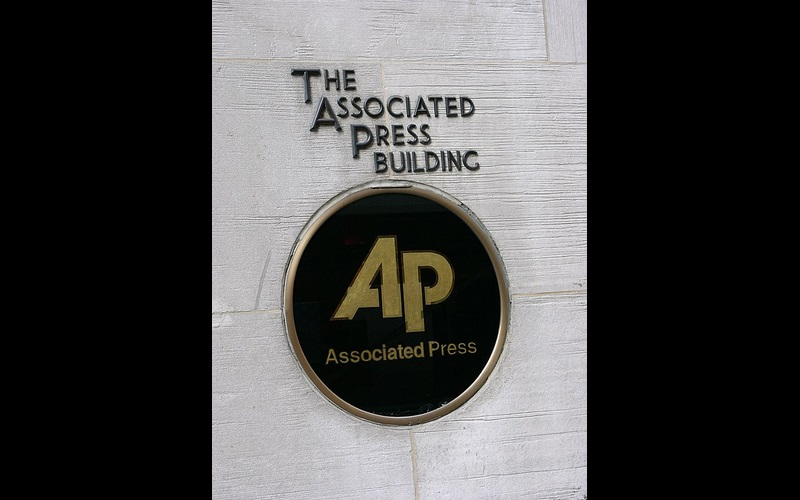
On May 22, 1844, five newspapers—The Sun, the New York Herald, the New York Courier and Enquirer, The Journal of Commerce, and the New York Evening Express—gathered in New York City and made a decision that would reshape how the world receives information: they created the Associated Press as a nonprofit news cooperative, pooling resources to cover the Mexican American War without bankrupting themselves.
Today, 180 years later, the AP has grown into a vast global network that would astound those five editors. The cooperative now operates 235 news bureaus across 94 countries, delivering stories in English, Spanish, and Arabic to newsrooms, broadcasters, and digital platforms worldwide. Along the way, AP journalists have won 59 Pulitzer Prizes—a testament to the quality and courage of reporting done under the organization's banner.
The AP's history is woven into the fabric of American journalism itself. An AP stringer died covering the Battle of the Little Bighorn in 1876, giving his life to document that pivotal moment. In 1899, AP became the first news organization to test Guglielmo Marconi's wireless telegraph technology, using it to cover the America's Cup yacht race off Sandy Hook, New Jersey—a technological breakthrough that changed how fast news could travel.
The organization's most transformative period came under Kent Cooper, who served as General Manager from 1925 to 1948. Cooper aggressively expanded AP's reach into Europe, South America, and the Middle East, but his most lasting innovation was the Wirephoto network. This system allowed news photographs to be transmitted over leased telephone lines on the same day they were taken—a revolution in visual journalism that made the world feel simultaneously smaller and more connected.
Beyond breaking news, the AP shaped the very language of journalism itself. The organization produced one of the first and longest-used style books in English-language media. Over 2 million copies have been sold, and its framework for punctuation, grammar, and spelling became the standard that newspapers and journals across America adopted. When you read a well-punctuated news article today, you're likely following rules that the AP codified generations ago.
What makes the AP's founding vision remarkable is its cooperative nature. Rather than competing against each other to cover expensive events, those five newspapers chose collaboration—a model that proved so durable it lasted nearly two centuries. The AP didn't hoard information; it democratized access to it, allowing smaller papers to publish world-class reporting they couldn't afford to produce alone.
As newsrooms shrink and local journalism faces unprecedented pressure, the AP's founding principle feels almost prophetic. In an age of media fragmentation and digital disruption, the organization that began as a cost-sharing solution to one war continues to be the backbone of news delivery worldwide. The cooperative that five newspapers built to cover a single military conflict now connects billions of people to the stories that matter.