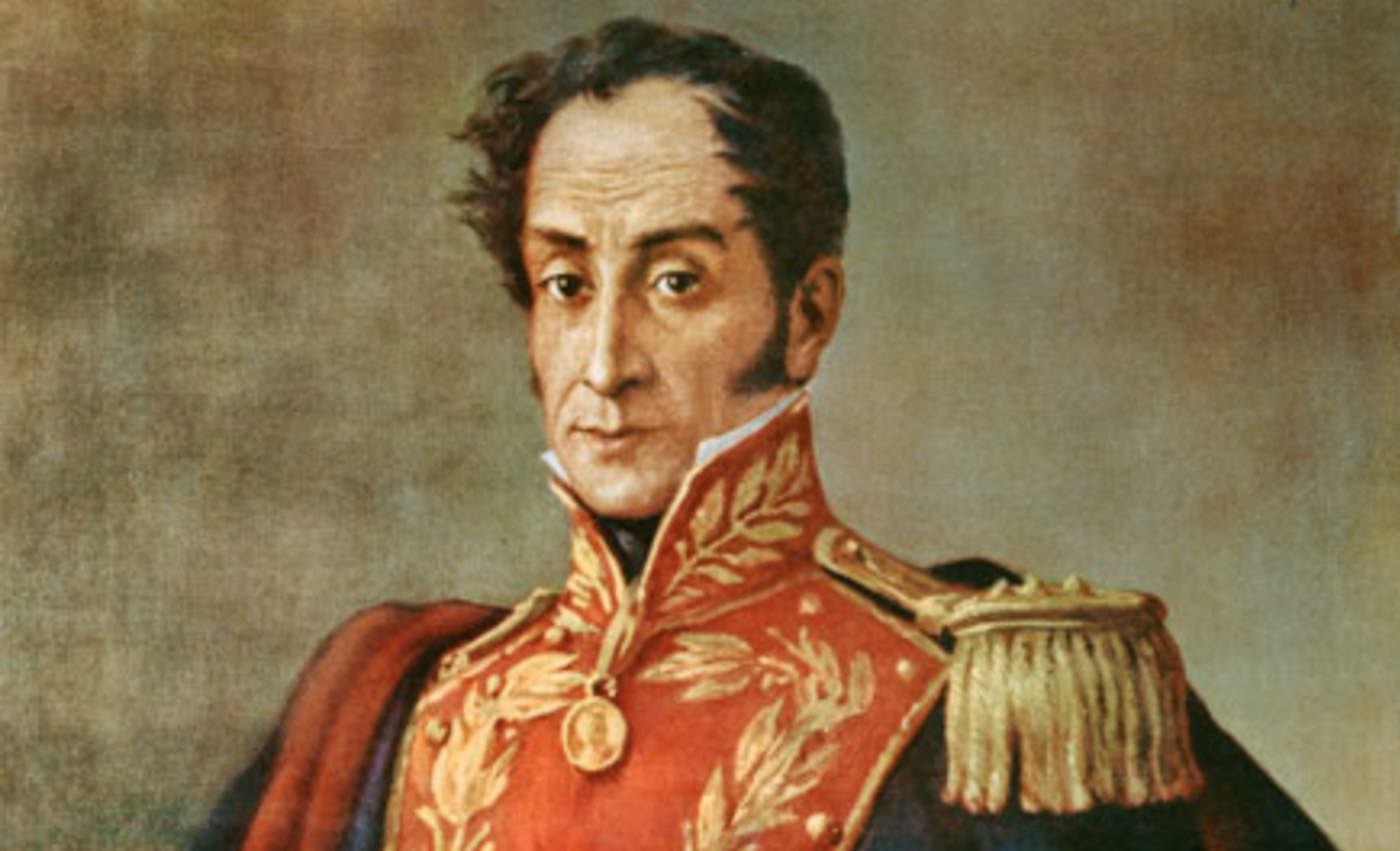
On May 23, 1813, Simón Bolívar entered the city of Mérida at the head of an invading army and was proclaimed El Libertador—The Liberator—a title that would define the trajectory of a continent. Two centuries later, the Venezuelan revolutionary's legacy endures across the nations he helped free: Venezuela, Colombia, Ecuador, Peru, Panama, and Bolivia, which bears his name to this day.
Bolívar's vision extended far beyond military conquest. A passionate admirer of the American Revolution, he traveled with well-worn copies of Montesquieu's Spirit of the Laws and Adam Smith's Wealth of Nations tucked alongside him as he wrote the Bolivian Constitution. His letters and speeches reveal a man devoted to the classical liberal ideals of limited government, the separation of powers, freedom of religion, property rights, and the rule of law. He described himself as a defender of the free market—a far cry from how he is sometimes remembered in popular imagination.
What makes Bolívar's intellectual legacy so vivid today is an act of disobedience. On his deathbed, the aging liberator ordered his aide-de-camp, General Daniel Florencio O'Leary, to burn his vast archive of writings, letters, and speeches. O'Leary refused. That refusal gave historians an extraordinary window into the mind of a man who reshaped South America, preserving not just the record of his military campaigns but the philosophical convictions that animated them.
The same day also marks the birth of Robert Moog in 1934, an inventor who transformed how humans make music. At fourteen years old, Moog built his first electronic instrument—a theremin—and by 1970 had released the MiniMoog, the first compact and user-friendly synthesizer. His innovations democratized electronic music, moving it from laboratories into the hands of musicians everywhere.
Thirty-one years ago, on May 23, 1995, the Java programming language saw its first public release from Sun Microsystems. Created by James Gosling, Mike Sheridan, and Patrick Naughton, Java was born from an ambitious principle: "write once, run anywhere." The name itself carries a wanderer's charm—originally called Oak after a tree outside Gosling's office, it traveled through the name Green before settling on Java, named for the Indonesian coffee that sustained so many late-night coding sessions. Intended to be simple, object-oriented, robust, and portable across all platforms, Java became one of the most widely used programming languages in the world. Though its dominance has waned in recent years, it remains actively maintained—Java SE 24 was released as recently as 2025, proof of its enduring influence.
But perhaps the day's most profound spiritual milestone came 182 years earlier, on May 23, 1843, when Báb—a merchant from Shiraz, Iran—announced himself as a prophet and lived to tell about it. Rather than facing execution for heresy, Báb founded the Baháʼí Faith, a religion that preaches the unity of the Abrahamic faiths and calls its followers toward a universal brotherhood of goodwill. His teachings emphasized the independent investigation of truth, the learning of arts and sciences, the improvement of women's status, and human nobility. Within five months, eighteen disciples had recognized him as a Manifestation of God, earning the mystical title the Letters of the Living, and spreading his vision across continents.