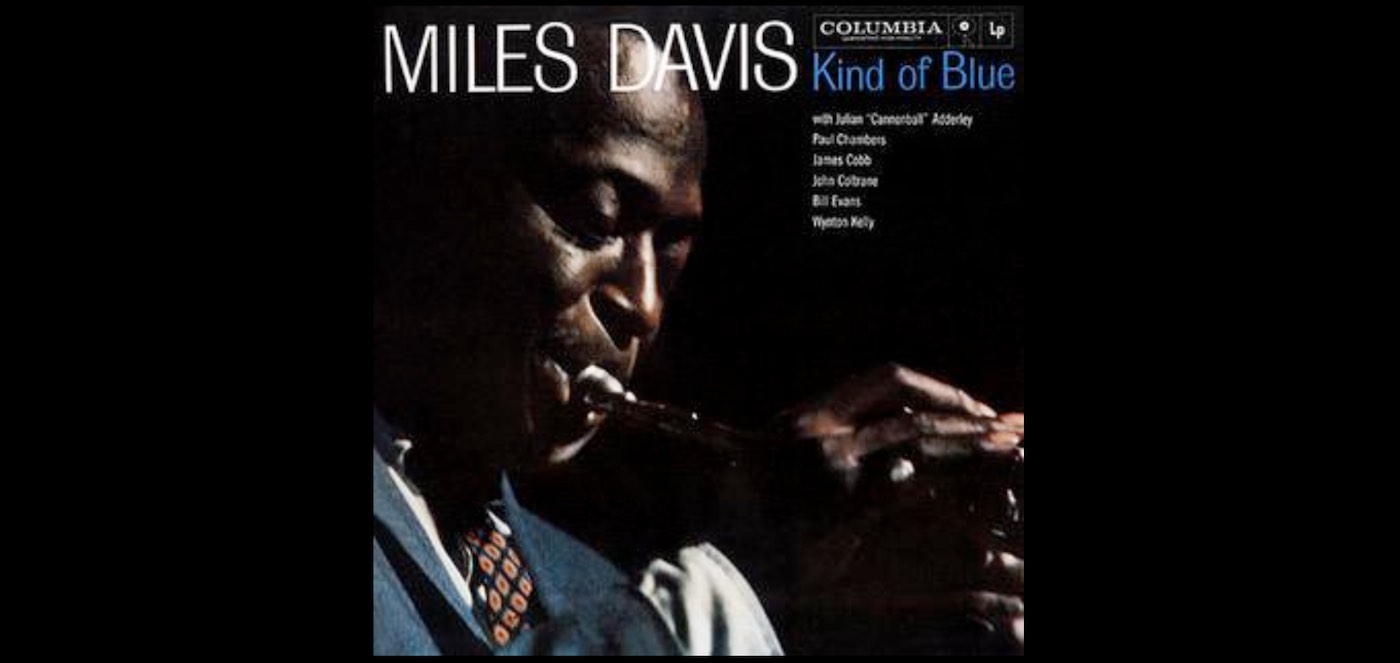
One hundred years ago today, Miles Davis was born—a trumpeter who would spend the next six decades rewriting the rules of jazz and proving that the deepest artistic innovation comes not from perfecting what came before, but from fearlessly breaking it apart.
Davis himself understood this hunger early. In his autobiography, he recalled that "by the age of 12, music had become the most important thing in my life," and when a trumpet arrived as his 13th birthday gift, he began playing in local bands almost immediately. But the real turning point came at 18, when he was invited to perform in St. Louis alongside jazz pioneers Dizzy Gillespie, Art Blakey, and Charlie Parker—stepping in when their trumpeter fell ill. That encounter convinced Davis of what he needed to do: move to New York City, "where the action was."
From 1944 to 1948, Davis played in Charlie Parker's revolutionary hard bop quintet, an apprenticeship that shaped everything that followed. When he signed with Columbia Records in 1955, he was asked to form a jazz quintet and perform at Cafe Bohemia in New York. What happened next became legend. The band entered the studio for a series of marathon sessions that culminated in four albums, establishing Davis as one of the era's finest musicians. Among those recordings was his landmark 1959 album Kind of Blue, which achieved 4-time platinum status and would become one of the best-selling jazz albums of all time.
Davis didn't just play jazz—he pushed the entire genre forward. He helped popularize jazz fusion, a radical merging of jazz with rock and funk that seemed impossible to purists but which Davis made inevitable. His influence rippled forward through decades: a 2016 digital study found that 286 Wikipedia articles cited Davis as an influence in their opening sentences, a remarkable measure of how deeply his innovations penetrated musical culture. Some critics have even argued that jazz itself stopped evolving after Davis stopped playing, suggesting that his restless creativity was the very engine driving the genre's development.
What made Davis exceptional was not technical mastery alone, but a willingness to question what jazz could be. He worked across every decade from the 1940s through the 1990s, and his career became a lens through which observers could trace the entire evolution of jazz across fifty years. He moved from bebop to cool jazz to modal jazz to jazz fusion to funk-influenced experiments, never settling, always listening, always changing.
Today, a century after his birth, Davis remains one of the 20th century's most influential musicians—not because he perfected jazz, but because he dared to ask what it could become. His gift was not just his trumpet or his ear, but his refusal to accept that any art form had already reached its limit.