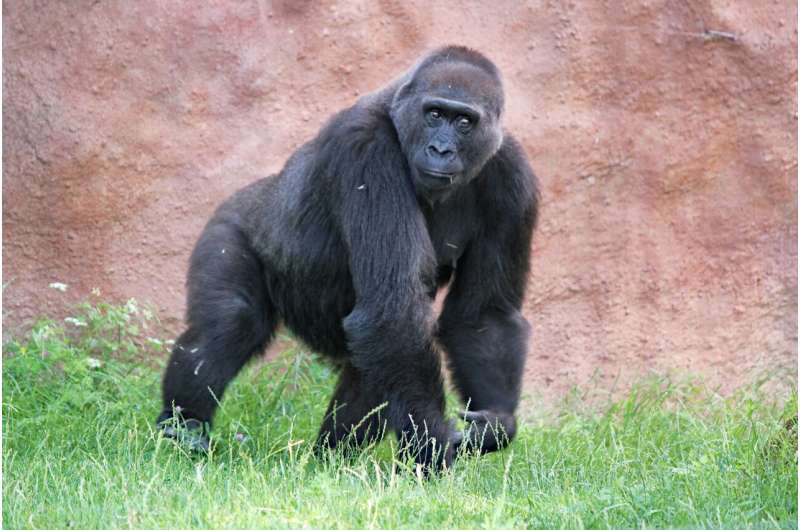
Wolfgang Köhler's research center at Leipzig Zoo has spent eighteen years collecting a dataset so comprehensive it's reshaping how scientists understand great ape minds. EVApeCognition—a database assembled from 262 separate experimental studies conducted between 2004 and 2021—holds the key to answering questions that single studies simply cannot tackle alone.
For decades, researchers have watched chimpanzees navigate touchscreens to locate food in virtual forests, observed bonobos cooperate in ways that mirror wild social dynamics, and documented how these intelligent creatures think about one another. But there's been a persistent puzzle underlying all this work: when an ape chooses to cooperate or compete, forgo food to learn gossip about its peers, or shift its behavior from one day to the next, how much of that choice reflects its deeper personality and relationship history versus its momentary mood?
That question drove researchers at the Wolfgang Köhler Primate Research Centre—led by scientists including one researcher who spent a decade observing these apes—to build something unprecedented. They standardized and integrated 262 experimental datasets involving 81 great apes, with 78 of those individuals participating in multiple studies. The result is a longitudinal window into great ape cognition that can track, for instance, whether a bonobo's act of generosity in 2008 was rooted in a stable personality trait, a particular relationship, or other factors entirely.
The database reflects a crucial shift happening in primate research. Historically, most studies confined great apes to pairs under strict laboratory conditions—useful for controlling variables but quite distant from how these animals actually live. Recent work is moving toward larger group studies that more closely mirror the social complexity of the wild. One recent experiment from researchers at the Max Planck Institute found that when great apes worked in groups of four rather than pairs, they maintained access to a shared pool of yogurt significantly longer. The breakthrough wasn't size alone—it was social tolerance. The quartets that succeeded most had leaders at the top of the social hierarchy who exercised restraint, a finding that underscores how leadership style shapes cooperation.
Yet the database also reveals a stark imbalance in captive great ape research. Chimpanzees dominate the scientific record, while bonobos, gorillas, and orangutans remain comparatively understudied. This matters because bonobos, uniquely known to cooperate across group boundaries in the wild, could offer particularly revealing insights into how larger social structures shape cognition.
The bigger picture is one of momentum. The global ManyPrimates project, launched in 2017, has already produced the most comprehensive study of primate memory, revealing that genetic lineage shaped these abilities more powerfully than either ecology or how social an animal is. Recent 2025 research shows chimpanzees update their beliefs by considering all available information before deciding—a hallmark of sophisticated reasoning.
What EVApeCognition promises is context. A great ape's choice to cooperate on a Tuesday isn't just about its intelligence; it's shaped by whether it groomed its partner that morning, or whether its status shifted. That social texture—the grooming, the hierarchy shifts, the relationships stretching back years—is precisely what transforms individual studies into genuine understanding of how these remarkable minds work.