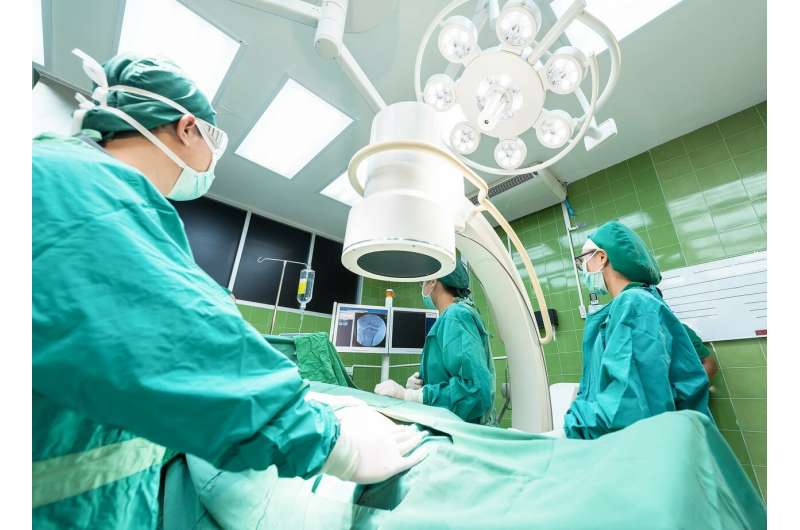
Etta Hanlon remembers the exact moment she realized anesthesia could be part of the climate solution: standing in an operating room in Roanoke, watching a clear gas flow into a patient’s lungs — a gas that, unseen, was heating the planet. That gas was desflurane, a common anesthetic that traps heat 20 times more effectively than carbon dioxide. But over the next four years, Hanlon and her team proved that small changes in how anesthesia is delivered could make a big difference — slashing emissions and costs without ever putting patients at risk.
Health care is responsible for nearly 5% of global greenhouse gas emissions, and operating rooms are among the biggest contributors. Anesthesia, especially inhaled gases like desflurane and nitrous oxide, plays an outsized role. These gases linger in the atmosphere, trapping heat just like the emissions from cars and power plants. But unlike many climate solutions, this one didn’t require new technology or massive investment — just smarter choices.
At Carilion Clinic in Roanoke, a six-site academic health system, doctors began shifting to greener alternatives. They replaced high-emission desflurane with sevoflurane, a less harmful inhaled gas, and increased use of intravenous anesthesia. They lowered fresh gas flow rates to reduce waste and gave anesthesiologists personalized reports showing how their choices impacted emissions. The results, drawn from 145,917 surgeries between 2021 and late 2025, were striking.
Average emissions per surgery dropped from 57.6 kilograms of carbon dioxide equivalent to just 31.6 kilograms — a 45% cut. Desflurane use fell from nearly a quarter of all cases to less than 10%, while sevoflurane use climbed to 93.1%. By late 2025, the system had surpassed its goal of cutting emissions in half. The financial savings were just as impressive: spending on inhaled anesthetics dropped from $628,588 in 2021 to $379,010 in 2024, a nearly 40% reduction. Most importantly, patient outcomes stayed strong — no increase in complications, recovery times, or side effects.
"Patients shouldn't have to choose between environmentally responsible health care and safe, high-quality care," said Sara Wohlford, director of sustainability at Carilion Clinic. Her words capture the quiet power of this shift: change that happens behind the scenes, improving both the planet and the bottom line without asking anything of the patient.
Now, other hospitals are watching. If a health system in Virginia can cut emissions and costs this dramatically with simple, evidence-based changes, the model could spread fast. And that means every surgery could be a small act of healing — not just for the patient, but for the planet too.