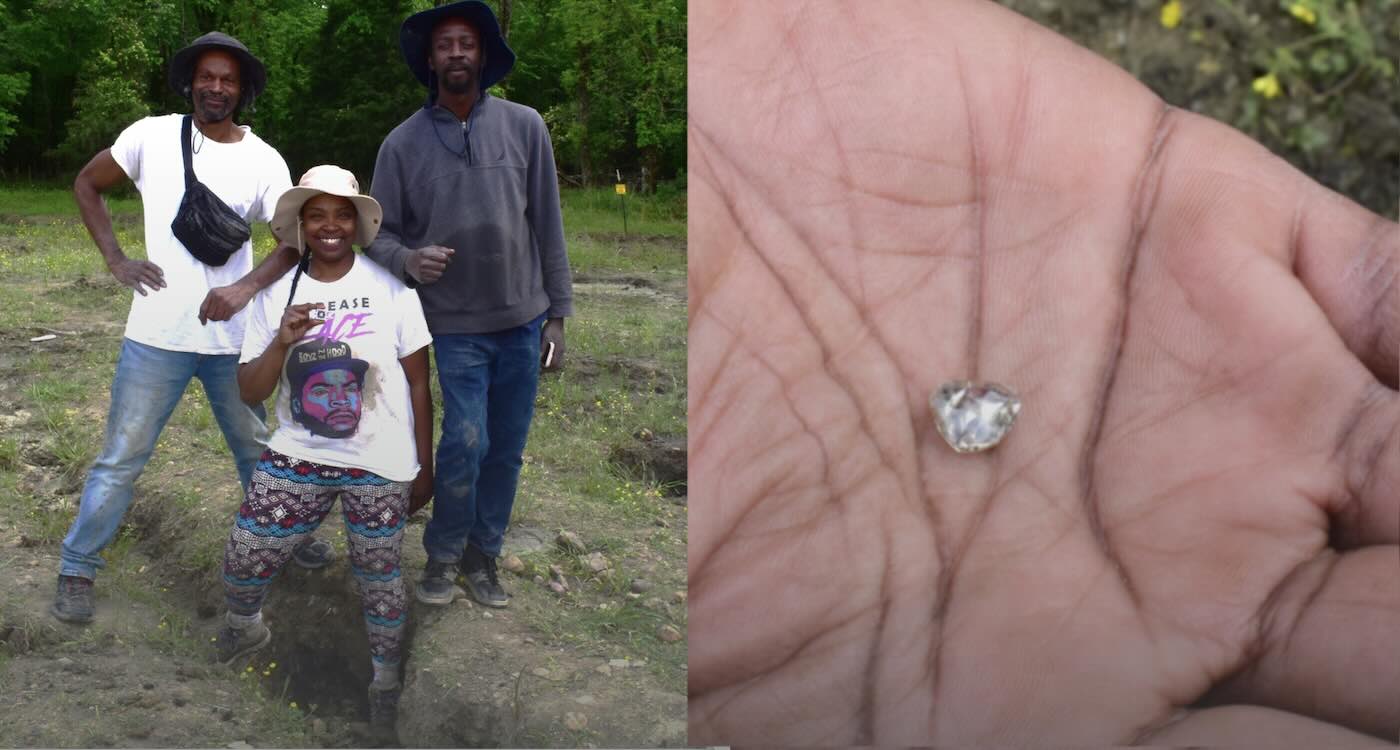
On a spring day at Crater of Diamonds State Park in Arkansas, Keshia Smith knelt in the dirt and spotted something that caught the light like a tiny mirror—a heart-shaped white stone that would become a monument to her resilience. The 3.09-carat diamond she pulled from the ground on April 22 arrived at a moment when Smith needed it most: she was grieving the loss of her son six months prior and had buried her father just days before beginning the trip from Pennsylvania with her boyfriend and brother.
The discovery holds particular resonance because Smith had planned this journey a year earlier, long before the weight of these losses settled on her shoulders. When she finally arrived at the park, she wasn't looking for diamonds so much as looking for a way forward. "I really needed this," she told KAIT-TV. "I just can't believe it actually happened!" The very first thing she noticed about the stone was its shape—it resembled a heart, the symbol of love and loss intertwined. She named it the Za'Novia Liberty Diamond, honoring both her grandchildren and the significance of America's 250th year, weaving her family's story into the gem's identity.
The find was remarkable not just emotionally but geologically. Crater of Diamonds is one of the few places in North America where the general public can legally hunt for diamonds, pulling stones directly from the volcanic pipe that formed millions of years ago. When Smith's diamond emerged from the soil, it gleamed with the distinctive "adamantine luster"—the intense, metallic-like shine that diamonds from this geological formation naturally possess. The stone's smooth, rounded edges and glass-like appearance initially prompted skepticism from some online observers, who questioned whether it could be authentic. The confusion reflects a widespread misunderstanding: most people are accustomed to seeing rough, frosted diamonds from deep-shaft African commercial mines, which look like milky shards of ice. Arkansas diamonds, by contrast, naturally develop their pristine appearance because they are completely non-porous and don't adhere to surrounding clay or dirt, emerging from the ground already polished by nature itself.
Park staff verified Smith's discovery at the Diamond Discovery Center, confirming both its authenticity and its precise weight. It became the second-largest diamond pulled from the park during 2024—a notable achievement that speaks to both the rarity of significant finds and the significance of Smith's moment. Park officials understood the deeper meaning of the discovery, writing on their Facebook page: "Moments like this remind us why Crater of Diamonds State Park is such a special place."
For Smith, the diamond represents something beyond its monetary value. It's a tangible reminder that beauty and discovery can emerge during our darkest seasons, that hope can crystallize in unexpected places. In naming the stone after her family and her country's milestone year, she transformed personal grief into a shared celebration—a small, brilliant testament to endurance and healing.