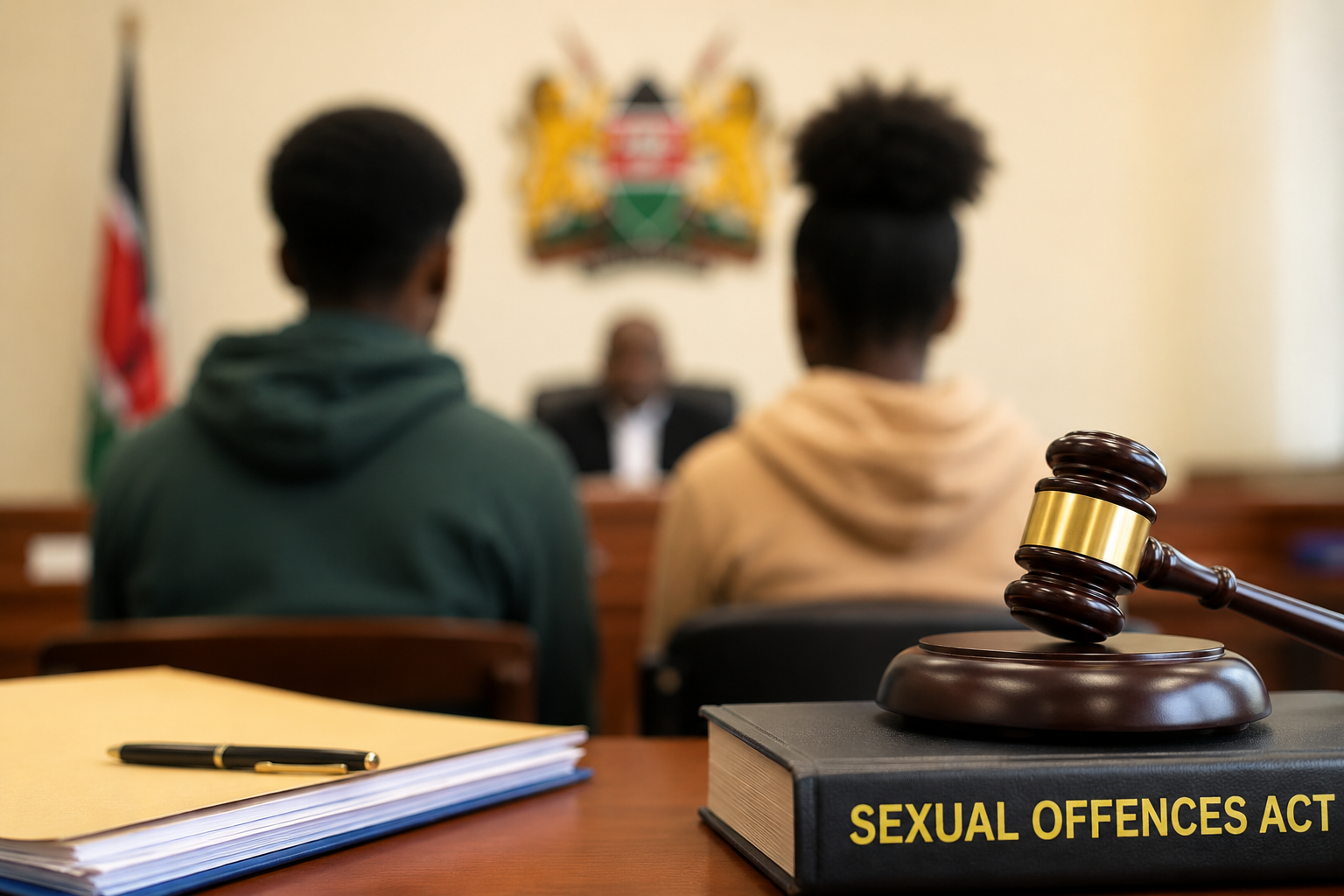
On May 20, 2026, Kenya's High Court declared that criminalising consensual adolescent peer relationships violates the country's constitution—a landmark ruling that has ignited a nationwide conversation about how young people should be treated under the law.
Justice Bahati Mwamuye found that the Sexual Offences Act's application to prosecute teenagers engaged in non-coercive relationships with peers unconstitutionally breached protections for equality, dignity, privacy, health, education, and the best interests of the child. The ruling, rooted in Petition E490 of 2025, strikes at a cruel irony: laws designed to shield children from abuse have been weaponised against adolescents simply exploring age-appropriate relationships.
The human cost has been severe. Young people arrested under these provisions have faced detention in adult facilities and lifelong stigma from criminal convictions. Vulnerable teenagers from low-income households—those already lacking family support and access to guidance—have been disproportionately funnelled into the criminal justice system, denied healthcare and counselling only to face punitive legal action. Now, civil society organisations across Kenya are pushing for something far more transformative than the court's initial orders: the complete expungement of criminal records for those previously convicted under what they now recognise as unconstitutional applications of the law.
"We call for the expungement of criminal records for those previously convicted under these unconstitutional applications of the law and for the provision of psychosocial support for affected minors," the coalition of rights groups stated in a joint statement. The move signals a fundamental philosophical shift—what the organisations describe as moving Kenya "from punishment to protection and from stigma to dignity."
Justice Mwamuye's decision contains explicit guidance for how the state should proceed. The court ruled that criminal enforcement is unconstitutional only where there is no evidence of exploitation, coercion, abuse, or power imbalance. It directed investigative and prosecutorial agencies to distinguish sharply between consensual adolescent relationships and cases involving genuine harm. The court also ordered state agencies responsible for health, education, and child protection to develop policies ensuring adolescents can access sexual and reproductive health information and services without fear of criminalisation.
The judgment halted criminal proceedings against the adolescent petitioners themselves and permanently stayed aspects of two criminal cases involving consensual, non-exploitative conduct. Yet implementation remains uncertain. Rights groups are urging Parliament to amend key provisions of the Sexual Offences Act—Sections 8, 9, 11, and 43(4)(f)—to explicitly distinguish exploitative violence from consensual peer relationships. They are also calling on the National Police Service and the Office of the Director of Public Prosecutions to immediately review procedures involving minors and align them with the constitutional standards the court has set.
Faith Odhiambo, former Law Society of Kenya President, cautioned that the ruling's true test lies in execution. "Implementation will be critical," she warned, noting that authorities must create clear safeguards to prevent exploitation while protecting age-appropriate peer relationships. The court has handed Kenya a roadmap; now the country must decide whether to follow it.